What the party wall actually is up on the roof
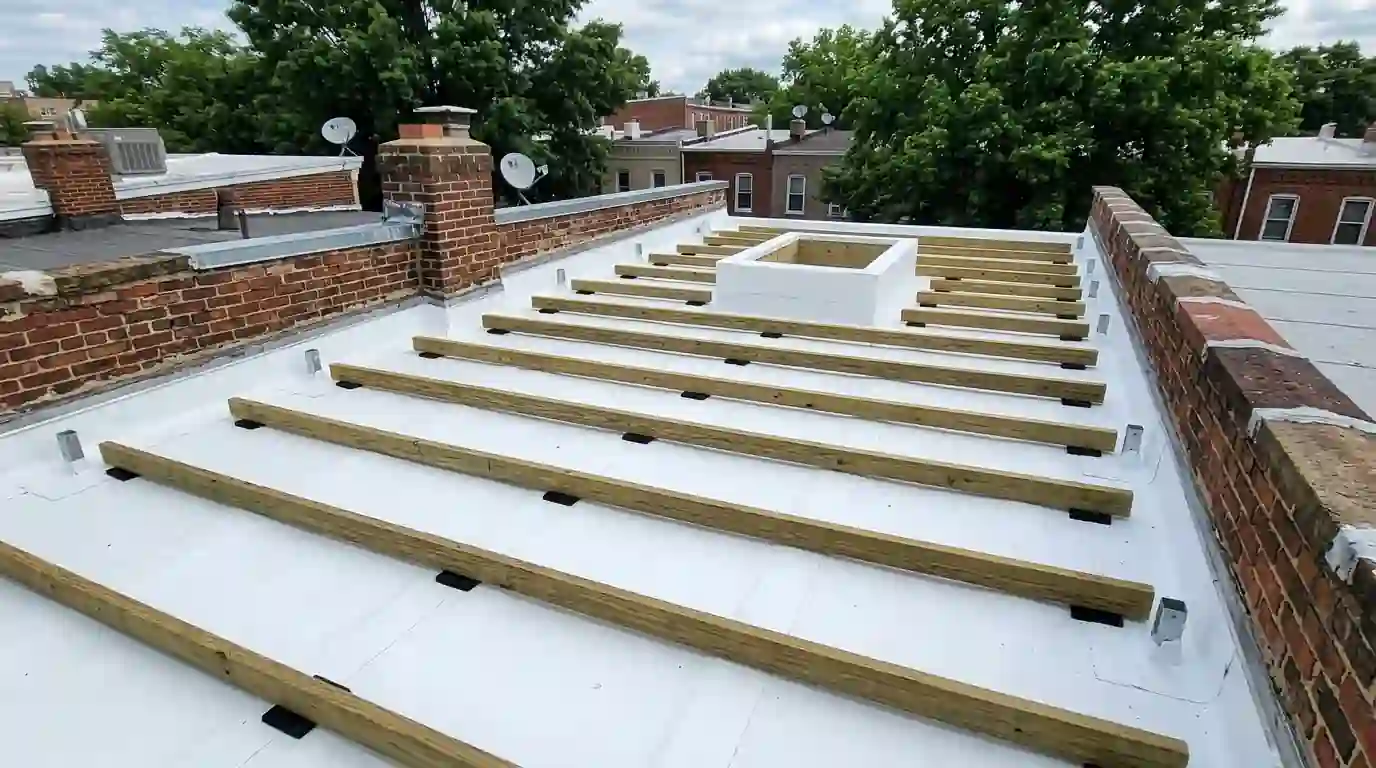
On most DC rowhouses, the shared wall between two houses rises a little above the roofs as a low parapet, or it stops at roof level and the two roofs simply meet over it. In both cases, two membranes have to be joined or separated by flashing along that line, and the brick below has to stay dry.
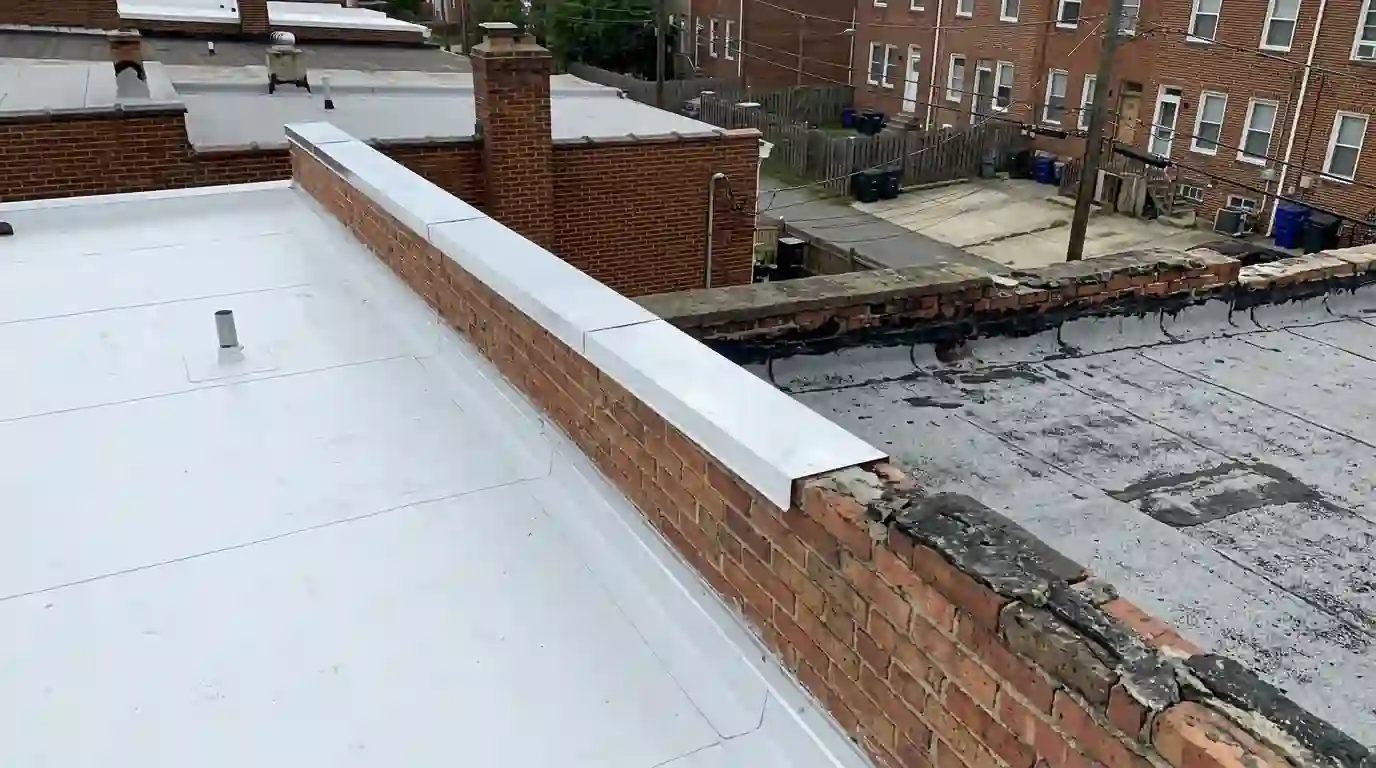
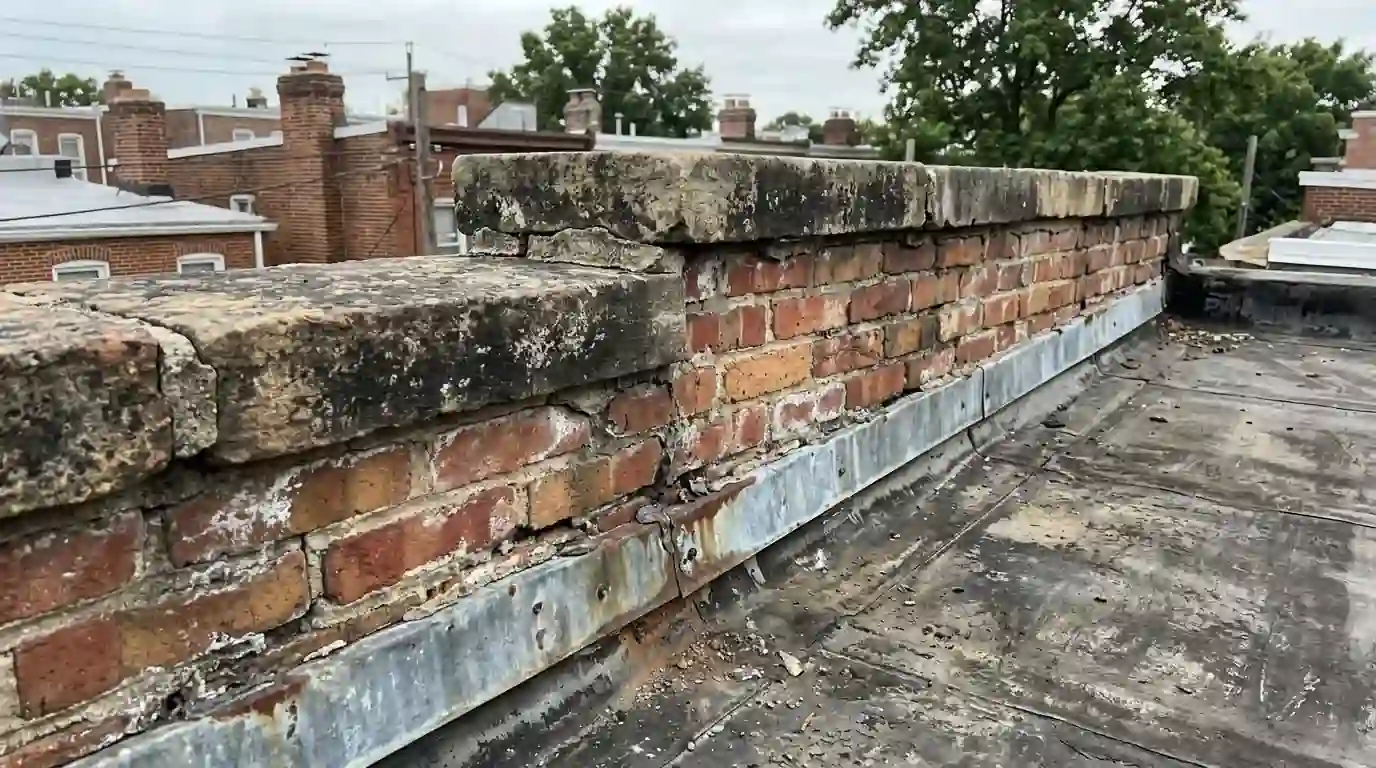
Older rows in Petworth, Eckington and Trinidad often have a parapet capped with terra cotta tiles, a brick rowlock course or galvanized metal. Each joint in that cap is a spot where water can slip in and run straight down into your wall, even when the membrane is in good shape.
Many of these walls also hide old chimney flues from coal stoves that were capped decades ago. A loose cap, a cracked crown or open joints in an abandoned flue let rain fall straight down inside the masonry, and the water can surface on either side of the wall, sometimes a floor below the roof.
The five spots where party wall leaks usually start
When we trace these leaks, the cause tends to fall into a short list. More than one is often at work, which is why a single tube of caulk rarely solves the problem for long.
Older repairs add to the confusion. Layers of roof cement troweled over the base flashing by past crews crack in the first hard freeze, then hold water against the brick like a sponge. Pulling that mastic off is usually the first step before anyone can see what's really failed.
- Open joints or missing pieces in the coping cap on top of the parapet
- Mortar washed out of the brick face above the flashing line
- Base flashing that has pulled away from the wall or was only tarred on
- A gap where your membrane stops and your neighbor's begins, with nothing joining them
- A shared scupper or downspout at the rear that backs up and spills over the wall
Reading the stain from inside
Where the stain sits on your wall gives clues. A streak that starts at the ceiling line and runs down suggests water entering at the roof edge. A damp patch that shows up a foot or two below the ceiling, and keeps spreading after the rain stops, often means water is wicking through the brick from a failed coping or open mortar joints above.
Watch the timing too. If the wall only gets wet during wind-driven storms from one direction, the problem is often the brick face or cap. If it gets wet in any steady rain, a seam or flashing gap along the roof is more likely.
Peeling paint, white crusty salt on plaster and a damp smell in the closet against that wall all point to long-term moisture. Take photos with a date in good light, because they help a roofer match what's happening inside to what they find above.
When the neighbor's roof is part of the problem
Rowhouse roofs get replaced one at a time. That means your new TPO may meet a neighbor's twenty-year-old modified bitumen or rubber, and the joint between them is often handled with tar and hope. When one roof is lower, or when one owner's parapet flashing sheds water onto the other side, leaks can bounce between houses for years.
The best fix carries a proper flashing up and over the party wall, or ties both membranes into a common cap with compatible materials. That usually means a short conversation with the neighbor and, ideally, access to their side. We're glad to explain the detail to both owners on the roof so nobody is guessing.
Sharing the cost of a new coping cap along the full length of the wall often makes sense, since both houses benefit. When a neighbor isn't ready, we can still flash your side correctly and leave a clean edge that their roofer can tie into later.
How we repair a leaking party wall the right way
We start by pulling off any loose coping and checking the brick beneath for loose units and washed-out mortar. Damaged brick gets reset and repointed with a mortar suited to old soft brick, not a hard modern mix that can crack the face.
Next, the membrane is run up the wall face to a proper height and terminated under a counterflashing or a termination bar sealed into a reglet cut. The top of the wall gets a new metal coping, usually prefinished aluminum or copper, with cleated joints and a slope that throws water toward the roof rather than toward your neighbor or the street. Our parapet wall and coping repair work covers this full sequence.
If the leak traces back to the rear, we clear and reflash the scupper and check that the leader head and downspout are big enough for a summer downpour. A blocked outlet can push water sideways under the base flashing, and the party wall gets blamed for it.
Rough cost ranges for party wall work
Sealing a short run of base flashing and repointing a few joints often comes in around $420-$1,260. A new metal coping cap with reflashed base along a full party wall commonly runs $2,180-$5,640, depending on wall length, height, brick condition and access from your side or the neighbor's.
Rebuilding the top courses of a loose parapet costs more and may need a mason working alongside the roofers. The real number comes from seeing the wall, testing the brick and checking how the two roofs meet.
Keeping the wall dry once it's fixed
A fixed party wall stays dry when the coping stays tight and the rear drain stays open. Have both checked each fall, and look along the top of the wall after big storms for lifted joints or missing pieces. Trees in the backyard drop more debris than people expect onto rowhouse roofs.
Ask any HVAC or cable installer to keep lines and brackets off the coping. Every screw driven into the cap is a new path for water.
If your house has a hidden gutter along the cornice, our post on box gutters on DC rowhouses explains how those connect to wall leaks too. For a stain that's spreading now, call (202) 771-7443 any time and we'll book a roof leak repair visit.