Mixed slate and shingle
Many houses kept slate in front and switched to asphalt in back, leaving a weak transition at hips and valleys.
Washington, DC neighborhoods
Shepherd Park fills the top corner of the District, from 16th Street to the Maryland line at Eastern Avenue, with detached brick colonials and Tudors built mostly between the 1920s and the 1950s. Plenty of those houses still carry slate on the front slopes and asphalt on the back, under chimneys as old as the houses.
Most Shepherd Park homes are brick colonials and Tudors with slate, asphalt shingle or a mix of both, under big oaks near Rock Creek Park. The usual work is slate valley and transition repair, chimney rebuilding above the roofline and shingle replacement on rear slopes. Slate repairs commonly run $590-$2,460, chimney work $1,280-$5,940 and a shingle reroof $13,700-$22,800.
On the flower-named streets west of 16th Street, like Holly and Juniper, the original slate often stayed on the street-facing slopes while an earlier owner put asphalt on the rear once the back slate wore out. Sometimes a dormer or a rear addition got shingles from day one. The roof works, but the joint where the two materials meet, usually at a hip or valley, leaks long before either surface does.
We rebuild those transitions with a proper metal valley or hip flashing that runs under the slate on one side and over an ice barrier beneath the shingles on the other. On the slate side, pieces come out and go back by hand on copper nails or hooks. It's careful work but not a huge job, and it usually ends a leak that has been smeared with roof cement for years.
If you'd rather have one material across the whole house, we can price new slate for the rear or a full shingle roof that settles the question. Both are fair choices, and the cost gap between them is wide.
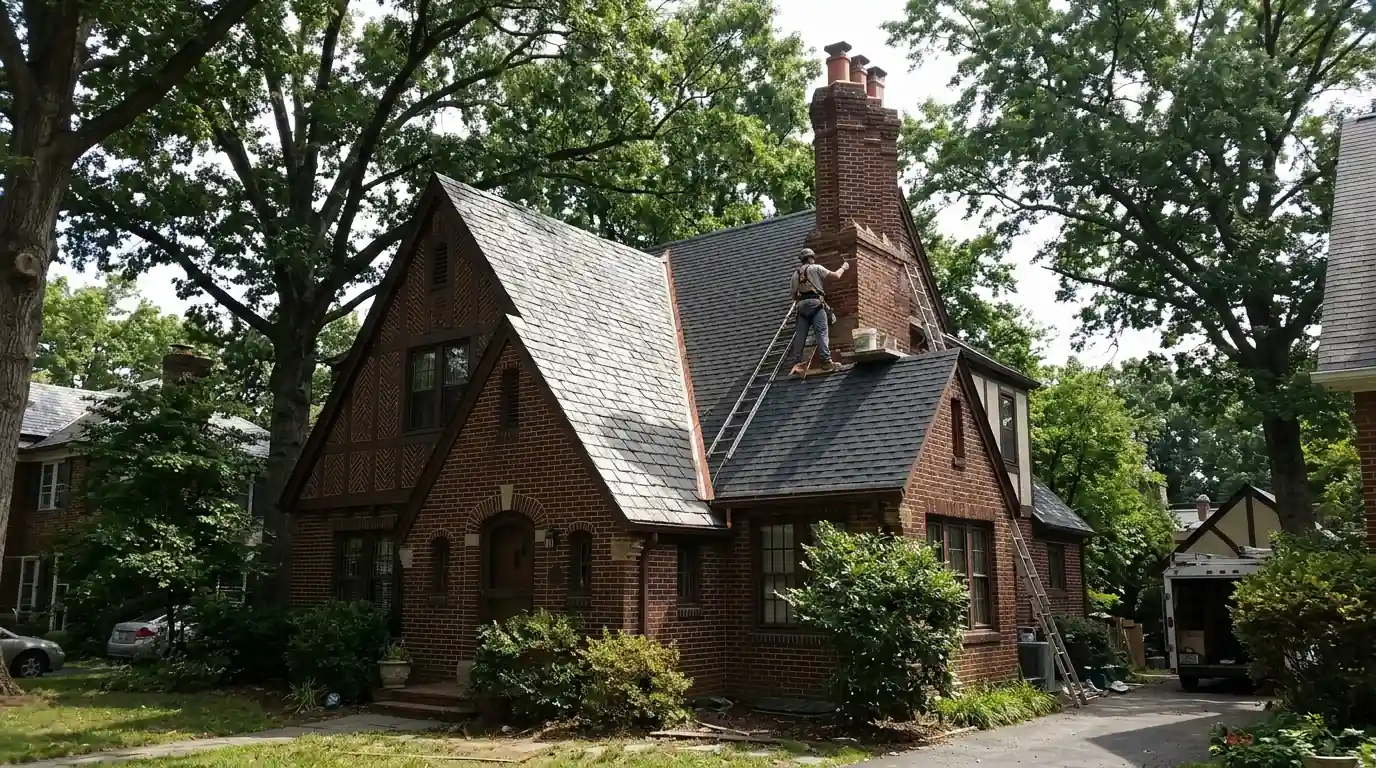
Houses here often have a broad brick chimney on the end wall and a second, narrower stack for the furnace. Both have been through many decades of freeze and thaw. Spalled brick, open mortar joints and cracked crowns let water soak into the masonry, and it shows up as a stain beside the chimney even when the flashing is fine.
We start at the top and work down. A cracked mortar crown gets replaced with a poured crown that overhangs the brick, loose courses get relaid and open joints get repointed. When the leak really is at the roof line, we cut a reglet, set new counter flashing and tie it to step flashing under the slate or shingles. The chimney repair page covers stacks that need rebuilding above the roof.
On a typical visit, we check these points:
The blocks near Rock Creek Park and the old Walter Reed campus sit under some of the biggest oaks in upper Northwest. Leaves and acorns fill gutters quickly, and a downspout that clogs at the elbow sends water over the front edge and into window wells. On houses with copper or galvanized half-rounds, we clean, flush and repitch the gutters before winter.
Overhanging limbs also scrape slate in the wind and drop debris that holds moisture in valleys. We point out branches worth trimming while we're on the roof, and our gutter cleaning visits include a look down every valley.
Shepherd Park is outside DC's designated historic districts, so repairs in kind need no preservation approval, and full replacements follow a normal DC Department of Buildings permit that we file. Lots are roomy by city standards, with driveways or rear alleys on many blocks, so a dumpster and a lift can usually sit off the street. On 16th Street itself, we time deliveries around rush hour and keep the sidewalk clear.
Homeowners on the Maryland side of Eastern Avenue sometimes ask whether we cross the line. We do, and the same roofers handle Silver Spring houses just north of the border.
Many houses kept slate in front and switched to asphalt in back, leaving a weak transition at hips and valleys.
Broad brick end chimneys and furnace stacks are nearing a century old and leak through crowns and mortar.
Steep cross gables and eyebrow dormers add short valleys where leaves pile up and hold water.
Lots near Rock Creek Park sit under mature oaks that clog gutters and keep north slopes damp.
Rear alleys or driveways on many blocks make it easier to stage a tear-off off the street.
Slate repair for Victorian mansards, turrets and steep DC roofs: broken slates replaced with copper hooks or nail-and-bib, plus valley and flashing rebuilds.
Slate Roof Repair detailsCracked crowns, missing caps, crumbling mortar and spalled brick above the roofline repaired, plus rebuilding or taking down unused rowhouse chimneys.
Chimney Repair detailsArchitectural shingle roofs for colonials, Cape Cods and split-levels, with ice barrier at eaves, new valley metal and balanced ridge venting.
Asphalt Shingle Roofing detailsWe trace roof leaks from the ceiling stain back to the real entry point, then fix that cause: seams, flashing, vent boots, skylights, parapets and drains.
Roof Leak Repair detailsHand-cleaned troughs, flushed downspouts and cleared conductor heads after the oak and poplar leaves come down, with hangers and seams checked on every run.
Gutter Cleaning detailsNatural slate replacement for Victorian mansards, turrets and steep roofs, with copper flashing, salvaged slate matching and historic district coordination.
Slate Roof Replacement detailsNot by itself. The weak spot is where the two meet. If that transition was built with a proper metal valley or hip flashing, the mix can last for years. If it was patched with roof cement, expect leaks there.
Water often gets in through a cracked crown, open mortar joints or porous brick above the roof, then runs down inside the masonry. We check the top of the stack before blaming the flashing.
No. Repairs in kind need no preservation approval, and a full replacement needs only a standard DC Department of Buildings permit, which we file.
Twice a year at minimum, once after most leaves drop in late November and again in spring. Houses right under oaks often need a third pass in early winter when the last leaves and acorns come down.
Call any hour. We answer 24/7 and tell you when a roofer can be at your house.