1920s and 1930s rows
Brick porch-front rowhouses with low-slope roofs behind short parapets fill most blocks.
Washington, DC neighborhoods
Trinidad's 1920s and 1930s brick rowhouses run in tidy rows between Florida Avenue NE and Mount Olivet Road, almost all with low-slope roofs behind short parapets. Many of those roofs are older than they should be and still hold up because someone kept recoating them.
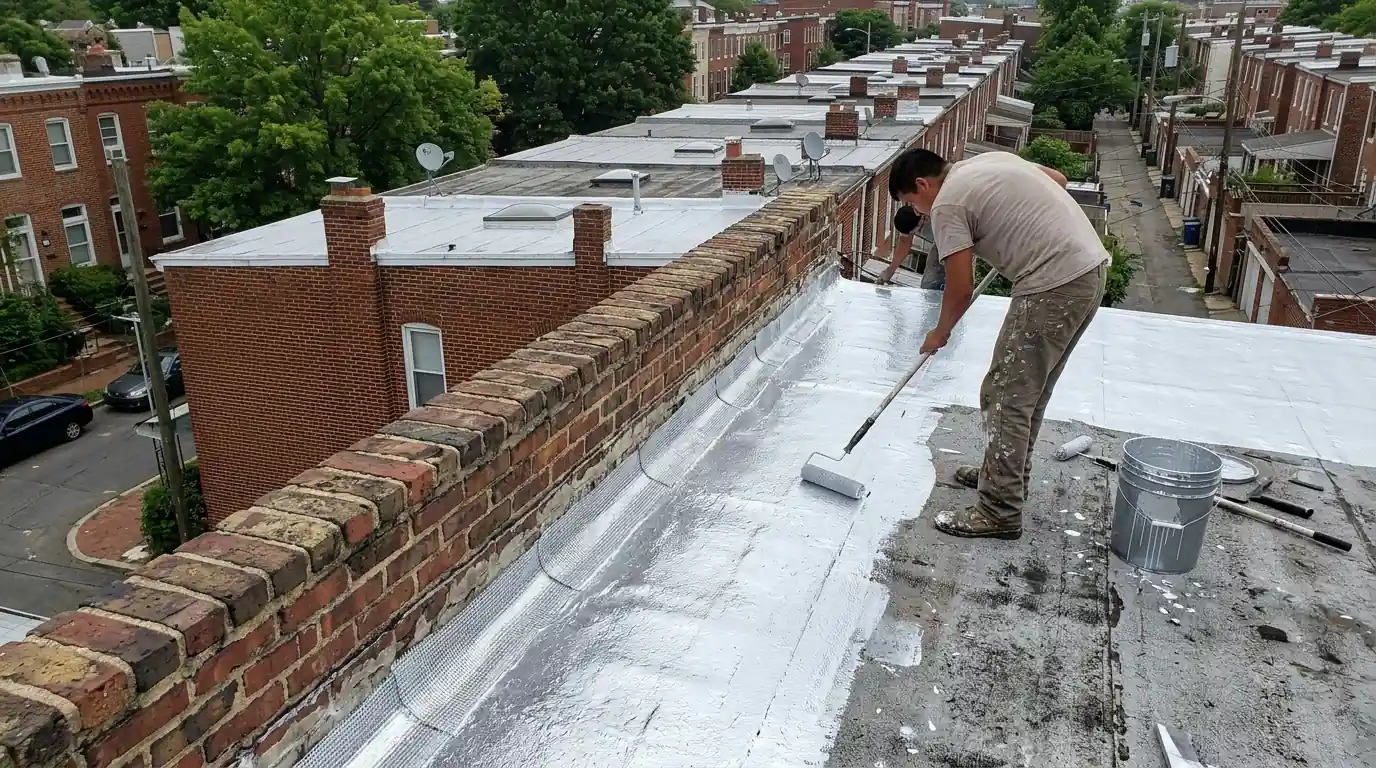
On a Trinidad rowhouse, a fresh roof coating can extend a sound flat roof by several years, but it cannot save one that is cracked through or holding wet insulation. Recoating with aluminum or white elastomeric typically runs $1,280-$3,160, including seam and flashing prep. When coating is no longer enough, replacement is usually $7,740-$13,480.
Silver aluminum coating has been the default on Trinidad roofs for decades. It reflects sun and protects the asphalt underneath from drying out. Applied over a membrane that is still flexible and dry, it works well and buys time cheaply.
The trouble starts when coating is used to cover a failing roof. We often find three or four coats over cracked roll roofing, with water sitting in the layers below. A coating seals the top but traps moisture underneath, and the deck rots out of sight. Before recoating, we cut a small core sample to make sure the layers are dry.
If the roof passes, we power-wash, reinforce open seams and flashing joints with fabric and mastic, and then apply the coating at the rate the maker specifies. White elastomeric coatings are another option and reflect more heat than silver. Our guide to what silver coating actually does explains the differences.
Most rowhouse roof failures here start small: a clogged scupper, a lifted seam at the party wall, a cracked spot around the plumbing vent. Catching those early is what separates a 25-year roof from a 12-year one.
We offer roof maintenance visits that cover each of the items below, with photos so you can see the roof without climbing up. Twice a year, in late spring and after leaf fall, is a good rhythm.
Soft spots underfoot, ponding that lingers for days, blisters that squish when pressed, and leaks that come back after each patch all point to a roof that needs a tear-off. At that point, coating money is better spent toward a new flat roof.
When we replace, DC energy rules usually push a reflective membrane, so the new roof will be white or light colored. We take the roof down to the deck, replace rotted boards, add insulation where possible and install TPO or modified bitumen with new flashing at every wall.
Because Trinidad rows were built in long matching runs, several neighbors on the same block often face the same decision within a few years. When two or three adjoining owners replace at once, the party wall seams become one continuous membrane instead of a patchwork, and staging in the alley is shared. We are glad to price adjoining houses together and walk each owner through their own section.
Modified bitumen in a white granulated cap is a common choice for owners who like the feel of a traditional rowhouse roof but need the reflective surface.
Most Trinidad blocks have rear alleys, which keeps our ladders and buckets off the narrow streets. Street parking fills quickly near Gallaudet University and the H Street corridor, so we bring coatings and roll goods early. Coating jobs usually take a day or two and need a dry forecast, so we schedule around rain and watch overnight temperatures in spring and fall.
Brick porch-front rowhouses with low-slope roofs behind short parapets fill most blocks.
Many roofs carry several coats of silver over old roll roofing, sometimes hiding wet layers.
Front porch roofs are separate low-slope surfaces that drain to the front gutter.
Most main roofs drain toward the alley through one scupper that clogs with leaves and debris.
Trinidad is not a designated historic district, so roof work uses a standard DOB permit.
Silver aluminum and white reflective coatings for DC low-slope roofs, applied over a cleaned, repaired surface to add years to a membrane that's still sound.
Roof Coating detailsSpring and fall roof visits that clear gutters and drains, reseal flashing and vents and catch small failures before they turn into ceiling stains.
Roof Maintenance detailsLow-slope roof repair for DC rowhouses and additions: modified bitumen, EPDM, TPO and coated roll roofing, plus ponding areas, curbs and parapet base flashing.
Flat Roof Repair detailsTear-off and new low-slope roofs for rowhouses and flats, with tapered insulation for ponding, new parapet flashing and reflective cool roof membranes.
Flat Roof Replacement detailsLeaking scuppers through rowhouse parapets, rusted conductor heads and clogged internal roof drains rebuilt so flat roofs empty fast after a storm.
Roof Drain and Scupper Repair detailsTwo-ply modified bitumen roofs with reflective granulated caps for rowhouses, porches and roofs that carry decks, condensers and steady foot traffic.
Modified Bitumen Roofing detailsSilver coatings typically need renewal every three to five years. White elastomerics can last longer. We check how the existing coat is holding up before suggesting a schedule.
Sometimes, if the leak is at a small seam or crack and the layers underneath are dry. If water is already trapped in the roof, coating over it makes things worse.
We cut a small core sample and look at the layers, then patch the hole. A moisture meter helps on larger roofs.
Yes, as long as it passes the same checks. Call (202) 771-7443 to schedule a look at both roofs.
Call any hour. We answer 24/7 and tell you when a roofer can be at your house.