Federal-era houses
Early nineteenth century brick houses with low-pitched metal roofs and dormers line the streets south of P Street.
Washington, DC neighborhoods
Georgetown's Federal and Victorian houses wear roofs that most of the city replaced long ago: painted terne metal, Buckingham slate, copper dormers and wood cornices. Keeping those materials working, and getting changes past the Old Georgetown Board, is most of what a roof job here involves.
Georgetown roof work starts with materials: standing seam metal, slate and copper are the norm on visible slopes, and the Old Georgetown Board reviews exterior changes through the Commission of Fine Arts. Repairs to tin seams or a few slates often run $640-$2,870. Replacing a visible metal roof in kind can reach $21,500-$38,900 on a typical rowhouse, depending on gauge, coating and dormers.
Georgetown is the one DC neighborhood where exterior work visible from a public street goes before the Old Georgetown Board, which advises the Commission of Fine Arts. A DOB permit alone is not enough for a front slope, a dormer or a new skylight that can be seen from the sidewalk. The board looks at material, profile, seam spacing and color, and it generally expects the original type to come back.
We plan around that from the first visit. We measure seam spacing on the existing metal, record the slate size and exposure and photograph every elevation that shows from Prospect, N or Dumbarton Streets. That record goes into the submission, along with product data for the replacement material, so the board sees a like-for-like job.
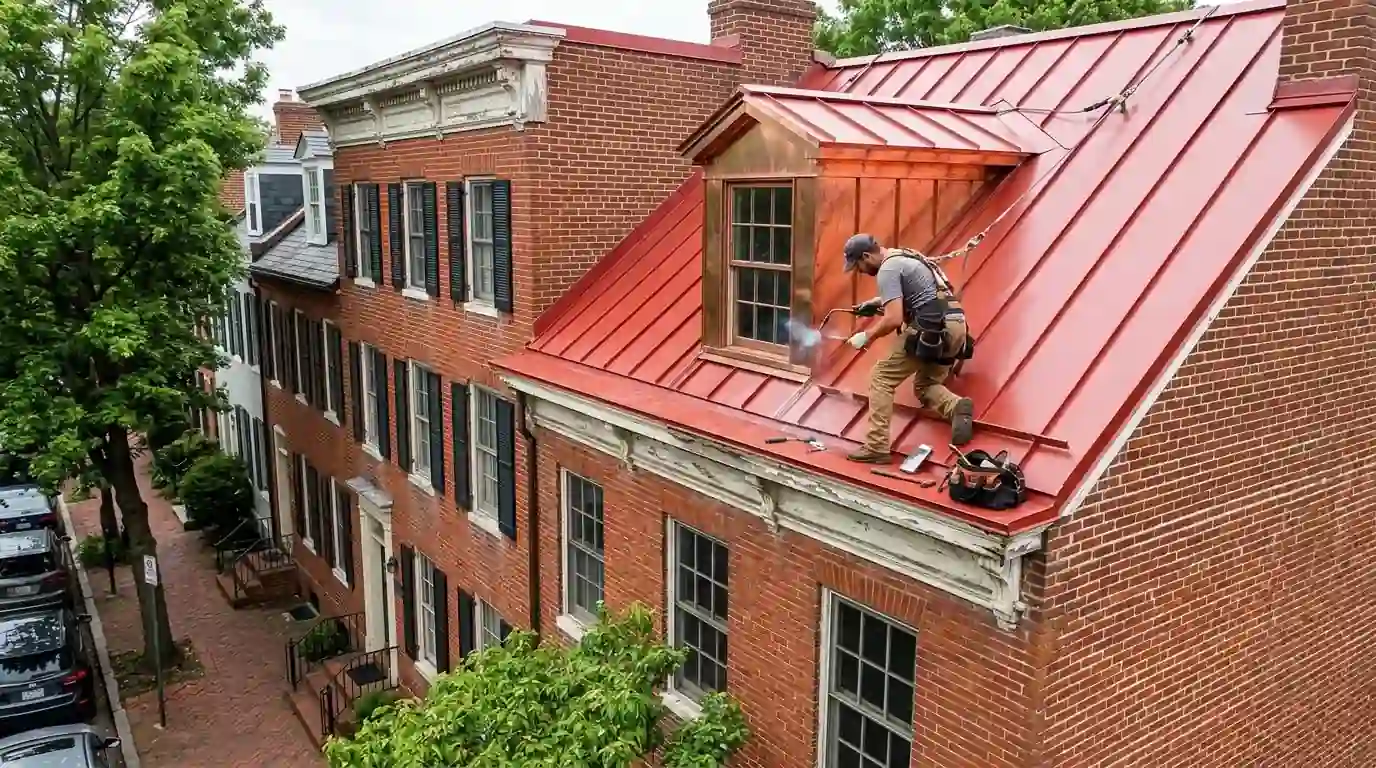
Many Federal houses near M Street and along the canal have shallow-pitched roofs of flat-lock or standing seam terne. When those roofs are painted every several years, they can last generations. When they are neglected, rust starts at the seams and around chimney bases, and pinholes let water into the attic.
Small rust spots get wire-brushed, primed and repainted with a metal roof coating. Open seams are resoldered. When the pan itself has thinned, we replace sections with new terne-coated stainless or painted steel, matching the seam height. Our metal roof repair page explains the soldering and patch methods we use.
A full new roof is usually standing seam metal formed on site to the original panel width, with seams locked by hand at the eaves where a machine seamer cannot reach.
Victorian houses along Q Street and up toward Georgetown University often have slate on the main slopes and copper on dormer cheeks, bay roofs and valleys. The slate itself can outlast several owners; the copper valleys, nails and flashings fail first. We replace slipped slates with copper hooks and rebuild failed valleys in 16-ounce copper.
Wood cornices and built-in gutters are the other sore spot. Water that overflows a clogged box gutter rots the cornice from inside, and the paint looks fine until the wood gives way.
When we open a cornice, we replace rotted blocking and fascia with matching profiles milled from clear lumber, then reline the gutter trough in copper with soldered seams and an expansion joint at each end. A box gutter relining done this way can go decades without attention beyond cleaning. We prime every cut end of the new wood before it goes back so the paint holds.
Narrow brick sidewalks, tight parking and few alleys make staging hard. We usually need a DDOT public space permit for a small hoist or scaffold, and we schedule deliveries for early morning before M Street traffic builds. Material comes up by hand or rope hoist in small loads, and debris goes down in bags rather than a chute.
Early nineteenth century brick houses with low-pitched metal roofs and dormers line the streets south of P Street.
Painted metal roofs are common and need regular coating and seam soldering to stay tight.
Victorian houses carry slate with copper valleys and flashings that wear out long before the stone does.
Built-in gutters behind wood cornices hide leaks that rot the trim from the inside.
Visible exterior roof changes are reviewed for material and profile before work can start.
Standing seam steel and aluminum roofs for porches, bays, low-pitch additions and whole homes, with concealed clips and site-formed panels.
Standing Seam Metal Roofing detailsSoldered repairs, repainting and partial replacement for tin, terne, standing seam and copper roofs on DC bay fronts, porches, turrets and mansards.
Metal Roof Repair detailsSlate repair for Victorian mansards, turrets and steep DC roofs: broken slates replaced with copper hooks or nail-and-bib, plus valley and flashing rebuilds.
Slate Roof Repair detailsSoldered and standing seam copper for bay roofs, turrets, dormers, cupolas and entry roofs, plus copper valleys, caps and built-in gutter liners.
Copper Roofing detailsRelining and rebuilding the built-in box gutters hidden behind DC rowhouse cornices, plus the rotted wood, outlet tubes and downspouts around them.
Box Gutter Repair detailsNew step, apron, counter and cricket flashing around brick chimneys on slate, shingle and flat roofs, cut into mortar joints instead of glued to the face.
Chimney Flashing Repair detailsWork visible from a public street usually does, and that includes front slopes, dormers and skylights. Rear slopes hidden from view may not, but we confirm with the preservation staff for the specific address before work begins.
On a visible slope in Georgetown, that change is unlikely to be approved, and it would change the look of a Federal house. Standing seam metal formed to match the original is the usual path.
Every five to eight years is typical for terne, sooner on south-facing slopes. Coating before rust breaks through is far cheaper than replacing pans.
We prepare the drawings, photos and material data, file the permit and attend to staff questions. Call (202) 771-7443 and we will walk the roof first.
Call any hour. We answer 24/7 and tell you when a roofer can be at your house.