Cupped or curled tabs
Edges lifting or bowling upward mean the asphalt has dried out and wind can now get under them.
Roof replacement and new roofs
Shingles that curl at the edges, shed grit into the gutters or blow off in every summer storm are telling you the roof has run out of years.
Materials we install
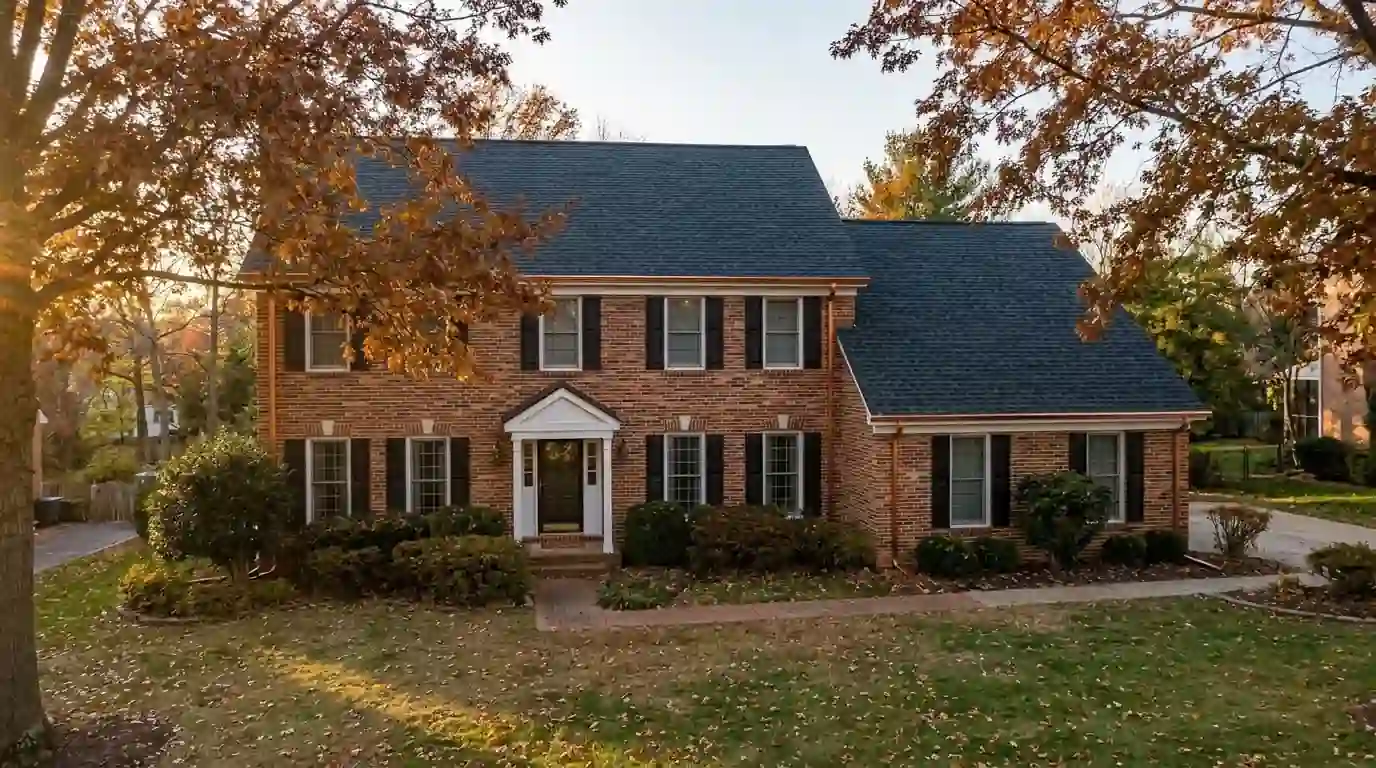
Asphalt shingle roofing is the standard covering for pitched homes around Washington: fiberglass-mat shingles laid over underlayment on a wood deck. Replace them when tabs curl, crack or go bald, or when leaks show up at valleys and chimneys. A typical tear-off and new architectural shingle roof on a DC-area colonial or Cape Cod runs about $11,800-$29,600, depending on size, pitch and deck condition.
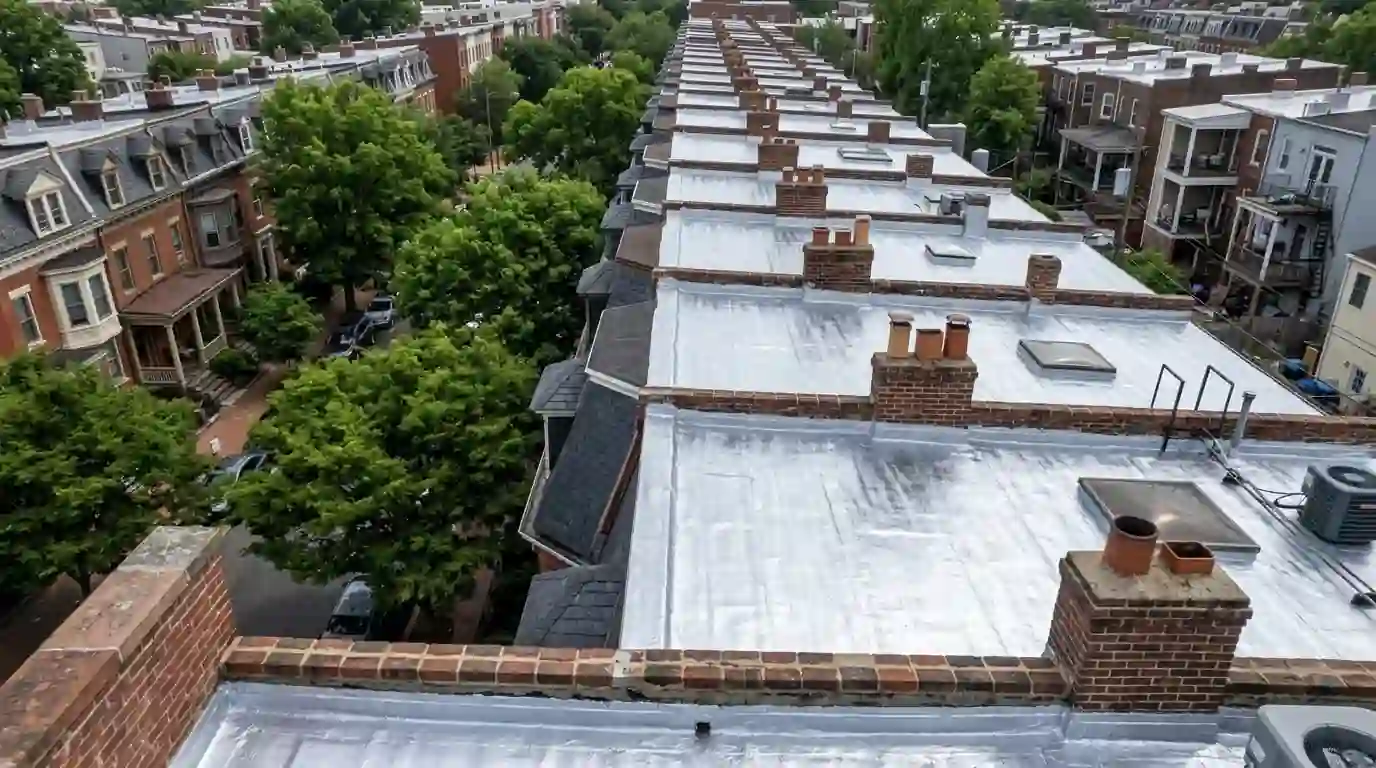
Shingles belong on roofs with real pitch, roughly 4 in 12 or steeper. That covers the detached colonials of Chevy Chase DC and Tenleytown, the Cape Cods across Brookland and Woodridge, and most of the split-levels and ramblers in Silver Spring, Annandale and Springfield. They do not belong on a flat rowhouse roof, no matter how cheap the bundle looks.
Plenty of DC homes mix the two. A Wardman-era porch-front rowhouse may carry a low-slope main roof behind the parapet and a short shingled front slope over the porch. We treat those as two jobs that share one tie-in, with a membrane on the flat section and shingles only where the pitch can shed water.
Shingles also work where historic rules allow them. Inside a historic district, swapping slate for asphalt on a visible slope usually needs Historic Preservation Office approval, and on many Victorian facades the answer is no. In those cases we point owners toward synthetic slate or a slate repair plan instead.
Most early shingle failures we see trace back to the layers beneath. We strip the old roof to bare sheathing, swap any delaminated plywood or soft planks, and nail the deck down again where it has lifted. Older homes in Takoma and Cleveland Park often have 1x6 board decks with gaps, which need careful nailing or an overlay of new sheathing.
Next comes self-adhered ice and water membrane along the eaves, in every valley and around chimneys and skylights. Washington does not get deep snow most winters, but a few freeze and thaw cycles a year are enough to back meltwater under the bottom courses. Synthetic underlayment covers the rest of the deck, lapped and fastened to the manufacturer's spacing.
Metal finishes the system. New drip edge goes on every eave and rake, valleys get open metal or a tight closed-cut detail, and every chimney gets new step flashing woven into the courses with counter flashing set into a fresh mortar joint. Reusing rusty old step flashing is a common shortcut, and we don't take it.
Architectural laminated shingles are what we install on nearly every job. They carry better wind ratings than old three-tab strips and hide minor deck waviness on older houses. We install lines such as GAF Timberline HDZ, CertainTeed Landmark and Owens Corning Duration, picking color and profile to suit the house rather than the latest catalog trend.
Heavy shade under mature oaks and tulip poplars, common in upper Northwest and Takoma Park MD, invites algae streaks and moss on north slopes. Shingles with copper-bearing algae resistant granules slow the black streaking. Lighter colors also run cooler under July sun, which helps a bit with attic temperature.
Ventilation decides how long any shingle lasts. Many 1940s Capes have little or no soffit intake, so attics bake all summer and sweat all winter. We cut continuous ridge vent and add intake at the eaves when the framing allows, and our attic ventilation work covers houses with knee walls or finished half-stories.
Most shingle damage around Washington comes from short, violent summer storms and the occasional derecho rather than long winter blizzards. Gusts lift the leading edge of a course, break the sealant strip and fold the tab back. Once a tab has creased, it rarely reseals, and the next storm usually takes it.
We nail to the manufacturer's high wind pattern on every roof, with six nails per shingle where the spec allows, and we keep fasteners inside the narrow nailing zone. Starter strips with factory adhesive go along every eave and rake, which is where wind uplift begins. Those small steps cost little during installation and save a lot of tarping later.
Hail is less common here, but it does hit parts of Montgomery and Fairfax counties every few years. If your roof took a beating, our storm damage team can document the bruising before you decide between repair and a claim-funded replacement.
Shingle tear-offs throw a lot of debris. We set tarps over foundation beds, lean plywood against windows near the drop zone, and park the dumpster or trailer where it won't crack a driveway. On tight DC lots the dumpster often goes in the alley or the street, and the public space permit for that is part of our job.
Nails are the real hazard. We run rolling magnets across the lawn, driveway and alley at the end of each day and again at final cleanup. Gutters get flushed of loose granules and the odd shingle scrap so the first rain doesn't overflow onto the porch.
When the roof is done, we hand you photos of the deck repairs, the underlayment at the eaves and the chimney flashing before the shingles covered them. That record is useful for your insurer and for any buyer's inspector down the road.
Edges lifting or bowling upward mean the asphalt has dried out and wind can now get under them.
Areas where the colored granules are gone leave black asphalt cooking in the sun, often on the south and west slopes first.
Shingles torn off after a thunderstorm or cracked across the middle let rain reach the underlayment.
Stains on ceilings below where two slopes meet usually point to worn shingles or rotted valley metal.
Algae streaks are mostly cosmetic, but thick moss holds water against the mat and lifts the courses.
A dip along the ridge or between rafters can mean rotted sheathing that needs replacing during tear-off.
We measure every slope, check the attic for rot and vent problems, and note chimney and skylight details.
We bring samples and talk color, profile and algae resistance for your lot's shade and exposure.
Old shingles come off down to the sheathing, and soft or delaminated boards are replaced.
Ice barrier, synthetic underlayment, drip edge, valley metal and new step flashing are installed.
Courses go on to the nailing line, followed by cut ridge vent and matching ridge cap.
The yard and driveway get swept for nails, gutters are flushed, and you receive the job photos.
Shingle roofs are priced per square, meaning 100 square feet of roof, plus extras for deck repair and flashing. Ranges below reflect 2026 local pricing.
| Job | Typical range |
|---|---|
| Rambler or Cape Cod, up to 18 squares | $11,800-$19,700 |
| Two-story colonial, 22 to 30 squares | $16,400-$29,600 |
| Short porch or front slope on a rowhouse | $2,960-$6,850 |
| Plywood deck replacement, per sheet | $118-$164 |
| Chimney reflashing during the reroof | $585-$1,370 |
Steep pitch, multiple dormers, extra layers to strip, skylights and limited dumpster access raise the price. A single-layer simple gable with a sound deck lands near the bottom of each range.
Expect roughly 22 to 30 years on a well ventilated roof. Hot attics, heavy shade and constant tree litter shorten that. South-facing slopes usually wear first.
We rarely recommend them now. Three-tab strips are thinner, carry lower wind ratings and are being phased out by most makers. Architectural shingles cost a little more and hold up better through summer gusts.
Not on a true flat roof. Shingles shed water by gravity and need at least about 2 in 12 with special underlayment, and 4 in 12 is better. Rowhouse flat roofs need a membrane such as TPO, EPDM or modified bitumen.
On a slope visible from the street, often not. The Historic Preservation Office generally wants slate kept or matched on contributing buildings in places like Capitol Hill or Mount Pleasant. Rear slopes hidden from view sometimes get more flexibility, so we check before quoting.
Lighter grays, weathered woods and tans absorb less heat than charcoal or black. The difference is modest unless the attic is also properly vented. Ridge vent with real soffit intake does more for attic temperature than color alone.
These are the places we drive to most for this work. We cover all 45 areas on our service area list.
Full tear-off and new roof systems for DC rowhouses, Victorians and suburban colonials, from low-slope membranes to shingle, slate and metal.
Roof Replacement detailsAttic and roof cavity ventilation for DC rowhouses and suburban homes: ridge and soffit vents, baffles, bath fan ducting and fixes for winter condensation.
Roof and Attic Ventilation detailsComposite slate tiles that give colonials, Tudors and non-contributing homes a slate look at a fraction of the weight, with copper or steel flashing.
Synthetic Slate Roofing detailsNew step, apron, counter and cricket flashing around brick chimneys on slate, shingle and flat roofs, cut into mortar joints instead of glued to the face.
Chimney Flashing Repair detailsCall and a roofer will answer, any hour of any day. We stop the leak first and fix it properly once the roof is dry.