Paint peeling on the trim
Bubbling or flaking paint along the roof edge is often the first sign that water is soaking the wood beneath.
Gutters, trim and commercial
Soft, peeling boards behind the gutter and gaps in the soffit where squirrels slip into the attic are signs that water has been getting into the roof edge for a while. Catching that rot early keeps it from spreading into the rafter tails and the roof deck.
Materials we install
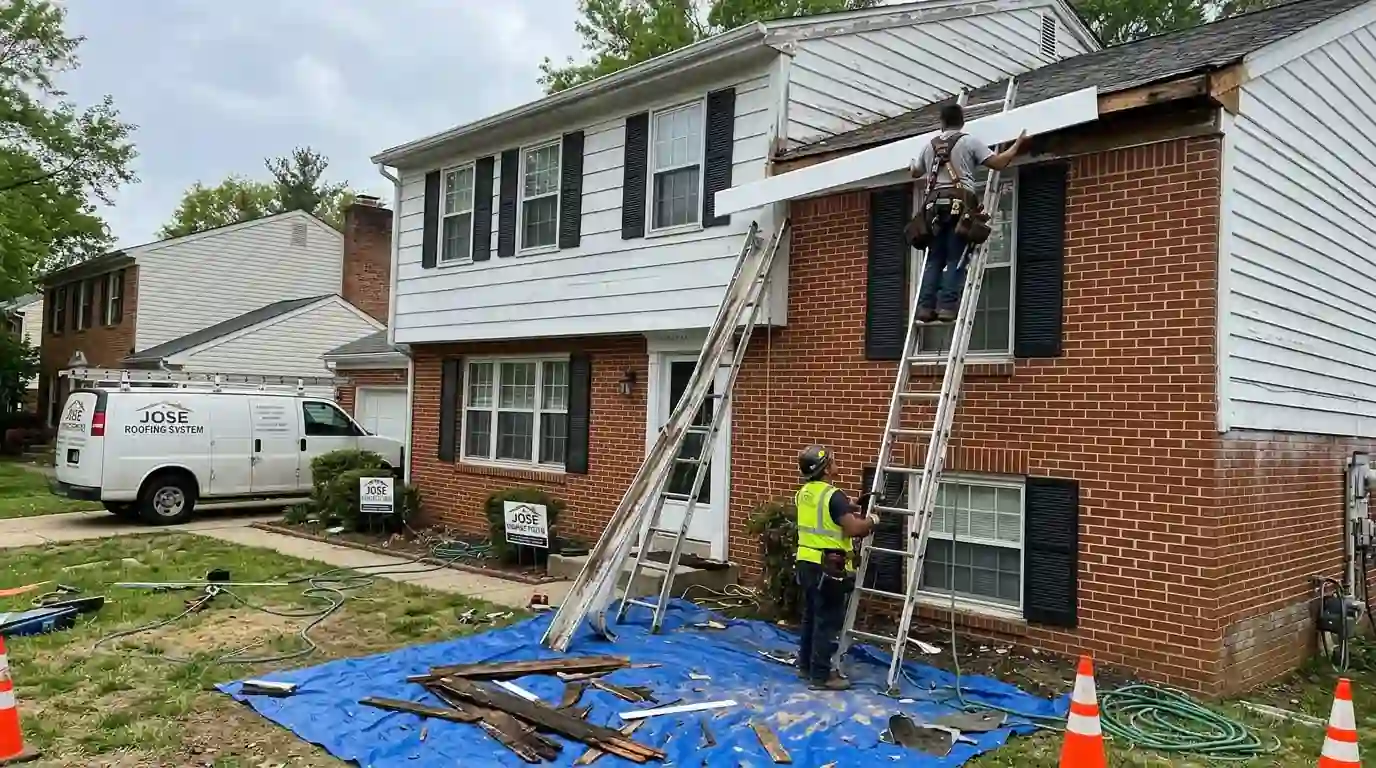
Fascia is the vertical trim board at the roof edge that the gutter hangs on; soffit is the underside of the overhang. Repair means cutting out rotted or damaged sections, fixing any decayed rafter tails, installing new boards and sealing or venting the soffit. Around Washington, DC, typical repairs run $385-$1,860 for a few sections and more for a full eave, depending on height and hidden rot.
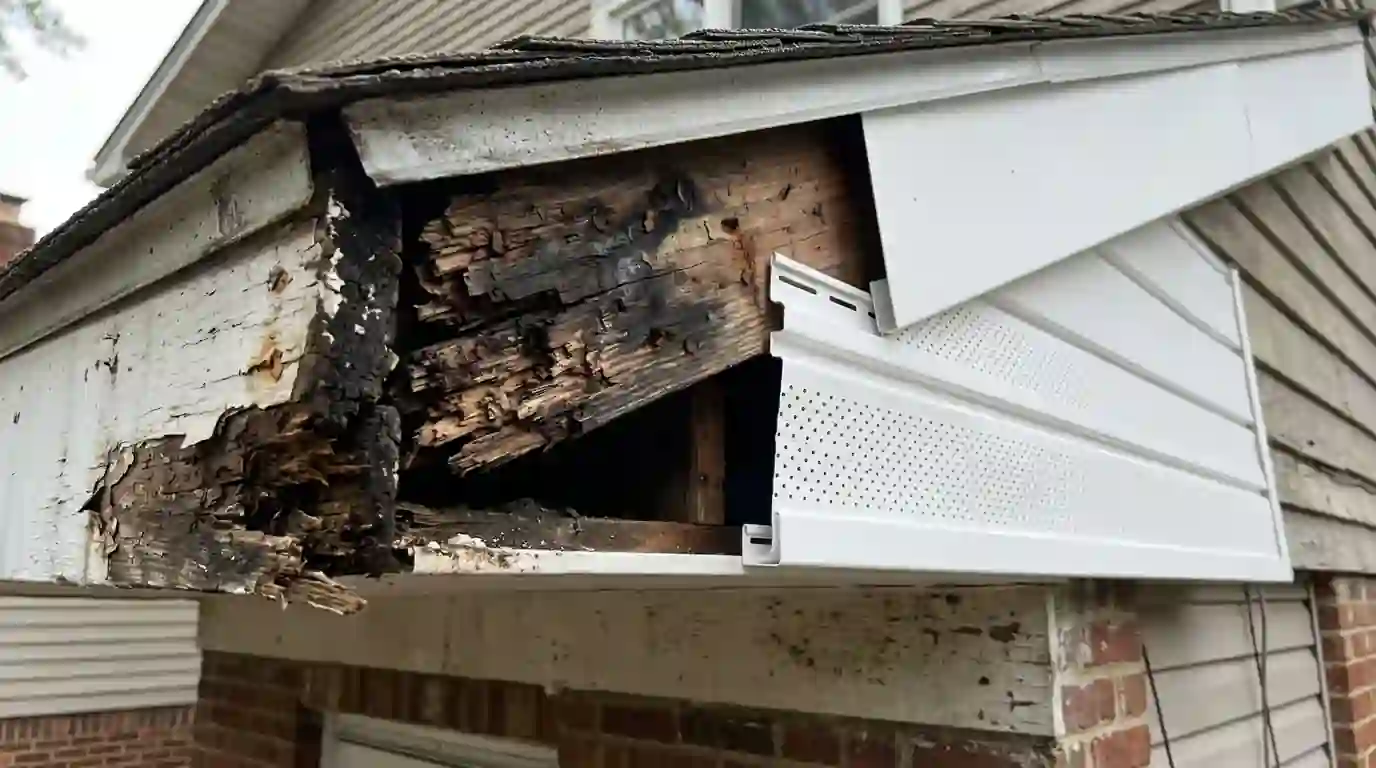
Most fascia rot we cut out starts with water getting behind the gutter. Missing drip edge, a gutter hung too low or overflow from clogged troughs keeps the top of the board wet for days after every storm. Painted pine and fir fascia on 1940s and 1950s colonials around Arlington and Silver Spring holds up for decades until the paint cracks, then it soaks up water like a sponge.
Soffits suffer differently. Plywood and beadboard soffits on older homes delaminate and sag once water reaches them from above, and the gaps that open at the joints are an open door for squirrels, starlings and bats. In wooded parts of upper Northwest and Montgomery County, we find chewed entry holes at the soffit corners more often than anywhere else on the house.
On rowhouses, the front cornice is usually a decorative wood or pressed metal piece, and the eave trim is limited to the porch roof and rear additions. Those porch fascias rot quickly where the gutter outlet sits, because one spot carries all the water from the porch roof.
The visible board is only part of the story. We probe the fascia with an awl every couple of feet, then pull a section of gutter if needed to look at the top edge and the rafter tails behind it. Rafter tails that crumble at the ends need to be sistered or capped before new fascia can be fastened.
From the attic, we check whether the roof deck along the eave is stained or soft and whether insulation is pushed tight into the soffit, blocking airflow. Blocked soffit vents trap warm, moist air in the attic, which feeds condensation and, in winter, ice at the eaves. If we see that, we'll talk about attic ventilation as part of the fix.
You'll get a quote that separates the board replacement from any rafter tail or decking repair, so you know what's routine and what came from water sitting there for years.
Cellular PVC trim boards don't rot, take paint well and hold screws firmly. They're our usual choice for fascia on suburban homes and rear additions, especially behind gutters. PVC moves more with heat than wood, so we leave small gaps at the joints and seal them with a flexible adhesive rather than butting boards tight.
Primed, back-sealed wood still makes sense on historic facades where the profile has to match, and in historic districts such as Mount Pleasant, Cleveland Park or Capitol Hill where visible trim changes may need sign-off from the Historic Preservation Office. We prime all six sides, including cut ends, before the board goes up.
Aluminum coil wrap over sound wood is a common low-maintenance finish. It works only if the wood underneath is dry and solid; wrapping rotted fascia hides the problem until the gutter falls off. We bend the wrap on a brake on site so it fits the board size exactly.
When we rebuild a soffit we install continuous vented panels or a strip vent wherever the attic needs intake air, and solid panels where it doesn't. Baffles go in at the rafter bays so insulation can't block the vent. That small detail helps the roof shed heat in summer and cuts condensation in winter.
If animals are already in the attic, they need to be out before we close the holes. We don't trap or remove animals ourselves; a wildlife control company handles that, and we come back to seal the entry points with metal flashing behind the trim. Closing a hole with a squirrel still inside just creates a new hole the next morning.
Old beadboard soffits on porches can often be saved. We replace only the rotted boards, match the bead profile and repaint, which keeps the look of a Takoma or Brookland porch intact.
New fascia behind a failing gutter will rot again. Every repair includes a look at the gutter pitch, the hangers and the drip edge. We add drip edge or a gutter apron under the first course of shingles where it's missing, so roof water lands in the gutter instead of running behind it. If the gutters themselves are worn out, it's cheaper to replace them while the fascia is open; see gutter installation for that work.
Roof edges where shingles hang too far past the board, or stop short of it, also feed rot. We trim or extend the edge detail as part of the repair. For an older roof with several problems at the eave, a full roof inspection helps decide whether to fix the edge or plan a replacement. Ring (202) 771-7443 and we'll come probe the trim with you.
Bubbling or flaking paint along the roof edge is often the first sign that water is soaking the wood beneath.
If a screwdriver sinks into the fascia, the wood has lost strength and gutter hangers won't hold.
A gutter pulling away from the house is frequently a fascia problem rather than a gutter problem.
Soffit panels that droop between supports have usually been wetted from above or lost fasteners.
Round openings at soffit corners or gable returns are typical squirrel and bird entry points.
Noise in the attic at dawn or dusk means animals have found a way in, often through the soffit.
Dark staining under the eave shows water running down the face of the house from behind the gutter.
We test the trim along every eave and mark each soft section, then check the attic side.
Gutters come down where needed, and rotted fascia and soffit are cut back to sound wood.
Decayed rafter ends are sistered and soft edge decking is replaced before new trim goes on.
PVC or primed wood fascia is fastened with stainless screws, and soffit panels are vented where needed.
Joints are sealed, drip edge or gutter apron is added and animal gaps are lined with metal.
Gutters go back up on screw hangers with correct pitch, and wood trim is painted to finish.
These are typical 2026 ranges for homes around Washington, including removal and disposal of the old material.
| Job | Typical range |
|---|---|
| Replace one to three fascia sections | $385-$945 |
| Full eave fascia replacement, single side | $1,165-$2,480 |
| Soffit panel repair with vents, per section | $245-$615 |
| Rafter tail sistering, per tail | $95-$215 |
| Remove and rehang gutter during repair, per run | $165-$390 |
Hidden rafter tail rot, height above grade, matching historic profiles and paint work all change the price. We confirm the figure once the gutter is off and we can see how far the damage runs.
Only if the wood underneath is still dry and solid. Wrapping over rot seals the moisture in, the board keeps decaying and the gutter hangers eventually pull out. We replace soft sections first and wrap after that if you want the low-maintenance finish.
Squirrels chew at soft wood and loose panel edges, and gable corners are their favorite spots. Once animals are out, we replace damaged trim and back the weak points with metal flashing so they can't chew through again.
Adding intake vents at the soffit lets cooler air enter low and push hot, moist air out through ridge or roof vents. It usually lowers attic temperature in summer and reduces winter condensation, as long as the exhaust side is in place.
Visible trim on a front facade in a historic district may go through the Historic Preservation Office. Painted wood that matches the original profile is the safe route there. Rear trim that isn't visible from the street usually has more freedom.
A few damaged sections usually take one day, including taking the gutter off and putting it back. Full eaves with rafter tail work can run two to three days, and painted wood needs dry weather for the finish coat.
These are the places we drive to most for this work. We cover all 45 areas on our service area list.
Seamless gutters formed on site and sized for DC rowhouse rear roofs and tree-heavy lots, with downspouts routed where the water can actually go.
Gutter Installation detailsLeaking seams, sagging runs, crushed downspouts and clogged alley tie-ins fixed on the spot, so you keep sound gutters instead of replacing them early.
Gutter Repair detailsAttic and roof cavity ventilation for DC rowhouses and suburban homes: ridge and soffit vents, baffles, bath fan ducting and fixes for winter condensation.
Roof and Attic Ventilation detailsTargeted fixes for open seams, slipped slate, lifted shingles and failed flashing on DC rowhouses, porch roofs and detached homes, sized to the actual damage.
Roof Repair detailsCall and a roofer will answer, any hour of any day. We stop the leak first and fix it properly once the roof is dry.