Inspector flags the roof
A home inspection note saying the roof needs a roofer's evaluation is the most common trigger.
Gutters, trim and commercial
A buyer's inspector flags the roof, the lender asks for a letter or the insurer wants to know how old it is, and suddenly a closing date depends on a roofer's word. A roof certification gives everyone at the table a clear, written answer.
Materials we install
A roof certification is a written statement, after a hands-on inspection, that the roof shows no active leaks and has a stated amount of remaining service life. Sellers, buyers, lenders and insurers request one during home sales and refinancing. If repairs are needed first, we list and price them. Around DC, a certification visit typically costs $285-$565, plus any repairs required before the letter is issued.
A home inspection note saying the roof needs a roofer's evaluation is the most common trigger.
FHA, VA and some conventional loans may ask for written proof of a few years of roof life.
Some carriers won't bind a policy on an older roof without a condition letter.
Sellers of houses with roofs past 15 years can head off buyer worries with a recent letter.
Visible past leak marks invite questions that a roofer's written answer settles quickly.
When nobody knows when the roof was done, a certification establishes a baseline.
Most requests arrive in one of three ways. A buyer's home inspector writes that the roof is near the end of its life or should be evaluated by a roofer. A lender, often on an FHA or VA loan, asks for proof the roof has a few years of life left. Or the buyer's insurer wants the roof's age and condition before it will write the policy.
Sellers sometimes get ahead of it and order a certification before listing. On a 1920s rowhouse in Petworth or a 1950s colonial in Silver Spring, a buyer's first worry is the roof, and having a recent letter with photos answers that before it becomes a negotiation point.
Timelines are short in a sale. We try to schedule certification visits within a few business days and turn the letter around quickly once any required repairs are done.
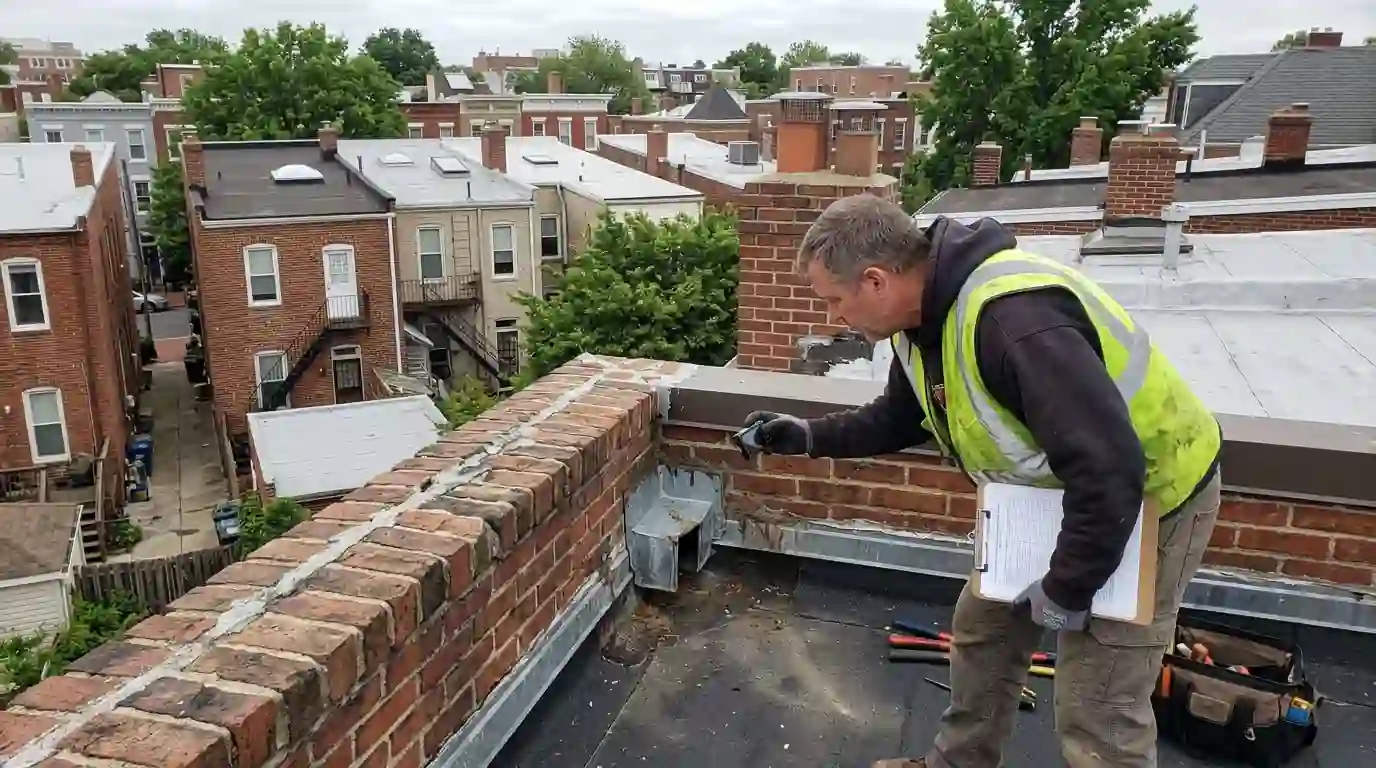
We get on the roof. A certification based on binoculars from the sidewalk isn't worth much, and we won't sign one. On flat roofs we walk the full surface, probe seams, check every penetration and outlet and look for soft spots that suggest wet insulation. On pitched roofs we check the covering, valleys, flashing, vents and the condition of the deck from the attic.
Inside, we look at the top-floor ceilings and the attic or roof cavity where we can reach it. Old stains, fresh stains and painted-over stains all tell part of the story. If a seller has recently painted a ceiling near a chimney, we'll look harder at that chimney flashing.
We also note anything outside the roof covering that affects it: rotted fascia, clogged gutters, a failing parapet coping or an abandoned chimney with no cap. Those don't always block a certification, but the buyer deserves to know about them.
Layers matter more than most sellers expect. A rowhouse roof with three layers of old built-up roofing under the current membrane is heavier, harder to repair and will need a full tear-off at the next replacement. We cut a small test opening where needed, patch it the same day and record the layer count in the letter.
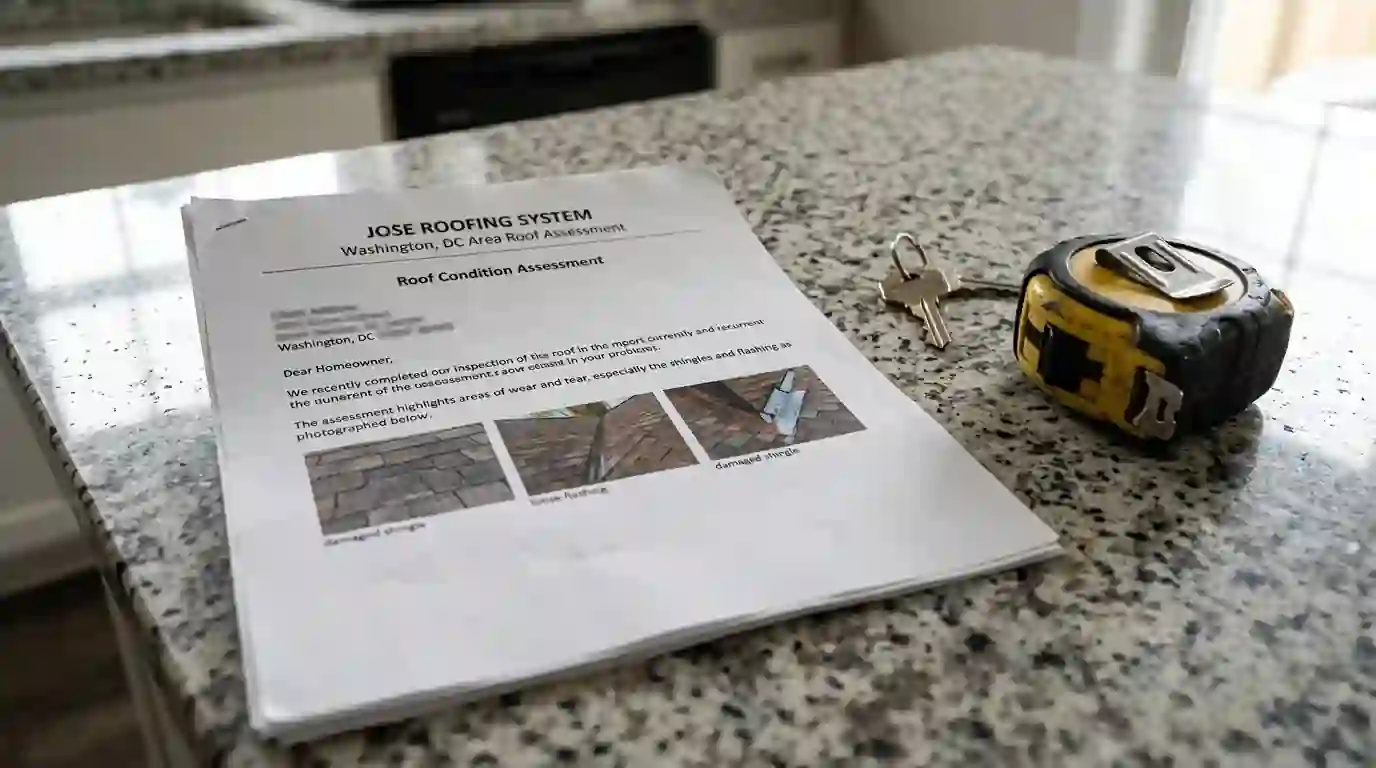
The letter states the property address, the date of inspection, the roof type and approximate age, the number of layers where we can determine it, the condition we found and our estimate of remaining service life. It confirms there were no active leaks at the time of inspection, and it lists any repairs we made to reach that point.
It isn't a warranty or a promise that the roof will never leak. Roofs are exposed to weather nobody can predict, and a letter that pretends otherwise isn't honest. What it gives the buyer and lender is a professional opinion, backed by photos, from someone who was actually up there.
If the roof has only a year or two left, we'll say that plainly. A seller is better off knowing now and pricing it in, or arranging a roof replacement before closing, than having the deal fall apart after a buyer's roofer says the same thing.
Most roofs we certify need something small first. Common items around DC are cracked pipe boots, open seams on a rowhouse modified bitumen roof, failed counterflashing at a chimney, a few broken slates or a scupper that's clogged and leaking. We price those right after the inspection, and many can be fixed the same week.
Bigger issues, such as wet insulation across a flat roof, rotted decking or a slate roof losing slates by the dozen, need a conversation between buyer and seller. We'll give a written price for the repair or replacement so the agents have a real number to work with in a credit or repair addendum. For a flat roof that's close to the end, our flat roof replacement page explains what that job involves.
Once repairs are finished, we photograph them and issue the letter. If the agents need it addressed to the lender or a specific buyer, tell us and we'll prepare it that way.
If you're the buyer, ask the seller for any roof records: replacement date, permit, warranty papers and maintenance history. In DC, a roof replacement should have a permit from the Department of Buildings, and in historic districts such as Shaw or Capitol Hill, visible roofing changes may have gone through the Historic Preservation Office. A missing permit doesn't mean the work was bad, but it's worth knowing.
A general home inspector covers the roof in a few lines. If the report raises a concern, a separate roof inspection from a roofer gives you more detail before the inspection contingency runs out. Call (202) 771-7443 and tell us your closing date so we can schedule the visit in time.
These are typical 2026 prices in DC and the nearby suburbs. Repairs are priced separately after the inspection.
| Job | Typical range |
|---|---|
| Certification on a rowhouse flat roof | $285-$435 |
| Certification on a single-family pitched roof | $345-$565 |
| Slate or steep roof certification with lift or hook ladders | $465-$785 |
| Common pre-certification repairs | $265-$1,480 |
| Rush scheduling within 48 hours | $95-$185 added |
Roof height, steepness, slate or tile coverings and how quickly you need the letter change the price. Any repairs are priced once we've seen what the roof needs.
Share the closing date and who needs the letter so we schedule and address it correctly.
We walk or ladder the roof, check flashing and outlets and look inside at ceilings and the attic.
You hear what we found before we leave, with photos sent shortly after.
If something needs fixing first, we give a written price the agents can use.
Agreed repairs are done and photographed, usually within a few days.
The certification goes out with dated photos, addressed as the sale requires.
Whatever we honestly estimate from the roof's condition, often anywhere from two to ten years or more. We won't inflate the number to help a sale close, and lenders tend to trust a letter more when it's clearly measured.
Yes, if the patch is sound and the roof isn't leaking. We note the patch in the letter with a photo. If the patch is failing, we redo it first.
Either can. Sellers often order one before listing to answer questions early. Buyers order one when their inspector raises a concern. The letter can be addressed to whoever the sale requires.
Yes. Most certifications we do are on roofs installed by someone else. We judge the roof on what we find, not on who put it on.
We give a written explanation and a price for the repair or replacement needed. Agents use that to negotiate a credit or a repair before closing.
These are the places we drive to most for this work. We cover all 45 areas on our service area list.
A walk of the whole roof with photos and a written condition report: membrane, slate, shingles, flashing, drains, parapets and attic, for owners, buyers and sellers in DC.
Roof Inspection detailsTargeted fixes for open seams, slipped slate, lifted shingles and failed flashing on DC rowhouses, porch roofs and detached homes, sized to the actual damage.
Roof Repair detailsFull tear-off and new roof systems for DC rowhouses, Victorians and suburban colonials, from low-slope membranes to shingle, slate and metal.
Roof Replacement detailsSpring and fall roof visits that clear gutters and drains, reseal flashing and vents and catch small failures before they turn into ceiling stains.
Roof Maintenance detailsCall and a roofer will answer, any hour of any day. We stop the leak first and fix it properly once the roof is dry.