Alligatored surface
Deep crisscross cracking across the old asphalt means the oils have baked out and the roof is brittle.
Roof replacement and new roofs
A rowhouse roof that gets walked on, holds a condenser and has been coated silver every few years needs a tougher surface than a thin patch job can give it.
Materials we install
Modified bitumen is asphalt blended with rubber or plastic polymers, made into rolls and installed in two layers: a base sheet and a granulated cap sheet. It is the modern descendant of the tar-and-gravel roofs on older DC rowhouses and handles foot traffic well. A two-ply system on a typical rowhouse runs about $10,840-$18,920, depending on tear-off depth, insulation and how the sheets are bonded.
Before single-ply membranes, most DC rowhouses wore built-up roofs: layers of felt and hot asphalt, often topped with gravel or aluminum paint. Modified bitumen keeps the strengths of that approach, multiple layers and a thick surface, while fixing its weakness. The polymer in the asphalt keeps the sheet flexible through cold snaps instead of cracking.
Two plies means redundancy. If a dropped tool or a branch punctures the cap sheet, the base sheet below still keeps water out. That matters on roofs where tenants or owners go up to reach a deck, where HVAC techs haul equipment, or where a satellite dish gets reaimed every few years.
The granulated surface also hides scuffs and doesn't show dirt the way a white single-ply sheet does. For owners who want a durable, low-drama roof and expect regular traffic, it is a good fit.
There are three ways to bond modified bitumen, and we choose based on the building rather than habit. Torch-applied sheets are melted onto the base with a propane torch, which produces strong laps but brings fire risk on old wood-framed rowhouses with dry joist bays and attic dust. We use torching sparingly and never near wood cornices, vent stacks or hidden voids.
Self-adhered SBS sheets have become our default on most residential jobs. The base sheet peels and sticks to a primed deck or cover board, and the cap sheet bonds to it the same way, with laps heat-welded or rolled. No open flame means no smoldering surprise inside a party wall hours after the crew leaves.
Cold-applied adhesive is a third option for large or complex roofs. Each method gives a sound roof when done right; the right one depends on deck type, weather and what is hiding inside the walls.
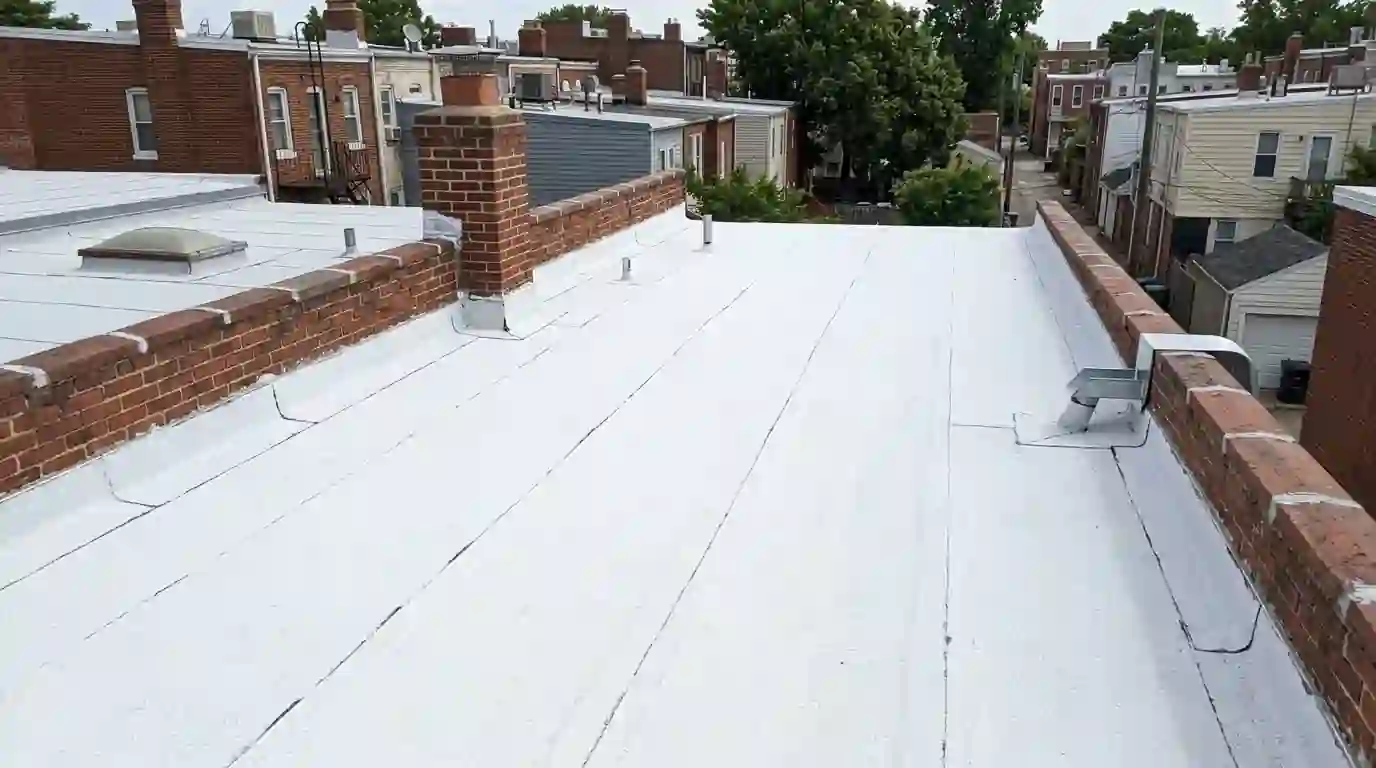
Traditional black granule caps soak up summer sun. Most manufacturers now offer white or highly reflective cap sheets rated for cool roof use, and those are what we specify on District low-slope replacements, where energy rules push reflective surfaces. Brands we install include GAF Liberty, CertainTeed Flintlastic and Polyglass, chosen by availability and the reflectance the permit needs.
An older approach was to lay a black cap and coat it with aluminum or elastomeric paint. That works for a while, but the coating needs renewing every few years. A factory reflective cap avoids that maintenance cycle. If you already have a sound mod bit roof and want it cooler, our roof coating service is the right place to start.
Reflective caps do gray under city soot and tree pollen. Washing them every few years brings back much of their brightness without harming the granules.
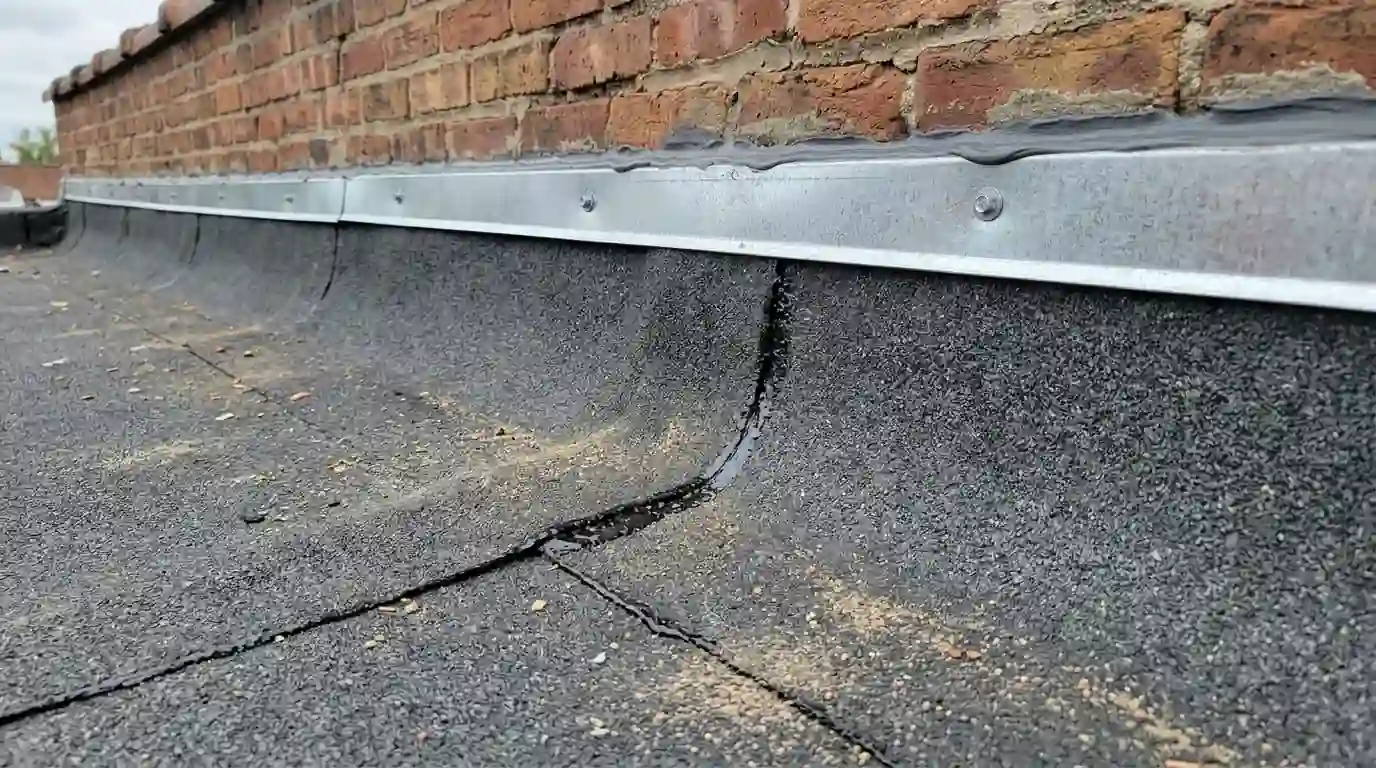
Modified bitumen bonds well to itself, which makes flashings strong. At the parapet we run the base ply up the wall, follow with a reinforced flashing ply, and finish with the cap. The top edge goes under counterflashing or new coping, and on deteriorated brick we repair the parapet first so the flashing has something solid to hold.
Pipe penetrations get lead or prefabricated boots set between plies, not slathered with mastic on the surface. Scuppers get metal liners stripped in with two layers of flashing, and the rear drip edge sits between plies so water sheds cleanly into the gutter or box gutter.
Party walls need care. When the roof next door is older built-up roofing, we bring our plies up and over the shared wall and tie them down so neither roof depends on the other's condition.
Beyond main rowhouse roofs, we install it on low-pitched porch roofs in Brookland and Woodridge, on flat garage roofs along alleys, and on the shallow rear additions that show up behind colonials in Arlington and Takoma Park. Its toughness suits spots where ladders lean and branches fall.
Some owners compare it directly with single-ply options, and our three-way membrane comparison lays out the differences. In short, mod bit wins on toughness and repairability, while TPO wins on reflectivity per dollar.
Modified bitumen asks for a little attention each year, mostly at the edges. Check that the scupper and downspout run clear after the fall leaf drop, since water backing up against a parapet finds the top of the flashing quickly. Look for granule loss around the hatch and at spots where people kneel to service equipment.
Small cuts and scuffs are simple to fix. We clean the area, prime it and bond a cap sheet patch over the damage, then broadcast matching granules into the edge. Done early, that patch blends in and lasts as long as the roof around it.
Every five to eight years, a reflective cap benefits from a gentle wash with a soft brush and low-pressure water. Skip the pressure washer, which strips granules and shortens the roof's life. If an HVAC or solar contractor needs to cut into the roof, call us first so the new penetration gets flashed between plies rather than sealed on top.
Deep crisscross cracking across the old asphalt means the oils have baked out and the roof is brittle.
When gravel or granules are gone and you can see felt, the roof has lost its weathering layer.
Old single-layer roll roofing opens at the overlaps after a few summers of expansion.
Soft, raised pockets near the scupper usually hold trapped water from earlier leaks.
Silver or white paint lifting off in flakes means the surface beneath has dried out.
High-traffic areas give way first, often with rot under the deck boards.
We map slope, drains and penetrations, and assess whether torching is safe or self-adhered sheets are required.
Old built-up roofing, gravel and coatings come off, and rotted boards are replaced.
Tapered or flat polyiso goes down with a cover board ready to receive the base ply.
The base sheet is bonded, and walls, pipes and scuppers get their first flashing layer.
The granulated cap goes on, offset from base laps, with sealed end laps and granule-matched seams.
We flood-test outlets, sweep the alley and send you photos of each stage.
Two-ply systems cost a bit more than single-ply roofs because of the second layer and labor. These are typical 2026 local ranges.
| Job | Typical range |
|---|---|
| Rowhouse roof, self-adhered two-ply, reflective cap | $10,840-$15,670 |
| Rowhouse roof with tapered insulation | $13,560-$18,920 |
| Porch or garage roof, two-ply | $2,870-$5,940 |
| Parapet flashing rebuild, per linear foot | $27-$46 |
| Remove gravel built-up roof, added per square | $83-$142 |
Gravel removal, multiple old layers, rotted decking and parapet repairs push prices up. Simple roofs with one old layer and alley staging stay closer to the lower figures.
Most two-ply systems give 20 to 30 years on a rowhouse with decent drainage. Reflective caps and good flashing help push toward the long end. Foot traffic wears granules, so walkway pads near the hatch extend life.
It can be, with strict fire-watch practice, but we avoid it near wood cornices, dry attics and hidden voids in party walls. On most residential jobs we use self-adhered sheets, which bond without open flame and give a comparable roof.
Yes, with a reflective white cap sheet rated for cool roof use. Standard black caps usually do not meet the reflectance target, so we confirm the cap's rating against the permit before ordering.
It handles deck sleepers and foot traffic well when the sleepers sit on protection pads and the posts are properly flashed. Plan the deck before the roof goes on so we can add blocking and extra flashing plies where needed.
These are the places we drive to most for this work. We cover all 45 areas on our service area list.
Tear-off and new low-slope roofs for rowhouses and flats, with tapered insulation for ponding, new parapet flashing and reflective cool roof membranes.
Flat Roof Replacement detailsHeat-welded white TPO membranes for rowhouse and low-slope roofs, built to meet DC cool roof expectations and shrug off ponded water.
TPO Roofing detailsSilver aluminum and white reflective coatings for DC low-slope roofs, applied over a cleaned, repaired surface to add years to a membrane that's still sound.
Roof Coating detailsRepairs to the brick walls that rise above rowhouse roofs: loose coping, cracked caps, open mortar, failed through-wall flashing and the membrane where it meets the parapet.
Parapet Wall and Coping Repair detailsCall and a roofer will answer, any hour of any day. We stop the leak first and fix it properly once the roof is dry.