Top floor runs hot all summer
If the AC struggles upstairs while the ground floor is fine, roof heat is likely a big part of the load.
Rowhouse and specialty roofing
If your top floor bakes every July, the roof is probably part of the reason. A cool roof swaps a dark surface for a white one that throws back most of the sun before it reaches your bedroom ceiling.
Materials we install
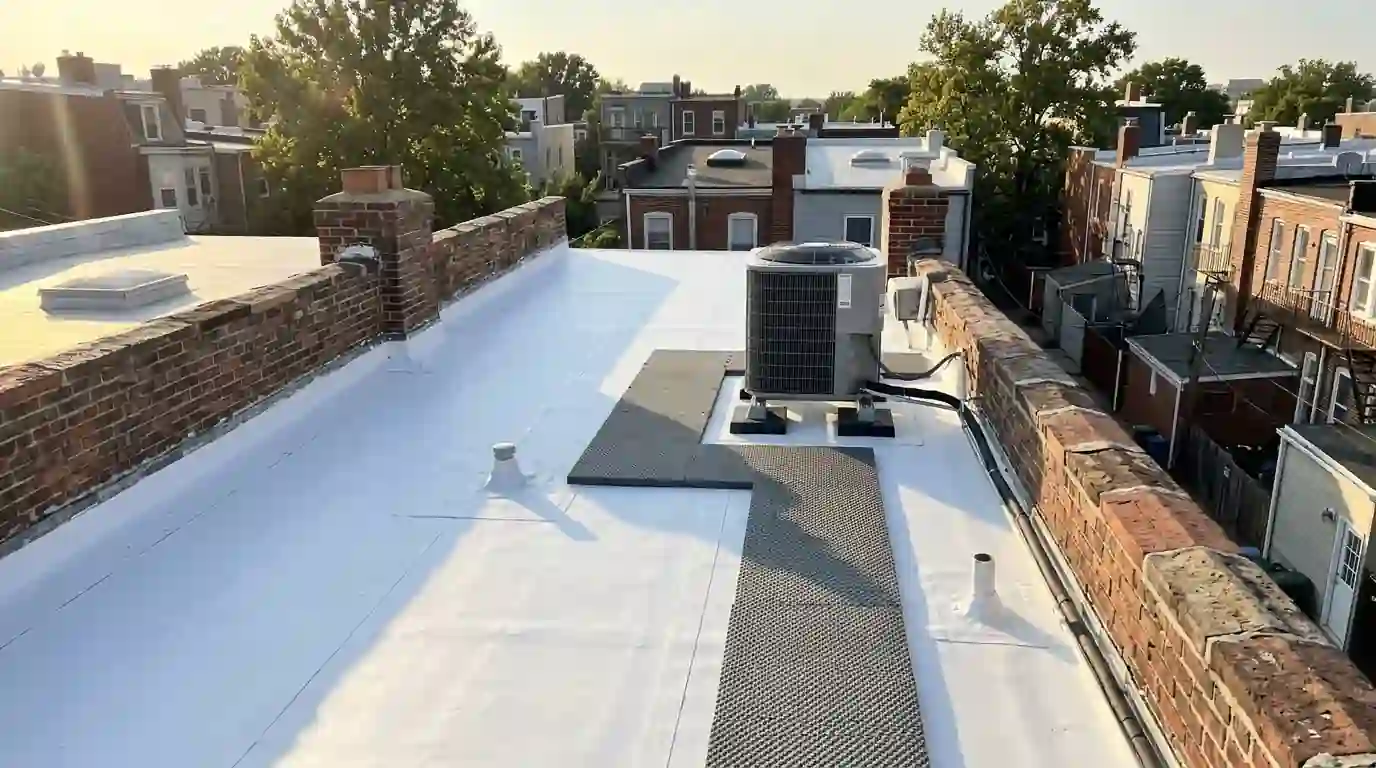
A cool roof is a low-slope roof finished with a highly reflective, heat-releasing surface, usually white TPO, white PVC or a modified bitumen cap sheet with reflective granules. In DC it's the expected choice whenever a low-slope roof is replaced. On a typical rowhouse, a full cool roof with tapered insulation runs about $11,340-$19,780, depending on layers removed and insulation depth.
Two numbers define a cool roof. Solar reflectance is the share of sunlight the surface bounces away. Thermal emittance is how readily it sheds the heat it does absorb. Together they produce a solar reflectance index, and a new white membrane scores far higher than black EPDM or a worn asphalt roof.
The Cool Roof Rating Council publishes tested values for roofing products, both when new and after three years of weathering. We compare products on those aged values, because DC soot and pollen dull every white roof over time.
A cool roof isn't one material. It's any membrane or cap sheet that meets the reflectance target, installed so it drains well and stays reasonably clean.
The District's energy and green building rules push low-slope roof replacements toward reflective surfaces, and the replacement permit from the DC Department of Buildings is where that gets checked. Practically, a black roof is off the table for most rowhouse and small multifamily jobs.
Reroofing can also bring insulation requirements into play. When we strip to the deck, we add tapered polyiso to bring the roof closer to current values where parapet height and door thresholds allow. On a rowhouse, the limit is often the hatch curb or the deck door sill, and we plan insulation thickness around those.
If the house sits in a historic district, a flat roof hidden behind a parapet usually doesn't change the street view, so a white surface rarely raises questions. Our permits and historic district guide covers the edge cases.
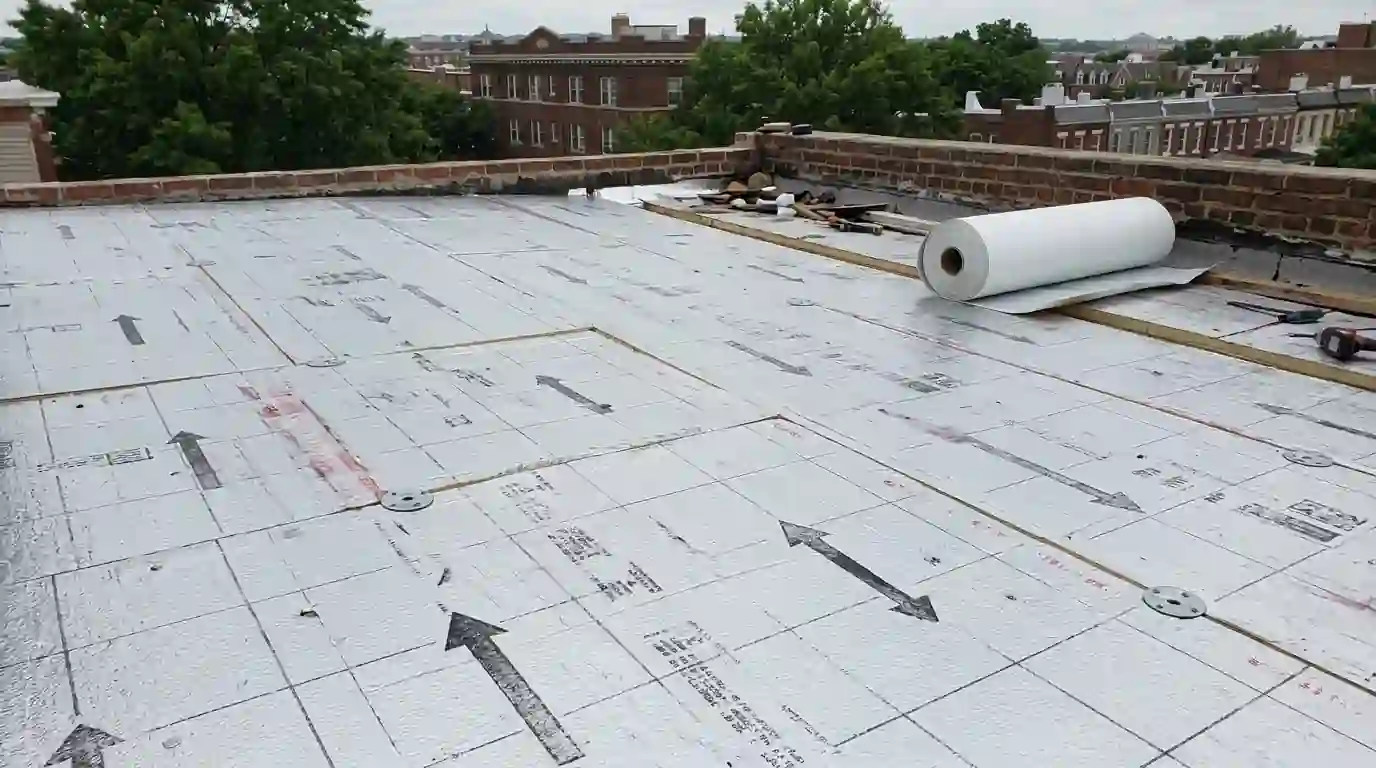
White TPO is the cool roof we install most often on DC rowhouses. It's a single-ply sheet, typically 60 or 80 mil, with hot-air welded seams that don't rely on glue. It tolerates foot traffic from HVAC service reasonably well and comes in wide rolls that cover a narrow roof with few seams. Our TPO roofing page goes deeper on the membrane itself.
PVC behaves similarly but resists grease and chemicals, which matters over restaurant exhausts on mixed-use buildings along 14th Street or Georgia Avenue. It also costs more.
Two-ply modified bitumen with a white granule cap sheet makes sense when the roof has awkward brick parapets, many small penetrations or several trades who'll walk on it often. The granule surface reflects a little less than a smooth white sheet but stands up better underfoot.
A cool roof lowers the temperature of the roof surface by a wide margin on a sunny afternoon. How much that changes the room below depends on insulation, ceiling height and how leaky the top floor is. In an uninsulated rowhouse, owners often feel the difference in the first summer.
There's a small winter trade-off, since a white roof absorbs less sun in January. In Washington's climate, summer cooling savings usually outweigh it, especially once insulation has been added.
A reflective roof also takes stress off the membrane. A smaller daily heat swing means less expansion and contraction at seams and flashing, which helps the roof last.
Every white roof in the city grays over time from soot, tree debris and foot traffic. A gentle wash every year or two with a soft brush and mild cleaner restores much of the reflectance without hurting the membrane.
We route walkway pads to the condenser and the hatch so service techs don't scuff a path across the field. If you'd rather not handle the washing, our roof maintenance visits include cleaning and a seam check.
Not every cool roof sits on a rowhouse. Rear additions on houses in Chevy Chase or Arlington, porch roofs, garages and the flat sections of split-level homes often have low-slope areas where a white membrane makes sense. The same reflectance rules of thumb apply, and the same care at the wall flashing.
On small mixed-use buildings along commercial corridors, a white roof keeps upstairs apartments cooler and takes load off rooftop units. These roofs usually carry more equipment, so we plan more walkway pads, add curbs where units sit on sleepers, and choose a membrane that tolerates grease or chemical exhaust where needed.
Steep roofs aren't covered by most low-slope reflective requirements, but lighter shingle colors with reflective granules exist for owners who want them. We'll show samples if that interests you.
If the AC struggles upstairs while the ground floor is fine, roof heat is likely a big part of the load.
Dark roofs absorb most of the sun that hits them, which makes them the strongest candidates for a reflective upgrade.
If replacement is a few years off anyway, choosing a cool roof at that point costs little extra.
Tapered insulation installed with a cool roof fixes the slope, so the white surface drains and stays cleaner.
Putting a new reflective roof down before the panels go on avoids pulling the array later for a tear-off.
A cool roof under a deck still needs protection board and pads, and it's easiest to design both together.
We check parapet height, hatch curb and deck door sills to see how much insulation the roof can take.
We file with the Department of Buildings and choose a membrane with rated reflectance that suits the roof.
Old layers come off, rotten boards are replaced and the deck is swept clean.
Polyiso is laid to slope water toward the scupper or drain, topped with a cover board for a firm surface.
The white sheet is fastened or adhered, and every seam is welded and probed along its full length.
Parapets, curbs and pipes are flashed in the same membrane, and pads go down along the service path.
These ranges cover typical 18- to 22-foot-wide rowhouse roofs in the District. The final figure follows a roof walk and a look at the layers underneath.
| Job | Typical range |
|---|---|
| White 60 mil TPO over tapered polyiso | $11,340-$19,780 |
| White 80 mil TPO, heavier sheet | $12,610-$21,450 |
| Two-ply modified bitumen with white granule cap | $10,280-$17,360 |
| White PVC for mixed-use or exhaust areas | $13,470-$23,180 |
| Walkway pads to condenser and hatch | $310-$690 |
Insulation thickness, the number of old layers, deck repairs, penetrations and hoisting access move the total more than the membrane choice does.
District energy rules push low-slope replacements toward reflective surfaces, and that's checked through the replacement permit. In practice, nearly every rowhouse flat roof we replace ends up white or highly reflective.
Almost never on a rowhouse. The flat roof sits behind the front parapet or cornice, so people on the sidewalk can't see it.
It depends on insulation and air leaks, so we won't promise a number. Rooms right under an uninsulated roof see the largest change, and adding tapered insulation in the same job amplifies the effect.
Yes. We flash the racking attachments or set ballasted racks on protection pads so the panels don't puncture the membrane. Installing the roof first means the array won't have to come off for a tear-off later.
Rarely on a well-insulated roof. Trouble shows up when warm, moist indoor air leaks into the roof cavity, so we seal ceiling openings and add enough insulation to keep the underside of the deck warm.
Every one to two years keeps most of its reflectance, more often under heavy trees or near busy streets. A soft brush and a mild cleaner approved by the membrane maker are enough; pressure washers can damage the surface.
These are the places we drive to most for this work. We cover all 45 areas on our service area list.
Heat-welded white TPO membranes for rowhouse and low-slope roofs, built to meet DC cool roof expectations and shrug off ponded water.
TPO Roofing detailsTear-off and new low-slope roofs for rowhouses and flats, with tapered insulation for ponding, new parapet flashing and reflective cool roof membranes.
Flat Roof Replacement detailsSilver aluminum and white reflective coatings for DC low-slope roofs, applied over a cleaned, repaired surface to add years to a membrane that's still sound.
Roof Coating detailsTwo-ply modified bitumen roofs with reflective granulated caps for rowhouses, porches and roofs that carry decks, condensers and steady foot traffic.
Modified Bitumen Roofing detailsCall and a roofer will answer, any hour of any day. We stop the leak first and fix it properly once the roof is dry.