Buying or selling a home
A roof check during the contract period turns uncertainty into a clear repair list and a price.
Roof repair
Most homeowners have never seen their own roof, especially on a rowhouse where it hides behind a parapet, so the first sign of trouble is usually a stain rather than a warning.
Materials we install
A roof inspection is a hands-on walk of the roof and its details, with photos and a written report on condition, problem areas and remaining life. You need one before buying or selling, after a major storm, when a roof passes about fifteen years, or once a year for older flat roofs. In the DC area, most inspections cost about $195 to $485.
A roof check during the contract period turns uncertainty into a clear repair list and a price.
High winds, hail or fallen limbs can damage a roof without causing an immediate leak.
Shingle and flat roofs in this climate start showing their age around this point.
Even dry stains deserve a look to confirm the cause was fixed and is not just between storms.
Adding equipment or a deck over a roof with little life left means paying twice later.
If you have no record of the last roof work, a baseline inspection gives you a starting point.
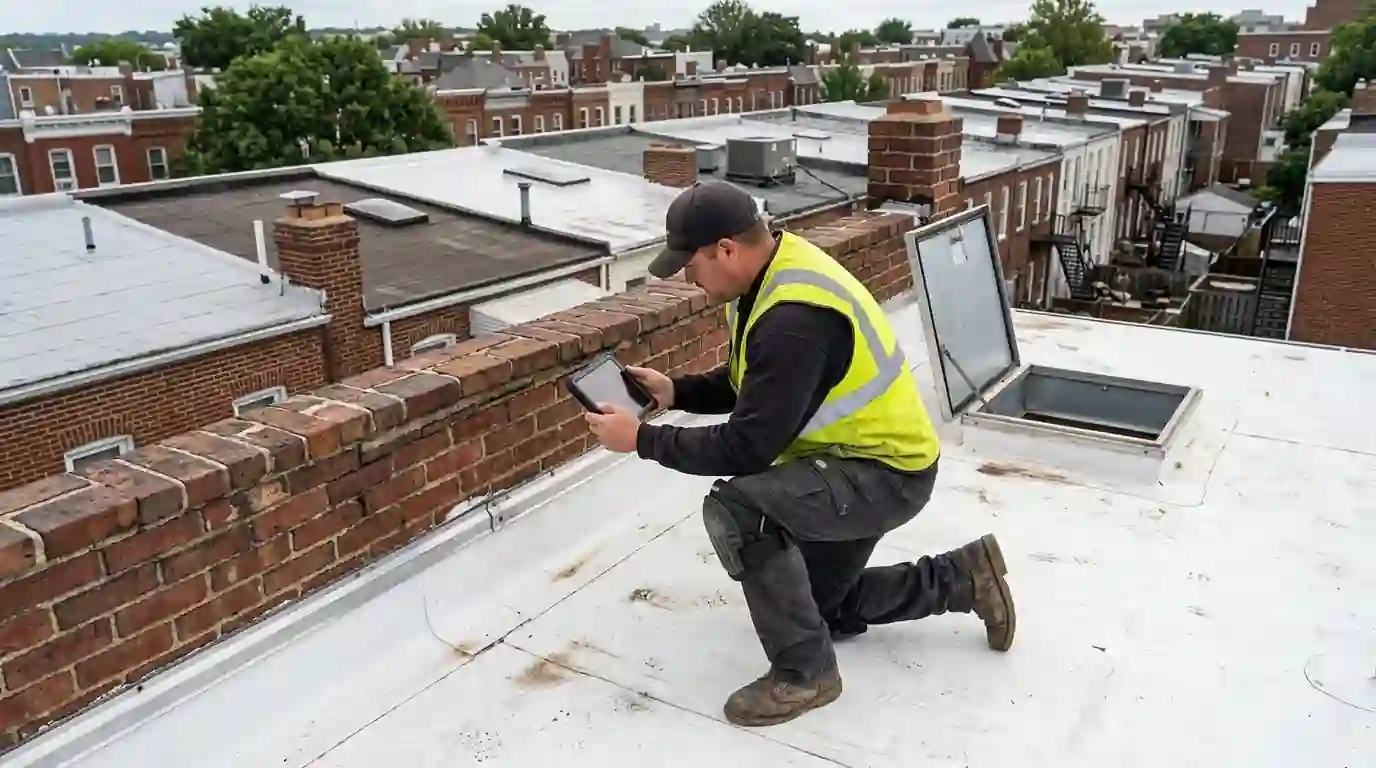
On a low-slope rowhouse roof, we walk the full surface and probe every seam we can reach. We look for blisters, splits, alligatored coating, ponding marks and soft decking. At the parapets we check whether base flashing is fully stuck to the brick, how it is terminated and whether the coping above has open joints.
On pitched roofs, we look at shingle granule loss, curling, cracking and nail pops, and on slate we count broken, slipped and delaminating pieces. We check valleys, ridge caps, and step flashing at walls and chimneys, and we note the metal used for flashing, since that tells us how long the details will last compared with the roofing.
Every roof gets its penetrations checked: plumbing vents, exhaust fans, skylights, hatches, HVAC stands and chimneys. Then the edges and drainage: gutters, downspouts, scuppers, drains and any built-in box gutter at the cornice. Drainage problems cause more early failures than anything else we find.
Half the story is under the roof. In houses with an attic, we look at the underside of the decking for staining, mold, delamination and daylight around penetrations. We check insulation depth and whether soffit and ridge vents are clear, because a hot, damp attic ages shingles faster. Our page on roof and attic ventilation explains why that matters.
In rowhouses with no attic, we look at the top-floor ceilings and the upper walls for old stains, patched plaster and paint changes that hint at past leaks. A ceiling that has been repainted in one spot often tells us exactly where to look on the roof.
We also ask about history: when the roof was installed if you know, any past leaks, and whether work has been done since. That helps us judge whether an old stain is from a problem that was fixed or one that is still active.
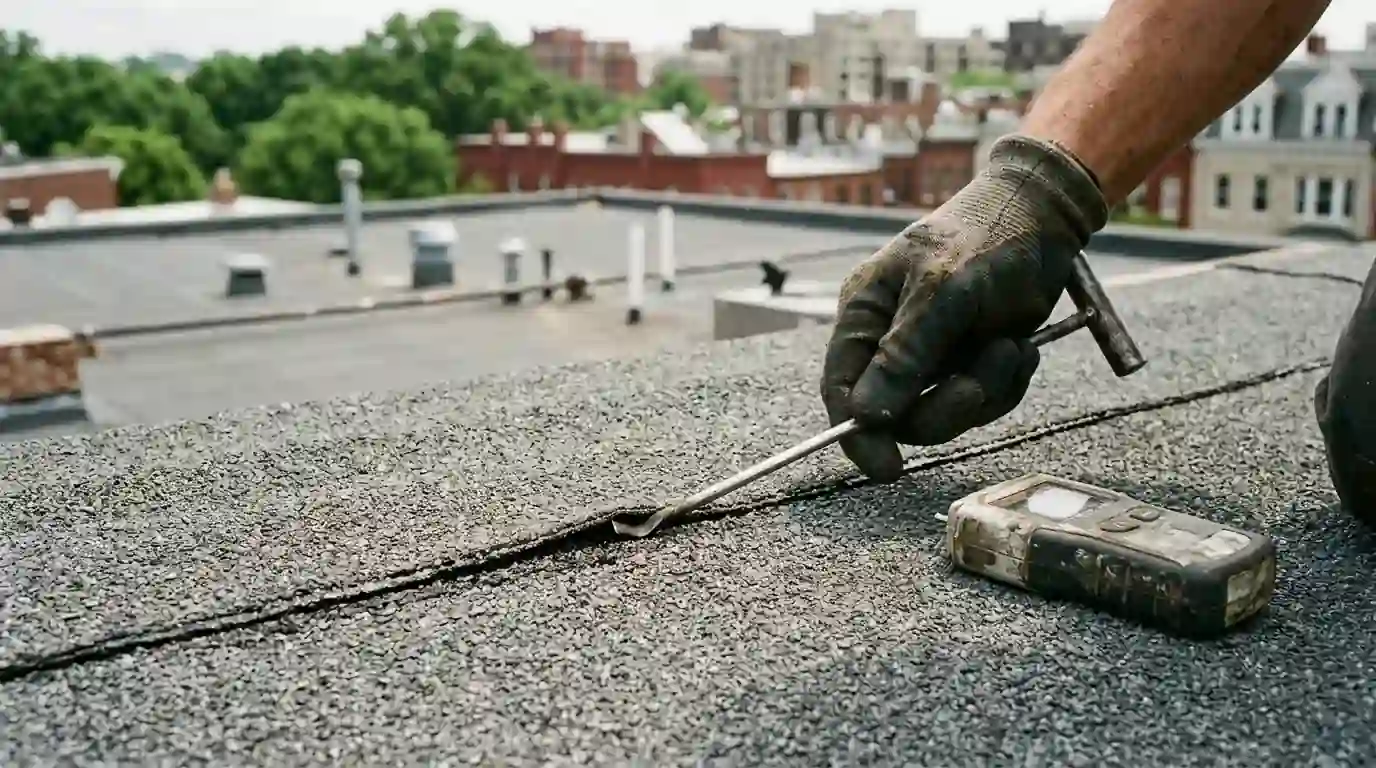
A general home inspector often looks at a rowhouse roof from a ladder at the rear or not at all, and the report says the roof should be checked by a roofer. We go onto the roof, open the hatch, check the layers and give a realistic estimate of remaining life and near-term repair costs.
For buyers, that turns a vague line in the home inspection report into a number you can negotiate with. For sellers, an inspection before listing lets you fix small issues on your own schedule rather than under contract deadlines. If a lender or buyer needs a formal letter, our page on roof certification letters explains that option.
We work on tight timelines during the contract period. Call with the address, the inspection deadline and how the roof is accessed, and we set a time that fits the contract dates.
Flat roofs over about twelve years old, slate roofs with iron nails and roofs under large trees benefit from a yearly check. Fall is the best time, after the summer heat has shown its effects and before leaves, nor'easters and freeze-thaw cycles arrive. A spring check after winter is a good second visit for roofs that had problems before.
Homes under heavy canopy in neighborhoods like Brookland or Takoma see clogged drains and gutters every season. Pairing an inspection with clearing those outlets often heads off the most common winter leak. For ongoing visits, our roof maintenance plan covers the cleaning and small repairs together.
Solar arrays and roof decks sit on a roof for twenty years or more, and removing them later to reroof is expensive. Before either goes on, we check how many years the membrane or shingles have left, whether the decking is solid, and where the attachments will pierce the roof.
If the roof has less life left than the panels or the deck, it usually makes sense to replace it first. If it is in good shape, we mark the weak spots so the installer avoids them and note the flashing details we would expect at each mount. Our article on the roofing side of a rowhouse deck goes into the details.
You receive a written report with labeled photos of each part of the roof, a summary of condition and our estimate of remaining life in a range of years. Problems are sorted into urgent items, repairs to plan for in the next year or two, and items to watch.
Each repair item comes with a rough price range, so you can budget or negotiate. We do not pad the list. If the roof is in good shape, the report says so and suggests when to look again.
If a repair is urgent, such as an open seam above a bedroom or a slipped slate over the sidewalk, we tell you on the spot and can usually fix it the same visit if you want.
Inspection pricing depends on the roof size, type and access. These ranges reflect typical 2026 costs for DC homes and nearby suburbs.
| Job | Typical range |
|---|---|
| Rowhouse flat roof inspection with photo report | $195-$345 |
| Pitched shingle roof on a detached home | $235-$395 |
| Slate or mansard roof with steep sections | $295-$485 |
| Pre-purchase inspection on a contract deadline | $265-$445 |
| Inspection with infrared moisture scan | $445-$865 |
Roof height, steepness, the number of separate roof sections, attic access and rush scheduling move the price. If we make a repair during the same visit, the inspection cost is listed separately from the repair.
We ask about the roof type, access, any known problems and your timeline.
We look at the roof lines, gutters, downspouts and walls from the ground and alley first.
We walk or ladder every section that is safe to access and photograph each component.
We check ceilings, upper walls and the attic or roof cavity for water signs and ventilation.
Before leaving, we tell you what we found and flag anything urgent.
Within a day or two you get the photo report with condition, remaining life and repair ranges.
Most rowhouse roof inspections take about an hour on site, including the interior check. Larger detached homes with several slopes and an attic can take up to two hours. The written report follows within a day or two.
It helps if you are home or a contact can let us in, since many rowhouse roofs are reached through a hatch inside. If the roof is accessible from outside, we can inspect without you and go over the report by phone.
Yes. A home inspector covers the whole house and often views the roof from the ground or a ladder. A roofer's inspection goes onto the roof, checks layers and details closely and prices the repairs, which is more useful for negotiating.
We give a range based on membrane condition, layers, seams, flashing and drainage. No one can predict an exact year, but a range like three to five years is solid enough for planning and for negotiating a purchase.
Yes. Walking on slate can break pieces, so we inspect from ladders, roof hooks and nearby flat sections, and use binoculars and a camera on a pole for upper areas. We only walk slate when it is safe and necessary.
These are the places we drive to most for this work. We cover all 45 areas on our service area list.
Spring and fall roof visits that clear gutters and drains, reseal flashing and vents and catch small failures before they turn into ceiling stains.
Roof Maintenance detailsA written roof condition letter for home sales and refinancing, with an honest estimate of remaining life and any repairs needed first.
Roof Certification detailsTargeted fixes for open seams, slipped slate, lifted shingles and failed flashing on DC rowhouses, porch roofs and detached homes, sized to the actual damage.
Roof Repair detailsAttic and roof cavity ventilation for DC rowhouses and suburban homes: ridge and soffit vents, baffles, bath fan ducting and fixes for winter condensation.
Roof and Attic Ventilation detailsCall and a roofer will answer, any hour of any day. We stop the leak first and fix it properly once the roof is dry.