How an ice dam forms on a DC area roof
Warm air leaking from the living space heats the underside of the roof deck. Snow on the upper roof melts, and the meltwater runs down toward the eaves. The overhang sits outside the heated walls, so it stays cold, and the water refreezes there into a ridge of ice.
Each day the ridge grows, and water from higher up pools behind it. Shingles are built to shed water running downhill, not to hold back a puddle, so the pooled melt backs up under the tabs and finds nail holes and seams. That's when you see drips inside.
The pattern shows up most on detached houses and townhomes with attic space, like the Cape Cods and colonials in Arlington, Silver Spring and Fairfax, and on split-levels where a low roof meets a heated room. Flat rowhouse roofs get winter leaks too, but from a different cause covered below.
Clues on the outside you can see from the yard
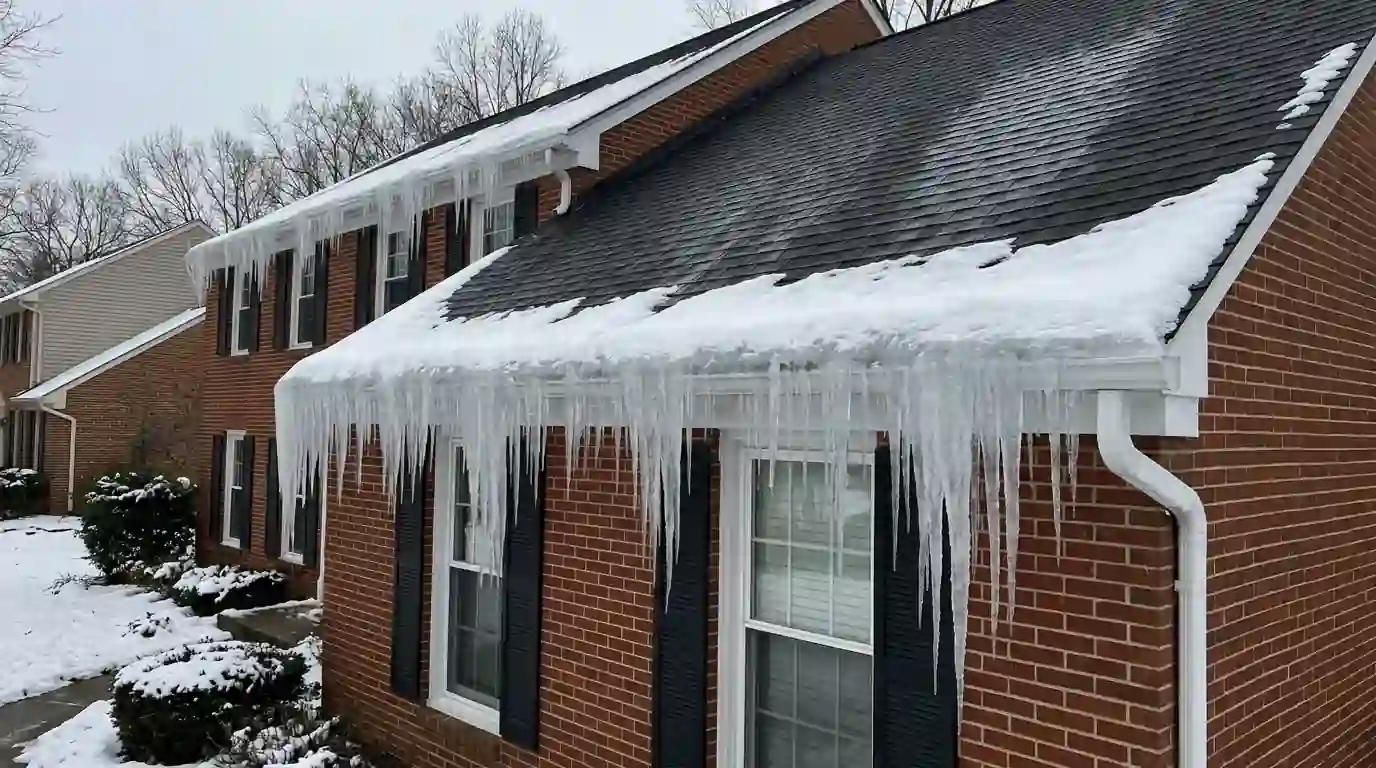
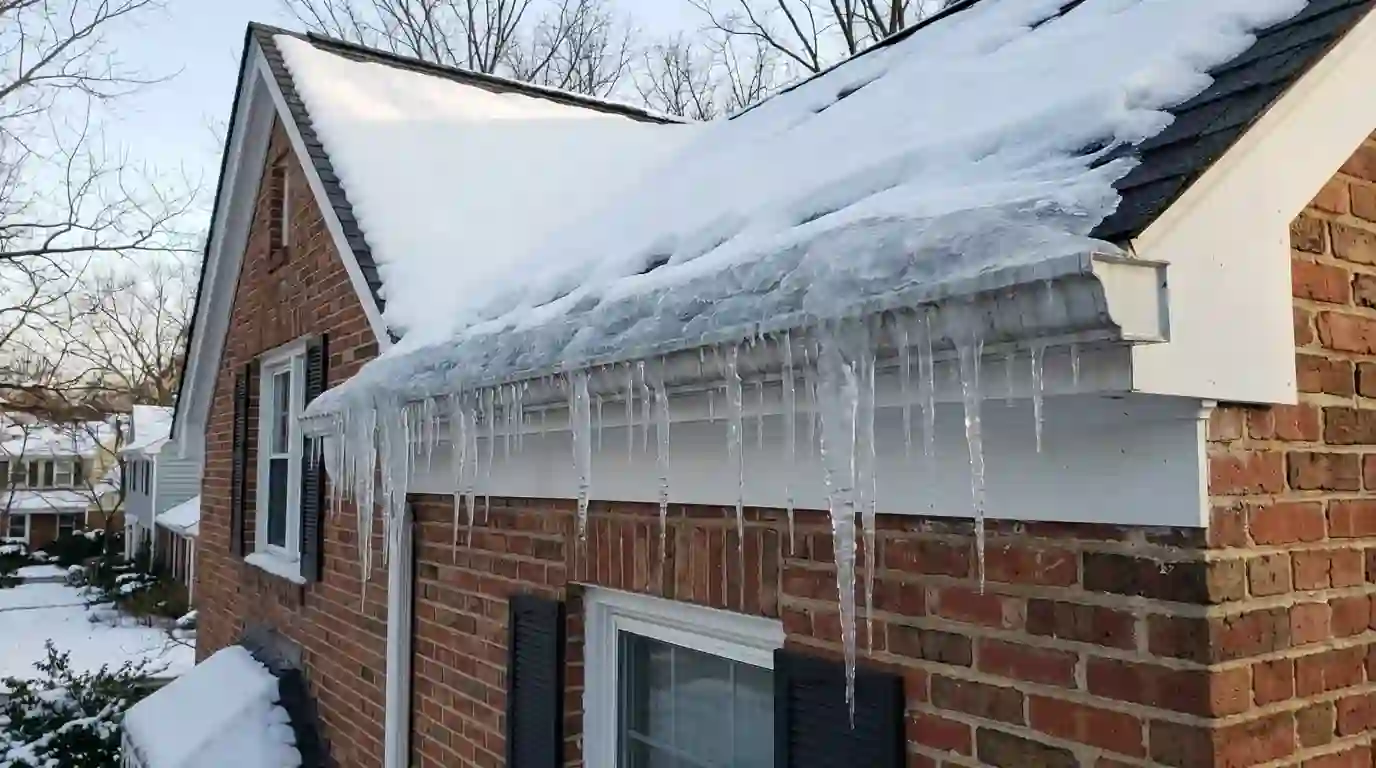
From the ground, look along the eaves after a few days below freezing. Thick ice along the gutter line, long icicles hanging from the gutter or the fascia, and snow melted off the upper roof while a band of ice remains at the edge all point to an ice dam.
Also notice which parts of the roof melt first. Bare patches in a line above an interior wall or over a bathroom fan usually mean heat is escaping there. That's useful to share with a roofer, since it shows where insulation or air sealing is weak.
- A thick ridge of ice along the eaves or in the gutter
- Icicles longer than a foot, especially with water dripping from the base
- Melted stripes on the upper roof while the lower edge stays iced
- Ice building in valleys where two slopes meet
- Gutters pulling away from the fascia under the weight
What you might see inside the house
Winter leaks from ice dams typically show up on the top floor ceiling right inside an exterior wall, or as water running down the inside of a window frame. Stains may appear on a sunny afternoon when melting speeds up, then stop at night when everything refreezes.
Look in the attic if you can get there safely. Frost on the underside of the roof deck, damp insulation near the eaves, or a line of wet framing all suggest warm moist air is reaching the roof. Use a flashlight from the hatch rather than walking across joists.
Bathroom exhaust fans that dump into the attic instead of venting outside are a common culprit in older homes. The warm, wet air they push out frosts on the cold roof boards, then melts on the first mild day and drips onto the ceiling below, which can look exactly like a roof leak even though the shingles are fine.
Safe steps while the ice is still up there
Put buckets and towels under drips, and move furniture and electronics away from the wall. If water is running inside a light fixture, switch that circuit off at the panel. Photograph everything, including the outside ice, for your insurance file.
Please don't climb a ladder onto an icy roof, and don't chip at the ice with a hammer, axe or shovel. That tears shingles and gutters, and falls from icy ladders are common in our area each winter. A roof rake used from the ground can pull snow off the lowest few feet of roof if you can reach without standing under the edge.
If water is coming in fast, call (202) 771-7443. We answer around the clock and can steam the ice off the eaves to open a channel, which melts the dam without damaging the shingles.
Why flat rowhouse roofs leak in winter
Low-slope roofs on rowhouses don't usually form classic ice dams, but they have their own winter problem. Snow and slush pile up in front of the rear scupper, freeze in the leader head, and block the only drain. Meltwater then rises against the parapet and works under base flashing that would be fine in normal rain.
Freeze-thaw cycles also open small cracks in tired modified bitumen caps and lift loose coping joints. Keeping the scupper and downspout clear in late fall, and checking them after the first big snow, prevents most of these leaks. Our piece on flat roof lifespan explains how winter wear adds up over the years.
Skylights and dormers on Cape Cods and bungalows can also trap snow. The upper side of a skylight curb acts like a small dam of its own, and meltwater backed up there finds its way around the flashing. Clearing snow from that area, from inside if the skylight opens, can reduce the risk.
The permanent fix is in the attic and the eaves
Ice dams are really a heat problem. Sealing air leaks around top-floor light fixtures, plumbing stacks, attic hatches and chimney chases keeps warm air out of the attic. Adding insulation to the right depth then slows heat loss through the ceiling.
Ventilation finishes the job by letting the roof deck stay cold. Continuous soffit vents paired with a ridge vent move outside air under the deck so snow melts evenly. Our roof and attic ventilation work starts with checking that soffit vents aren't blocked by insulation, which is common in older houses.
When the roof itself is replaced, ice and water shield membrane goes along the eaves, up at least two feet inside the warm wall line, plus in every valley and around chimneys. That self-adhered layer seals around nails and stops backed-up water from reaching the deck. On a new shingle roof, it's one of the most valuable details.
Typical costs for ice dam damage and prevention
Steaming an ice dam off a section of eave often runs $465-$1,180 depending on length, height and access. Repairing shingles, flashing and gutters damaged by ice usually costs $520-$2,340. Adding soffit and ridge ventilation to an existing roof commonly falls around $1,380-$3,670.
Prices move with roof height, pitch, number of valleys, how much interior damage needs attention, and how quickly the work has to happen. We price each job after a look, and we keep emergency calls focused on stopping water first.