First five minutes: protect people and power
If water is dripping near a light fixture, outlet or ceiling fan, turn off that circuit at the panel before you do anything else. Water and electricity in a ceiling can arc, and wet drywall near a fixture can drop suddenly.
Move people and pets out of the room if the ceiling is sagging. A bulge in drywall or plaster means water has pooled above it. Don't stand underneath. If it's safe, put a bucket below and poke a small hole at the lowest point with a screwdriver on a long handle so the water drains in one controlled spot instead of bringing the ceiling down.
Catch the water and limit the spread
Set buckets, storage bins or a trash can under every drip. Lay towels around the edges to soak up splash. Move furniture, rugs, electronics and anything made of paper or fabric out of the wet zone.
In a rowhouse, check the floors below the leak too. Water often travels along joists and appears one floor down near the party wall or the rear wall. A damp spot on the second floor ceiling may trace back to the roof above the third floor.
Run a dehumidifier or fans in the room if the power is safe, which helps slow mold growth while you wait for the storm to pass.
Basement ceilings rarely get wet from a roof leak, but water can run down inside a wall cavity and show up at a baseboard or around a window two floors down. Check those spots with a flashlight once the main drip is under control, and pull back a corner of carpet if the floor feels damp.
Stay off the roof, even if it looks easy
We get asked a lot whether it's fine to climb up and throw a tarp on. During a storm, the answer is no. Wet shingles, slate and membranes are slick, wind gusts catch a tarp like a sail, and lightning is a real risk on the highest point of the block. Rowhouse hatches often open onto roofs with low parapets and no rail.
Even after the rain stops, a wet roof stays slippery. Leave the tarp work to a roofing crew with harnesses, anchors and the right ladders.
What to look for once you're safe inside
Note where the water is coming in and roughly when it started. Look at the room above if you have attic access, and check whether the leak shows up only in heavy downpours or in any rain. That helps narrow the source before anyone is on the roof.
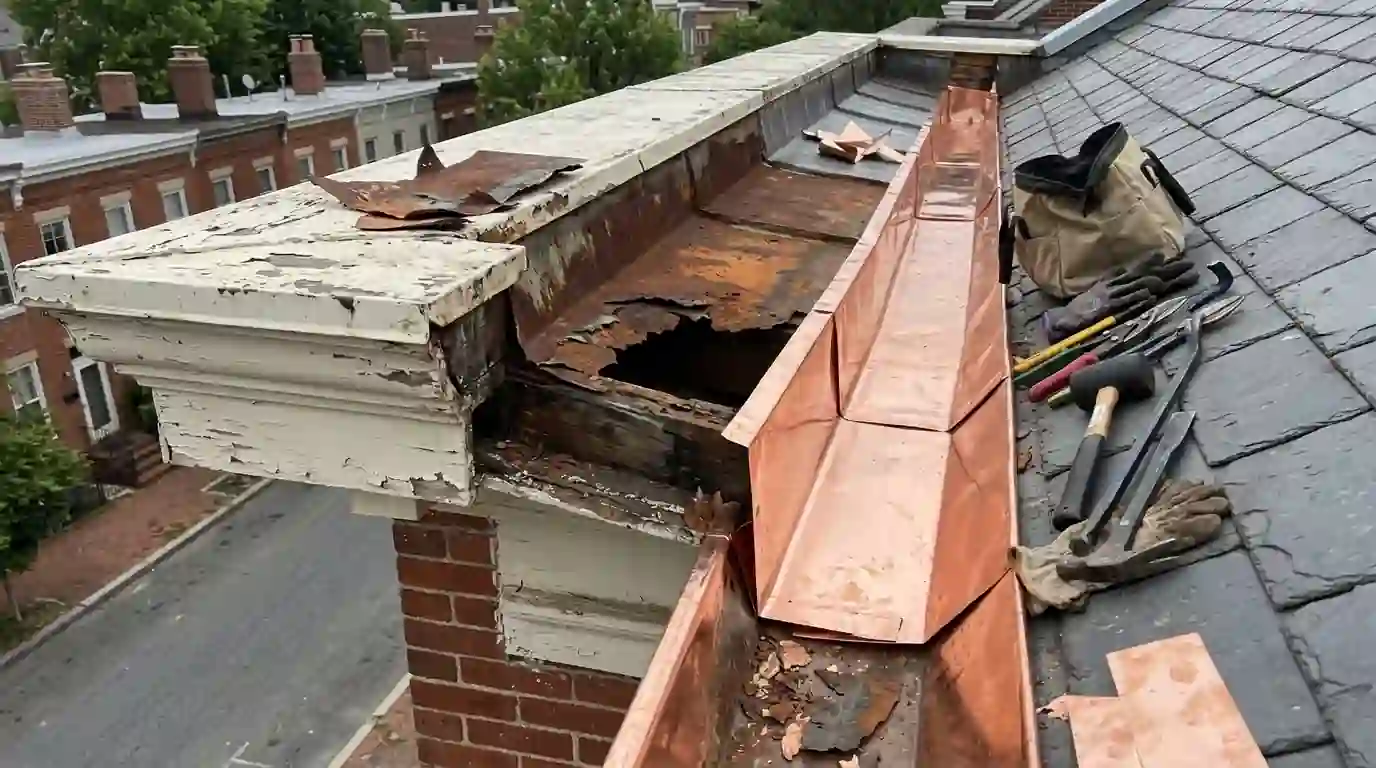
From a window or the ground, look for obvious damage: a fallen limb on the roof, a gutter hanging off, a missing section of coping, shingles in the yard or a scupper spilling water down the brick. If a downspout is dry while water pours over the edge, a clog is a likely cause.
Write it all down with times. Notes made during the storm are easier to trust than memory a week later, and they help us compare the leak's behavior with wind direction and rainfall from that night.
- Location of every drip and stain, inside and on lower floors
- Whether water appears near a chimney, skylight, vent or wall
- Any tree limbs or debris on the roof from street level
- Clogged or overflowing gutters, scuppers or downspouts
- Missing shingles, slates or metal on the ground
Photograph everything for the insurance file
Take wide photos and close-ups of each wet spot, the ceiling, stained walls, floors and damaged belongings. Add exterior shots from the ground or a window showing the roof and any debris. Video with your phone narration is useful too.
Keep receipts for buckets, fans, a hotel night if the house became unlivable, and any emergency service. Most homeowner policies expect you to take reasonable steps to prevent further damage, and documented action helps with that. Our insurance claim roof help covers photos and repair notes that adjusters can use.
What emergency roof work usually looks like
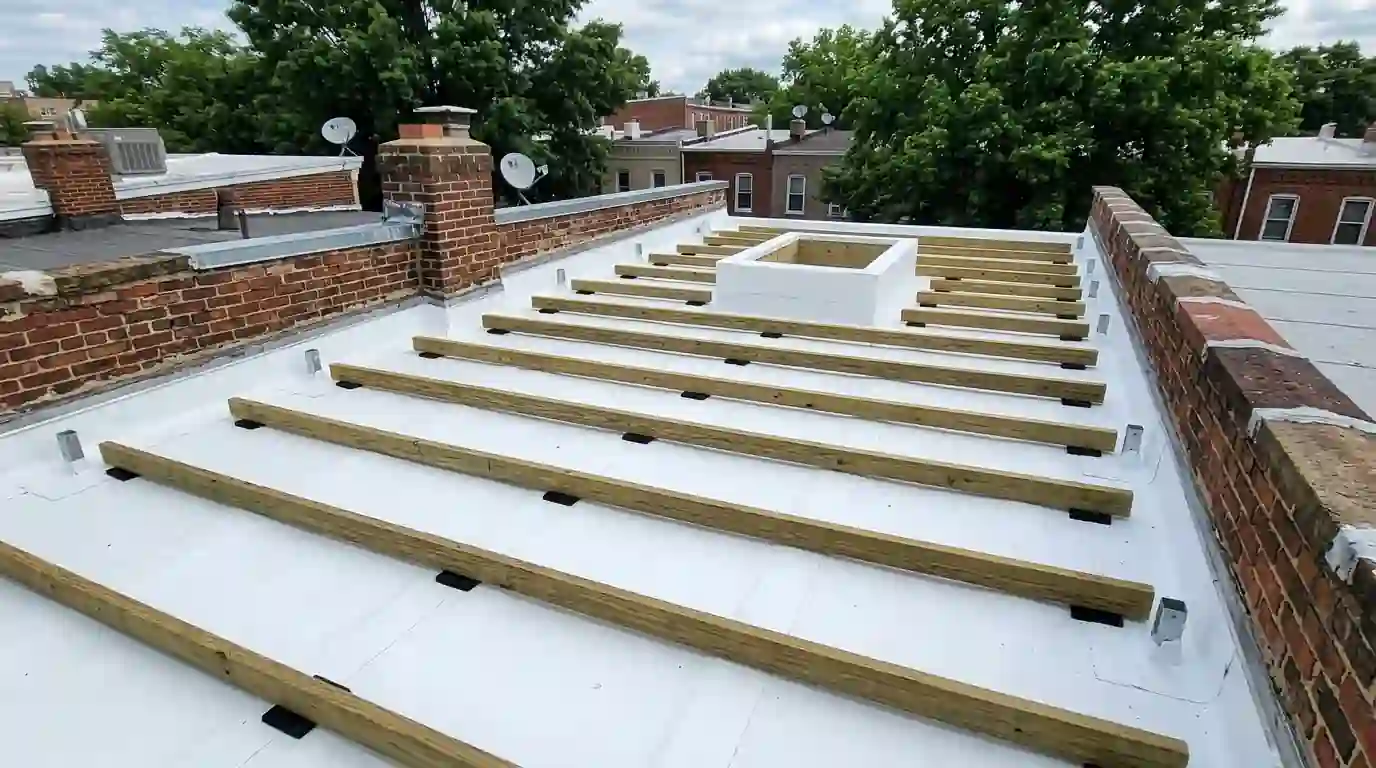
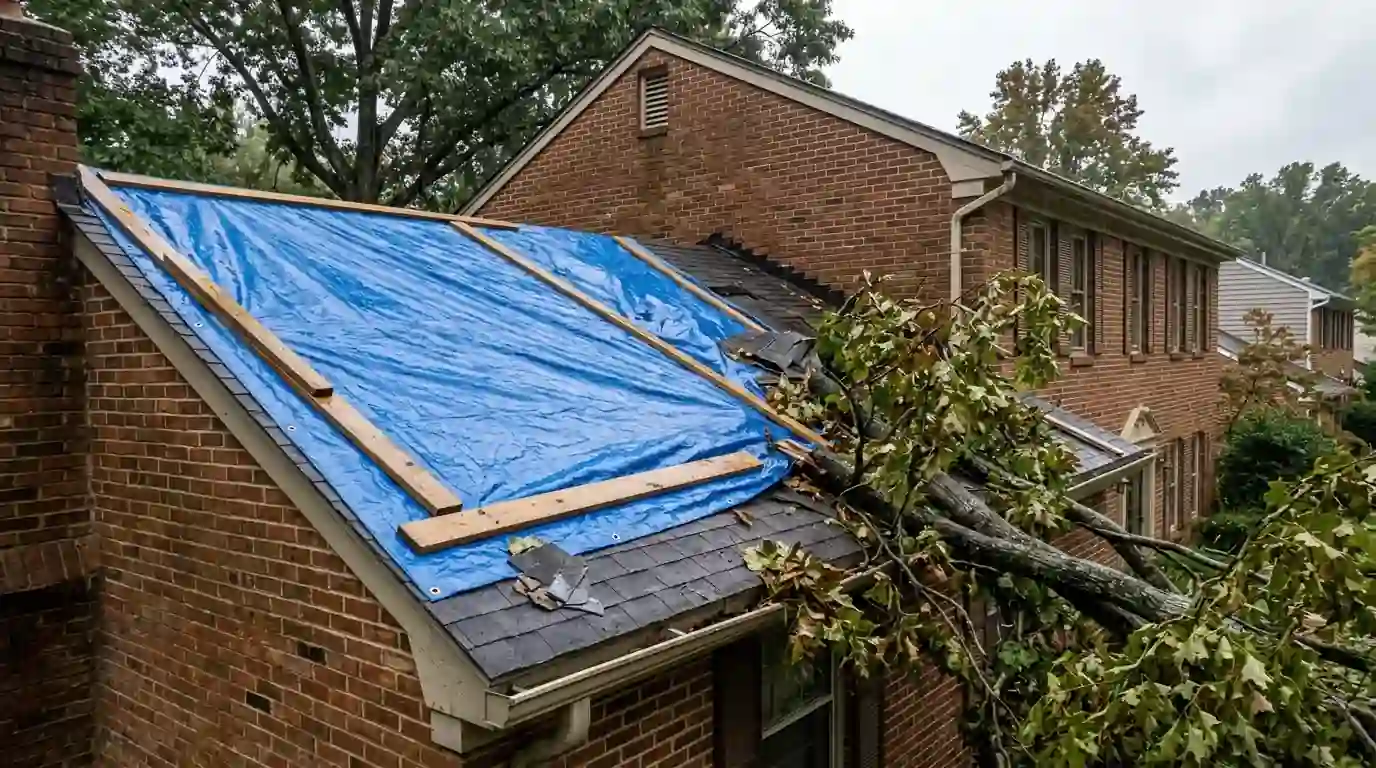
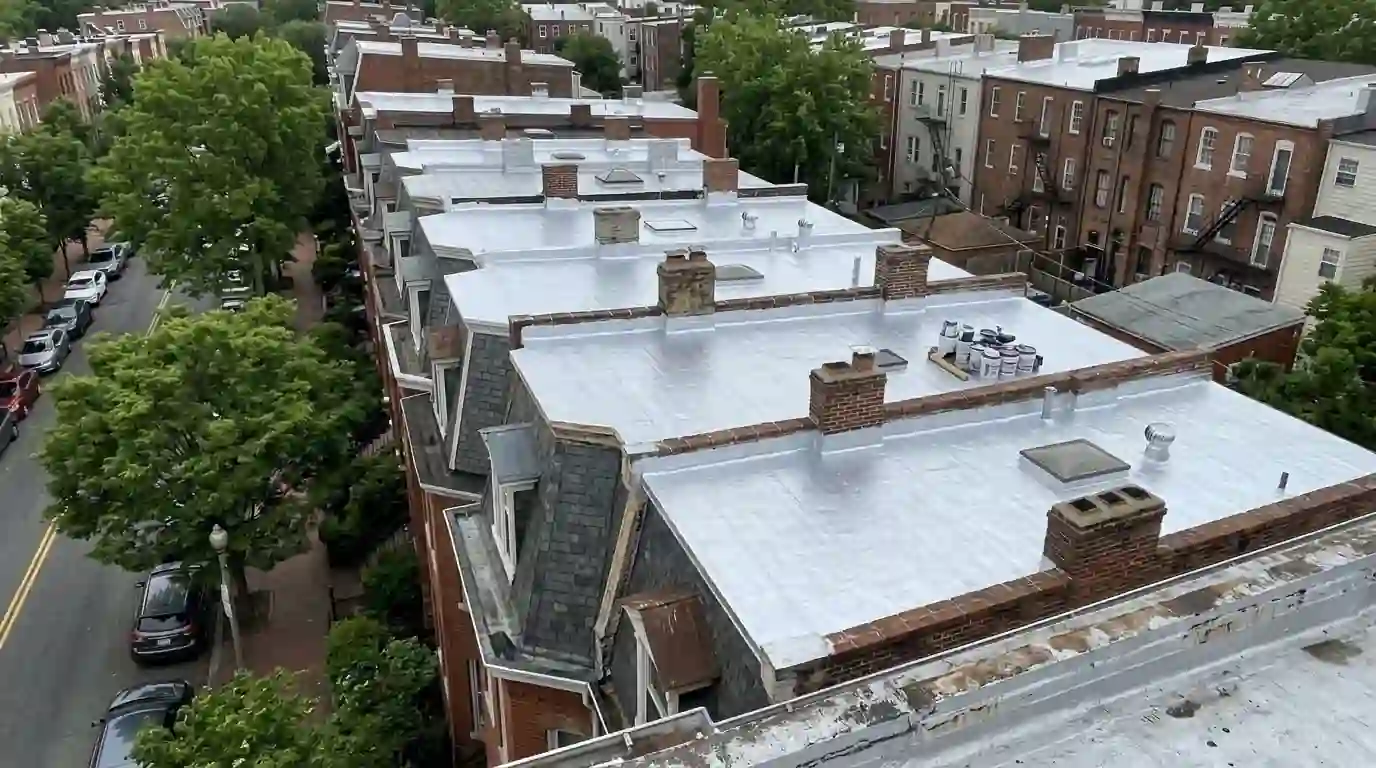
When we arrive during or right after a storm, the goal is to stop the water, not to finish the repair. On a shingle roof, that might mean a tarp secured with battens over the damaged area. On a flat rowhouse roof, it might mean clearing a blocked scupper, sealing a split seam with a temporary patch, or covering a damaged hatch.
Once the weather clears, we come back to diagnose the real cause with dry surfaces and daylight. That's when we trace the leak path, check the decking and insulation for moisture, and lay out a permanent fix. Our emergency roof repair crews carry tarps, membrane patches, sealants and battens on every call.
Emergency tarping and temporary repairs often run $385-$1,240, depending on roof height, pitch, size of the damaged area and access. Permanent repairs are priced separately after inspection. We'll explain both before the crew starts.
Some leaks can't be fully stopped until the storm passes. If wind is too strong for a safe tarp, we focus on drains and interior protection and come back as soon as conditions allow, rather than putting a crew on a roof in lightning.
After the storm: the leak that stops on its own
Many leaks stop once the rain does, especially those caused by wind-driven water or a short clog. It's tempting to forget about it. But the opening is still there, and water that got into insulation or framing can feed mold and rot over the next weeks.
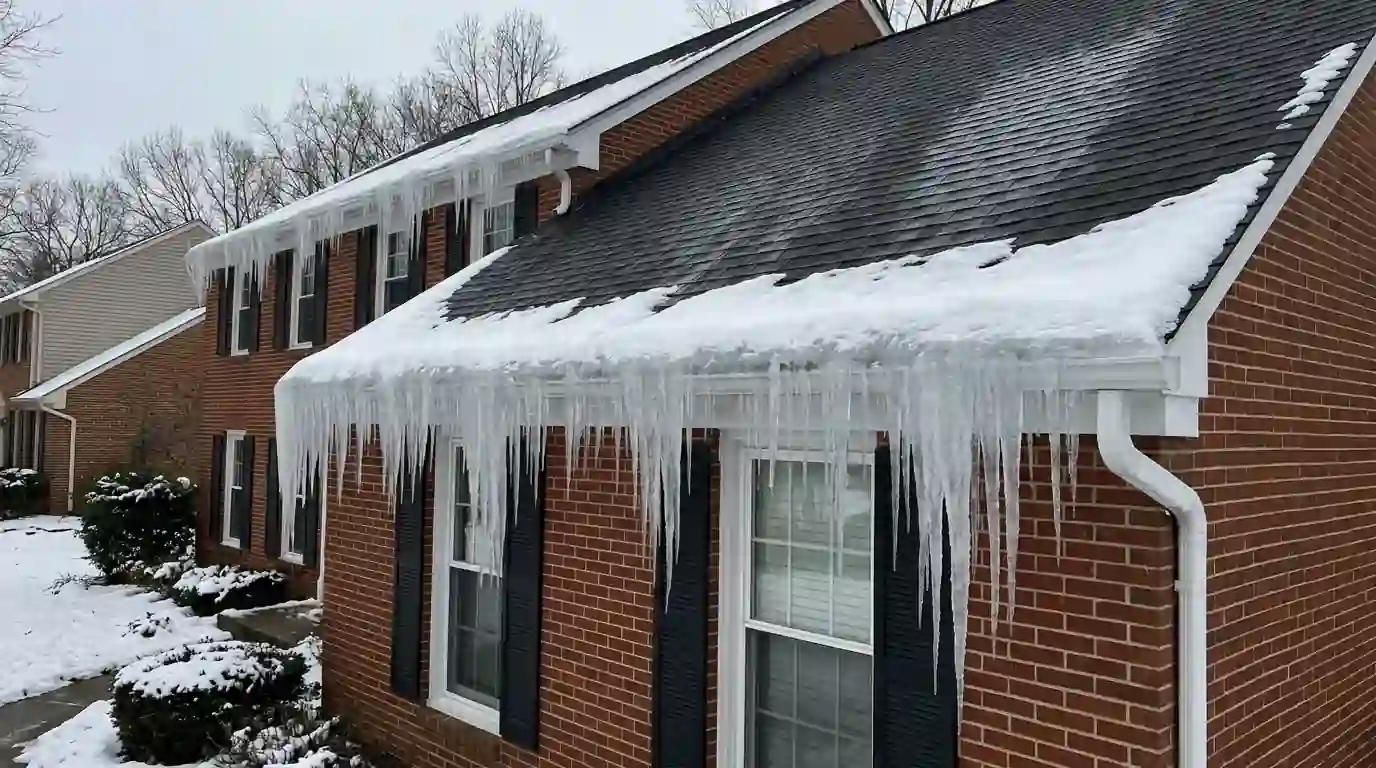
Book a check within a week or two. We'll find where the water entered, repair it, and check the surrounding roof for related wear. If the storm brought hail or fallen limbs, our storm damage roof repair visit looks at the whole roof, not just the obvious spot. For winter leaks with snow and ice, see our post on ice dams and winter roof leaks.
Call any hour and we'll talk you through it
Call (202) 771-7443 the moment you see water coming in. We answer 24 hours a day, every day, and can walk you through safe steps on the phone while a crew heads your way.
Tell us your address, where the water is showing up, and what kind of roof you have if you know. That lets us bring the right materials on the first trip.