Black showing through silver
Bare asphalt patches mean the protective layer has worn away. Recoat soon to stop the cracking that follows.
Rowhouse and specialty roofing
That flaking silver paint on your flat roof was never decoration. It's a sacrificial layer that shields the asphalt underneath from sun, and once it's gone the roof starts aging fast.
Materials we install
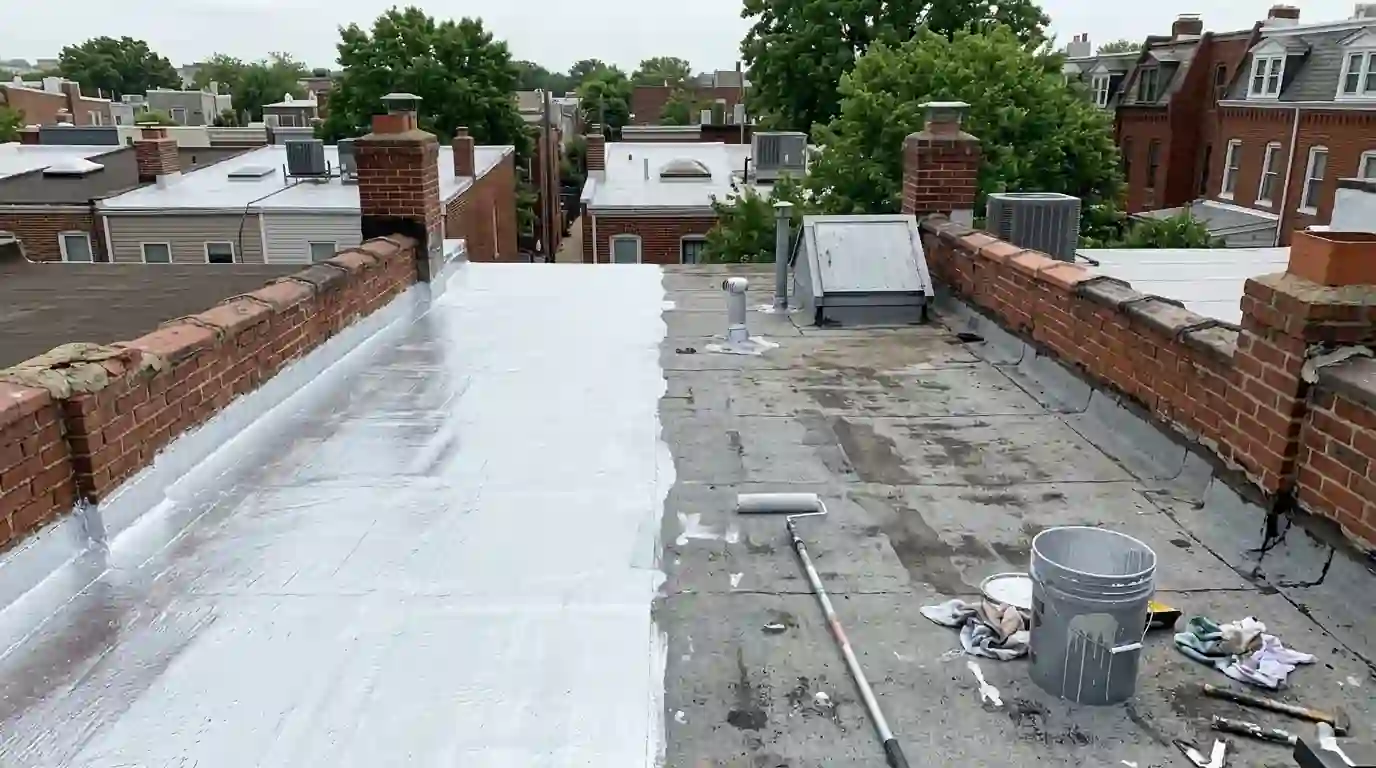
A roof coating is a liquid layer rolled or sprayed over an existing low-slope roof to block UV, reflect heat and seal small surface cracks. It suits a membrane that's still dry and attached but weathered. Recoating a typical DC rowhouse roof in fibered aluminum runs about $1,090-$1,870, and a white silicone system costs roughly two to three times that.
Bare asphalt patches mean the protective layer has worn away. Recoat soon to stop the cracking that follows.
Loose coating washing off the roof is coating that no longer protects anything.
A web of shallow cracks in the asphalt means UV has reached the binder. Coating seals them while they're still shallow.
A dark, worn roof soaks up heat. A fresh reflective layer often makes the top floor noticeably cooler.
Acrylic chalks as it ages. Light chalk is normal, but bare spots mean a recoat is due.
Climb onto almost any rowhouse roof in Columbia Heights or Trinidad and you'll see a dull silver surface. For decades, the standard flat roof in the District was a built-up or rolled asphalt roof finished with fibered aluminum coating, an asphalt-based liquid loaded with aluminum flakes that float to the top and form a reflective skin.
That skin does two jobs. It reflects a good share of summer sun, so the asphalt below doesn't cook and dry out. It also blocks ultraviolet light, which breaks down asphalt binders and makes the roof brittle. Without it, the roofing turns black, cracks into an alligator pattern and starts letting water through.
Aluminum coatings wear thin in a few years on a sunny roof. Recoating on schedule is one of the cheapest ways to stretch an older asphalt roof, and our article on what a silver roof coating actually does goes into the chemistry.
Fibered aluminum is the right partner for asphalt surfaces: built-up roofs, smooth modified bitumen and old roll roofing. It lets the roof breathe enough not to trap vapor and is cheap enough to reapply every three to five years.
White acrylic elastomeric coatings reflect more heat than silver and stretch with the roof's movement. They do well on roofs that drain properly but don't like standing water, which softens acrylic and lets it peel.
Silicone handles ponding better than acrylic and holds up to UV for a long time. The catch is that almost nothing sticks to silicone later except more silicone, so it commits the roof to that family. We use it on roofs with minor ponding that can't be re-sloped yet.
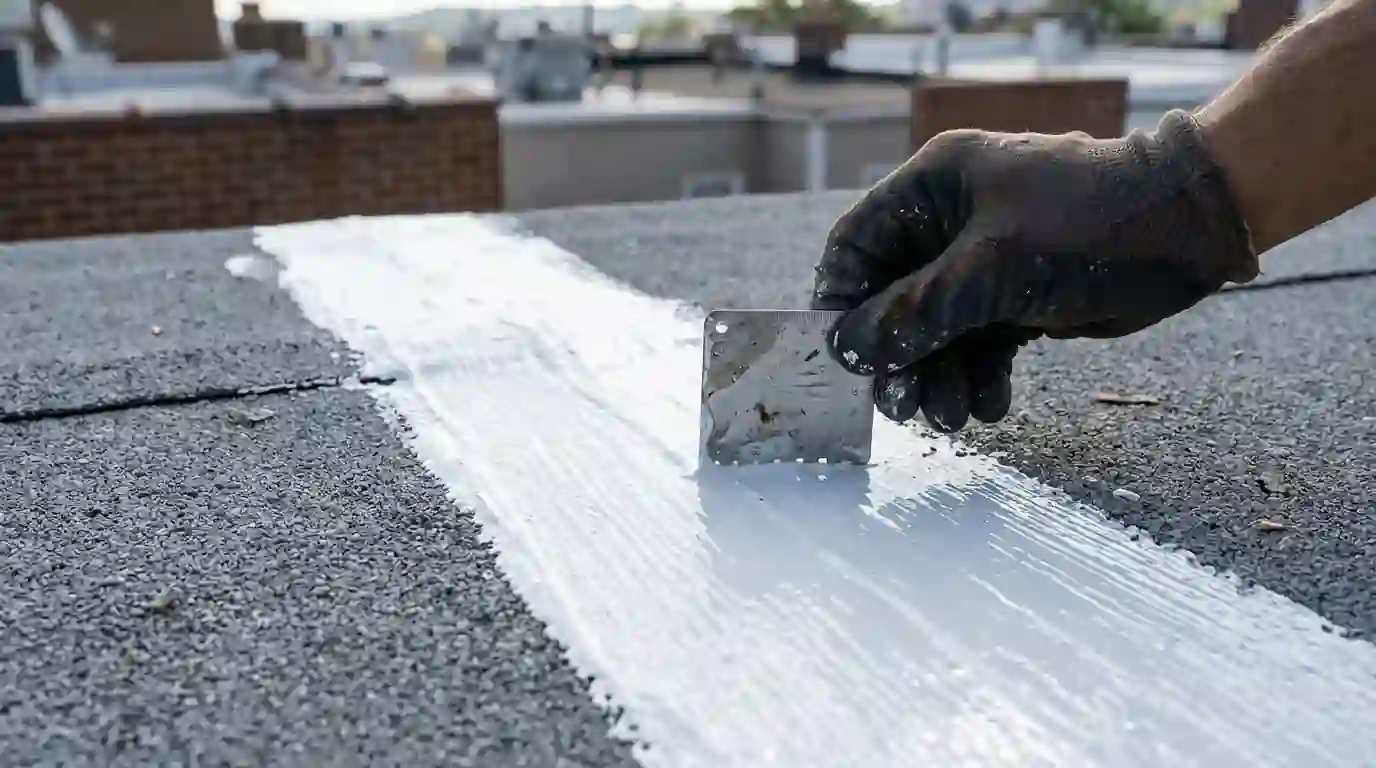
Coating over dirt is the fastest way to waste money. Rowhouse roofs collect soot, tree pollen, mortar dust from parapets and leaves from street trees, and a coating laid over that film peels within a season. We power-wash or broom-scrub the surface and let it dry fully before anything else.
Repairs come next. Blisters get cut open, dried and patched. Open seams are reset with membrane and mastic. Cracked base flashing at the parapets gets rebuilt, since no coating bridges a gap that moves. We also cut a few small test cores or run a moisture meter to confirm the insulation isn't soaked.
Wet insulation is a hard stop. A coating seals the top, and trapped water then has nowhere to go but down into your ceiling. If the cores come up wet, we'll tell you a flat roof repair or replacement has to come first.
The District has been nudging low-slope roofs toward reflective surfaces for years, and a white or bright silver top layer is part of that picture. A coating alone doesn't stand in for the requirements that apply when a roof is fully replaced, but it can make an existing dark roof run cooler until replacement time.
Owners near the end of a roof's life often do better with a new reflective membrane than with coating a tired surface. We'll lay out both paths with numbers so you can compare.
On a sound asphalt roof, a fibered aluminum recoat typically protects for three to five summers. White elastomeric coatings applied at the right thickness, usually two coats with reinforcing fabric over seams, can last eight to twelve years. Silicone often runs longer than that.
None of those numbers hold if the coating goes over a roof that's moving, wet or delaminating. That's why we look before we quote, and why we sometimes recommend skipping the coating altogether.
Some roofs are poor candidates, and saying so saves you money. A membrane with wide splits at the seams, flashing pulled away from the parapets, or a deck that flexes underfoot needs repair or replacement, not paint. Coating over those defects only hides them until a ceiling stain appears.
Roofs with heavy ponding are another warning. Acrylic softens under standing water, and even silicone can't fix a sagging deck that sends water the wrong way. If water still sits in the same low spot two days after a storm, the fix is better slope or a new outlet, not a thicker coat.
Single-ply roofs need their own approach too. Old EPDM can take a coating, but only after a special cleaner and primer, and many TPO sheets are better left uncoated and simply washed. We test a small area before committing the whole roof, and we put the results in writing so you can see why we chose the product we did.
These ranges assume a rowhouse roof of roughly 750 to 1,000 square feet with normal access from the hatch or alley. A roof walk sets the real price.
| Job | Typical range |
|---|---|
| Fibered aluminum recoat, cleaned and primed | $1,090-$1,870 |
| White acrylic elastomeric, two coats with seam fabric | $2,640-$4,580 |
| Silicone coating system | $3,170-$5,860 |
| Blister and seam repairs before coating | $290-$1,140 |
| Moisture survey with test cores | $245-$520 |
Surface condition, the number of repairs needed, primer requirements and the coating thickness the system calls for all affect the price.
We meter the roof and cut test cores where readings run high, so we know the insulation is dry.
Power-washing or scrubbing removes soot, pollen and loose old coating down to a firm base.
Defects are cut out and patched with compatible membrane before any coating goes on.
Some surfaces, like weathered modified bitumen, need a primer so the coating grips.
We roll or spray to the manufacturer's coverage rate and check wet thickness with a gauge.
Parapet base flashing, scupper boxes and pipe boots get an extra brushed coat where water works hardest.
Usually, but not directly. Aluminum coating needs a compatible primer or a thorough cleaning down to a sound layer before acrylic or silicone will stick. We test adhesion on a small patch before coating the whole roof.
Rarely by itself. Leaks usually come from flashing, seams or holes that need real repair. We fix the source first, then coat the field.
Every three to five years is typical for fibered aluminum in the DC sun. Roofs with no shade from trees or taller neighbors wear faster.
Aluminum and acrylic come off with the tear-off and cause no trouble. Silicone can complicate repairs later, since few materials bond to it, which is why we use it only where it really fits.
Dry surfaces, temperatures above about 50 degrees, and no rain expected for a day after application. In DC that means most coating happens between April and October.
It can be, but rubber needs a dedicated cleaner and primer first, or the coating peels in sheets. If the EPDM is shrinking away from the parapets or its seams are opening, repair or replacement makes more sense than a coating.
These are the places we drive to most for this work. We cover all 45 areas on our service area list.
Low-slope roof repair for DC rowhouses and additions: modified bitumen, EPDM, TPO and coated roll roofing, plus ponding areas, curbs and parapet base flashing.
Flat Roof Repair detailsWhite, high-reflectance low-slope roofs for DC rowhouses and flats, built over tapered insulation and detailed for the District's reflective roof expectations.
Cool Roof Installation detailsSpring and fall roof visits that clear gutters and drains, reseal flashing and vents and catch small failures before they turn into ceiling stains.
Roof Maintenance detailsTwo-ply modified bitumen roofs with reflective granulated caps for rowhouses, porches and roofs that carry decks, condensers and steady foot traffic.
Modified Bitumen Roofing detailsCall and a roofer will answer, any hour of any day. We stop the leak first and fix it properly once the roof is dry.