Ceiling tiles stained or sagging
Brown rings on acoustic tiles mean water is reaching the plenum, often far from where it entered the roof.
Gutters, trim and commercial
A leak over a sales floor, a sanctuary or a tenant's office costs more than the repair itself: ruined stock, closed rooms and unhappy tenants. Small commercial roofs around Washington need a roofer who can fix the problem fast and plan the replacement before the next one.
Materials we install
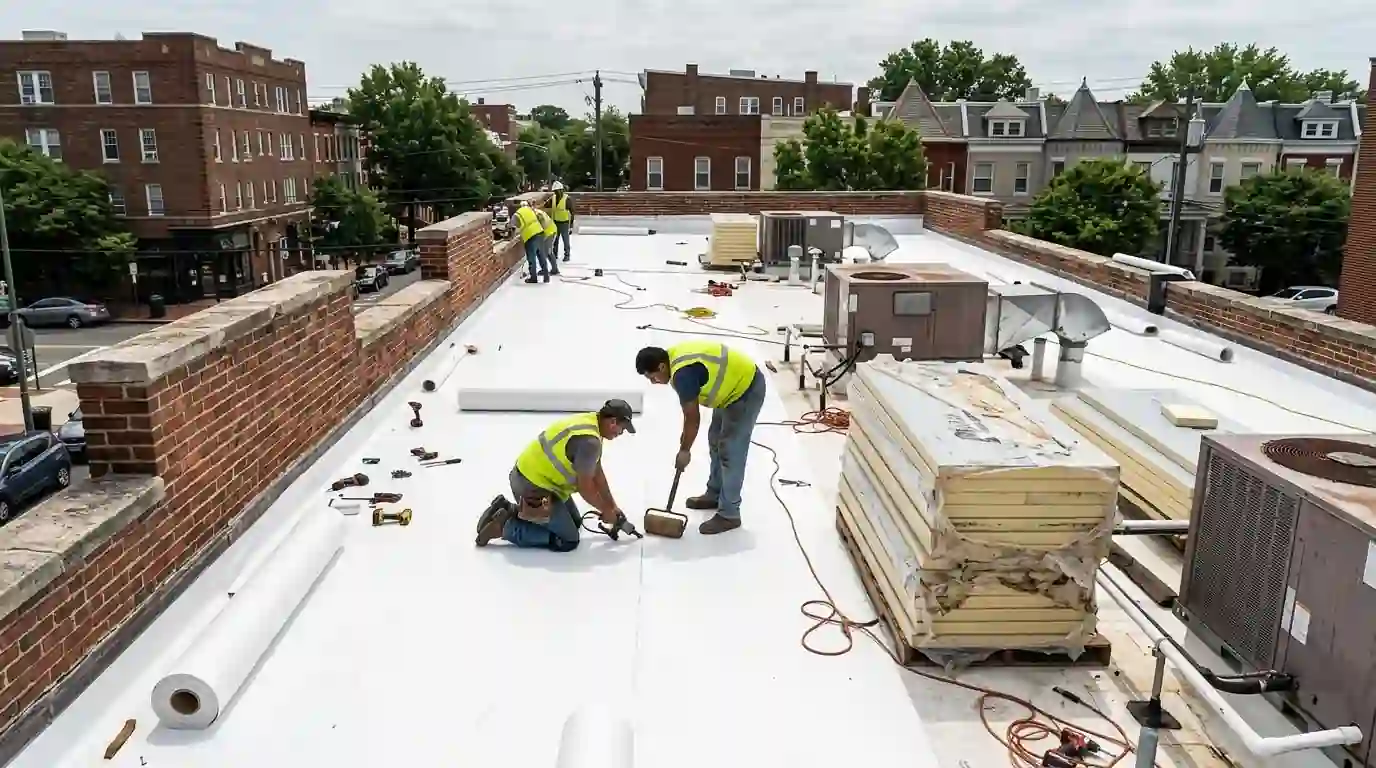
Commercial roofing covers repair, restoration and replacement of low-slope roofs on storefronts, churches, small offices, mixed-use buildings and light industrial space. You need it when leaks repeat, the membrane is blistered or split, or the roof has passed its service life. Around DC, typical repairs run $685-$3,450 and full replacements roughly $9-$17 per square foot, set by roof size, tear-off layers, insulation and access.
Our commercial work is mostly the smaller buildings that make up DC's corridors: two- and three-story storefronts on Georgia Avenue, H Street NE and Rhode Island Avenue, corner markets with apartments above, churches in Brookland and Congress Heights, medical and law offices in converted rowhouses, and one-story strip centers out in Prince George's and Fairfax counties.
Nearly all of them have low-slope roofs: built-up tar and gravel from the mid-century, modified bitumen from the 1990s and 2000s, or newer single-ply TPO and EPDM. Many carry rooftop HVAC units, exhaust fans from a restaurant kitchen, satellite dishes and old abandoned curbs. Each of those penetrations is a likely leak point and has to be flashed properly.
Churches add their own mix. A brick church may have a steep slate main roof, flat roofs over the side aisles and the parish hall, box gutters behind the parapets and a copper-clad steeple. We handle the low-slope portions, gutters and flashing ourselves and tell you plainly where a specialty trade is needed.
We begin with a core cut in an inconspicuous spot to see how many layers are on the deck and whether the insulation is wet. A moisture survey across the roof tells us whether the leak is isolated or water has spread through the insulation. Wet insulation loses most of its R-value and keeps the deck damp, so it has to come out.
If the membrane is sound and the insulation is dry, targeted repairs at the seams, curbs and edges are the right move. If the membrane is weathered but still watertight, a restoration coating can add years for a fraction of replacement cost. Once more than about a quarter of the insulation is wet, or the roof has two layers already, replacement is usually the better spend.
You'll get a written summary with photos of the core, the problem areas and the options side by side, so the owner, the board or the property manager can decide with the full picture.
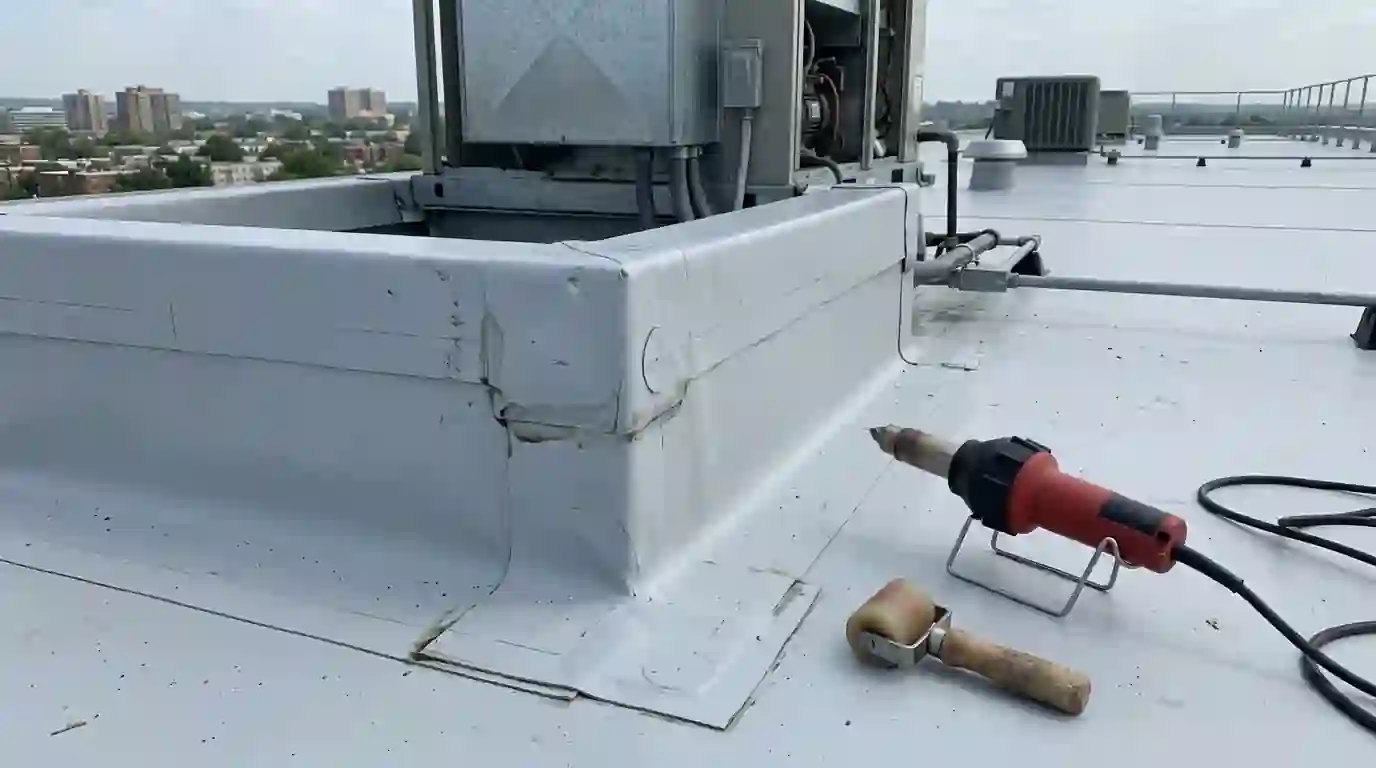
For most small commercial roofs we install a mechanically fastened or fully adhered TPO membrane over new polyiso insulation, often 60-mil Carlisle or GAF TPO in white. Heat-welded seams and a reflective surface suit the long summers here. DC energy rules push reflective membranes on low-slope roof replacements, and white TPO meets that need.
EPDM makes sense where the roof has lots of foot traffic or where the owner wants a long-lasting, simple membrane, especially on churches and older buildings. Two-ply modified bitumen with a reflective cap sheet is a strong choice around heavy rooftop equipment and on roofs that take a beating from maintenance crews. Our TPO roofing page goes deeper on that membrane.
Insulation is where commercial replacements earn back money. Adding tapered polyiso during a tear-off fixes ponding, improves drainage to the outlets and brings the roof up to current energy code, which lowers cooling bills for the floor below.
We plan commercial tear-offs to keep the building open. Restaurants usually want work done before lunch service, so we start early and keep the kitchen exhaust running. For churches, we finish loud work and material lifts before weekend services and keep the entrance clear. For office tenants, we post notices, schedule the noisiest cutting first thing in the morning and close each section watertight by the end of every day.
On corridor buildings, the street side is often the only staging area. We arrange public space permits with DDOT where a dumpster or lift needs curb space, and we coordinate with the building's HVAC contractor when a rooftop unit has to be lifted so the curb can be reflashed. DC roof replacements generally need a permit from the DC Department of Buildings, which we pull before work starts.
In Maryland and Virginia, the county permit office handles similar requirements, and we include that paperwork in the job.
Most commercial roof leaks start at the same handful of spots: rooftop unit curbs, pitch pans around pipes, parapet base flashing, edge metal and clogged drains. A twice-a-year check that clears outlets and reseals those details catches small failures before they become ceiling tiles on the floor. Our roof maintenance plans are built around those points.
We also keep a simple record for each building: photos of the roof, the date and scope of every repair and the condition of each outlet. Property managers and church facility committees find that record useful when planning budgets or showing an insurer the roof has been looked after. If you manage a building with a leak today, call (202) 771-7443 and tell us the address and roof type.
Brown rings on acoustic tiles mean water is reaching the plenum, often far from where it entered the roof.
Bubbles in modified bitumen or cracks in old EPDM show trapped moisture or a membrane at the end of its life.
Puddles still there 48 hours after rain stress the membrane and point to sagging deck or blocked drains.
Edge flashing that lifts in wind is how many commercial roofs start peeling back in a storm.
Drips near HVAC curbs or exhaust fans usually trace to failed curb flashing or condensate lines.
A spongy feel when walking the roof means wet insulation or rotted decking under the membrane.
We inspect the roof, take a core sample and trace stains on the ceilings inside.
Wet insulation is mapped, and you get photos and repair or replacement options in writing.
We pull permits, arrange curb space if needed and set work hours around tenants or services.
Only what can be dried in that day comes off, so the building stays watertight overnight.
Tapered insulation goes down, then the membrane, curb flashings, edge metal and drain sumps.
We inspect every seam, flood-test the drains and hand over photos, warranty papers and permit records.
These are typical 2026 ranges for small commercial and institutional buildings in DC, suburban Maryland and Northern Virginia.
| Job | Typical range |
|---|---|
| Leak repair at curbs, drains or seams | $685-$3,450 |
| Restoration coating over sound membrane, per sq ft | $3.15-$6.40 |
| TPO replacement with tear-off, per sq ft | $9.35-$15.80 |
| Modified bitumen two-ply replacement, per sq ft | $10.20-$17.10 |
| Rooftop unit curb reflashing, each | $845-$2,165 |
Layers to tear off, wet insulation, tapered insulation for drainage, crane or lift access and after-hours work all change the price. We price each building from the core sample and roof survey.
Yes. We schedule tear-off and material lifts during the week, keep the main entrance and parking clear, and close the roof watertight each day. Loud work stops before any scheduled service or event you tell us about.
DC energy rules generally push reflective, cool-roof membranes on low-slope roof replacements. White TPO and reflective cap sheets meet that need. We confirm the current requirement for your building when we pull the permit.
We coordinate with your HVAC contractor to disconnect and lift the unit, then rebuild the curb height to suit the new insulation and flash it into the membrane. The unit goes back on the same day in most cases.
Of course. We send the report, photos, schedule and invoices to whoever manages the building, and keep tenant notices short and clear.
We install the waterproofing and root barrier layers and can coordinate the growing system. DC's RiverSmart Rooftops program through DOEE has offered green roof rebates, so check the current terms before planning.
These are the places we drive to most for this work. We cover all 45 areas on our service area list.
Heat-welded white TPO membranes for rowhouse and low-slope roofs, built to meet DC cool roof expectations and shrug off ponded water.
TPO Roofing detailsTear-off and new low-slope roofs for rowhouses and flats, with tapered insulation for ponding, new parapet flashing and reflective cool roof membranes.
Flat Roof Replacement detailsSilver aluminum and white reflective coatings for DC low-slope roofs, applied over a cleaned, repaired surface to add years to a membrane that's still sound.
Roof Coating detailsSpring and fall roof visits that clear gutters and drains, reseal flashing and vents and catch small failures before they turn into ceiling stains.
Roof Maintenance detailsCall and a roofer will answer, any hour of any day. We stop the leak first and fix it properly once the roof is dry.