Early 1900s rows
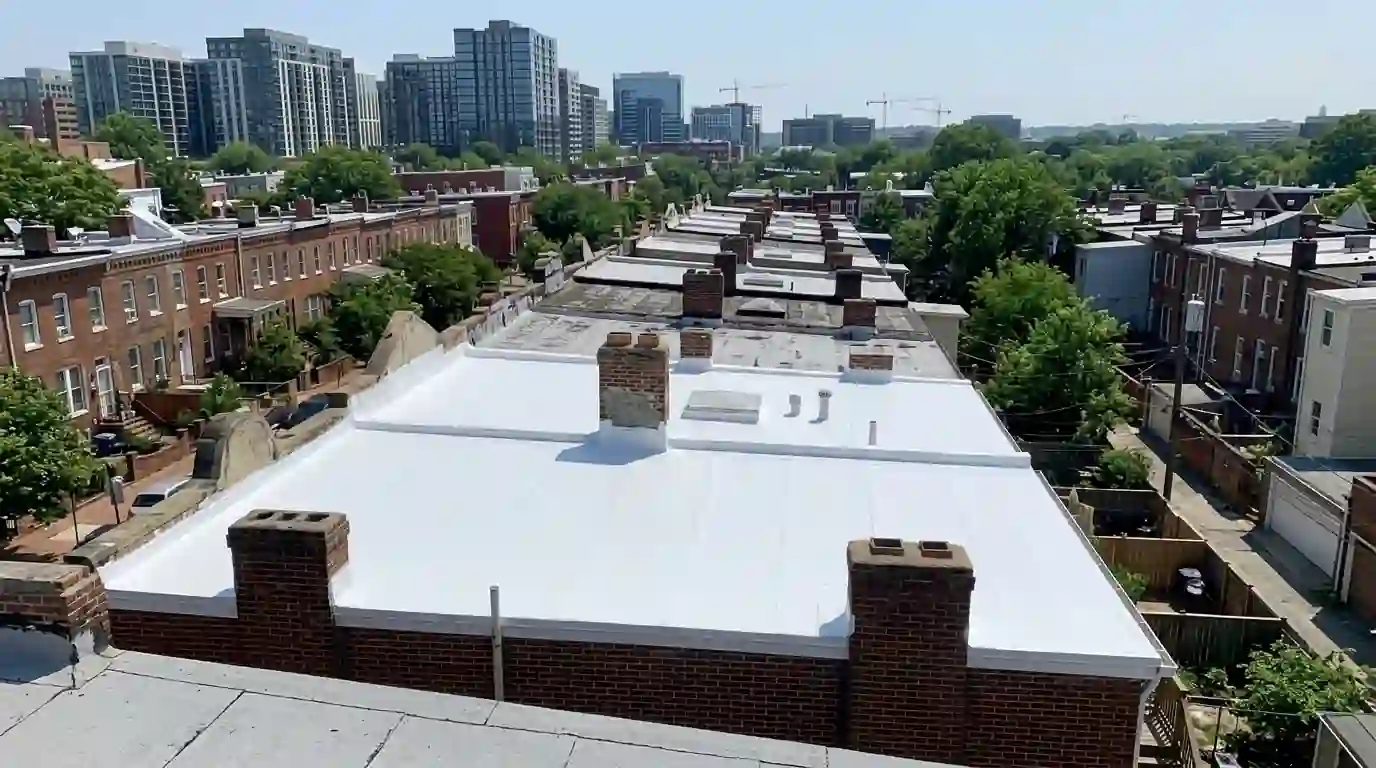
Brick rowhouses with flat roofs behind short parapets and small front cornices make up most blocks.
Washington, DC neighborhoods
Eckington's brick rowhouses sit a few blocks from the glass towers of NoMa, and the same DC energy rules that shaped those new buildings now apply when an old rowhouse roof gets replaced. That makes the choice of membrane a bigger decision than it used to be.
When an Eckington flat roof is replaced, DC rules generally push a reflective cool roof surface, usually white TPO or a light-colored modified bitumen cap. Expect $7,860-$13,950 for a typical rowhouse, depending on layers, insulation and parapet work. Some owners add a green roof and check DOEE's RiverSmart Rooftops program for current rebate terms before planning.
Most Eckington rowhouses were built in the early 1900s with dark built-up or roll roofs, and many have since been covered with black modified bitumen or silver-coated patches. When you replace a low-slope roof today, DC energy rules generally expect a reflective surface. In practice that means a white or light gray membrane that bounces summer sun instead of soaking it into the top floor.
We usually install a 60-mil white TPO welded at the seams, or a granulated white cap sheet over a modified bitumen base when the owner wants a more traditional system. Either one keeps the third-floor bedroom noticeably cooler in July. Our cool roof installation page compares the options in more detail.
Insulation is the other half of the energy story. Many of these roofs have nothing between the deck and the ceiling joists. Adding a layer of polyiso board over the deck during tear-off raises the roof slightly, so we adjust the parapet flashing heights and scupper openings to match.
Eckington drains toward the combined sewer system that overflows during heavy storms, which is part of why DOEE has offered RiverSmart Rooftops rebates for green roofs across the city. A shallow sedum system adds weight, so the first question is whether the joists can carry it when saturated. We look at joist size and span from inside the top floor before suggesting it.
If the structure works, we install a root barrier over a new membrane, a drainage mat and a thin growing layer with sedum plugs or mats. Program terms and rebate amounts change, so check DOEE's current rules before counting on a rebate. Our green roof installation page lays out the build layers.
A white membrane does not fix bad flashing. The leaks we find most on blocks along R Street NE, Quincy Place and around Harry Thomas Way come from three spots: the joint at each party wall, the rear scupper and the base of the small front cornice or bay roof.
Several streets here back onto the railroad embankment and the Metropolitan Branch Trail. Rear walls facing that open stretch take more wind, and we often find lifted membrane edges and loose metal coping on that side. We refasten edges with continuous cleats and seal laps before they become a peeled roof.
Because the blocks are short and many rows were built together, your roof likely ties into your neighbor's on both sides. We cut a clean edge, lap onto their membrane and seal it so the transition stays watertight.
Eckington has rear alleys on most blocks, and that is where we set up our hoist and debris trailer. Some alleys run tight beside garages and new infill houses, so we bring a shorter trailer and make extra runs. Street parking near Florida Avenue and the NoMa-Gallaudet Metro fills fast, so roll goods arrive first thing in the morning.
Brick rowhouses with flat roofs behind short parapets and small front cornices make up most blocks.
Many roofs still carry black roll roofing or silver coating that will need a reflective membrane at replacement.
Original roofs rarely had insulation, so tear-off is the time to add rigid board above the deck.
Homes backing onto the rail line and trail see more wind on rear edges and copings.
Eckington is not a designated historic district, so roof replacements go through a standard DOB permit.
White, high-reflectance low-slope roofs for DC rowhouses and flats, built over tapered insulation and detailed for the District's reflective roof expectations.
Cool Roof Installation detailsTear-off and new low-slope roofs for rowhouses and flats, with tapered insulation for ponding, new parapet flashing and reflective cool roof membranes.
Flat Roof Replacement detailsHeat-welded white TPO membranes for rowhouse and low-slope roofs, built to meet DC cool roof expectations and shrug off ponded water.
TPO Roofing detailsSedum and planted roofs for DC rowhouses and alley garages, built on a root-resistant membrane after a structural check, with RiverSmart Rooftops rebate paperwork support.
Green Roof Installation detailsTear-off and new low-slope roofs for DC rowhouses, with party-wall parapets, rear ells, neighbor tie-ins and the rear scupper that carries all the water handled properly.
Rowhouse Roofing detailsRepairs to the brick walls that rise above rowhouse roofs: loose coping, cracked caps, open mortar, failed through-wall flashing and the membrane where it meets the parapet.
Parapet Wall and Coping Repair detailsDC energy rules generally push a reflective surface on low-slope replacements. White TPO and light granulated cap sheets both qualify in most cases. We confirm the current requirement when we pull the permit.
On a top floor directly under the roof, the difference is easy to feel on a summer afternoon. How much it changes a bill depends on insulation and your air conditioning, so we avoid promising a number.
Many can carry a thin sedum system, but it depends on joist size and span. We check from inside before recommending one.
Call (202) 771-7443. We look at the roof and the top floor, explain the membrane options and give you a price range based on what we see.
Call any hour. We answer 24/7 and tell you when a roofer can be at your house.