Repeat leaks in top-floor units
When the same unit reports a leak after every heavy storm, patching has stopped working.
Gutters, trim and commercial
When the roof over a condo or co-op leaks, the water usually lands in one unit while the decision sits with the board. Getting from that first ceiling stain to a fixed roof takes a clear report, a fair price and a plan residents can live with.
Materials we install
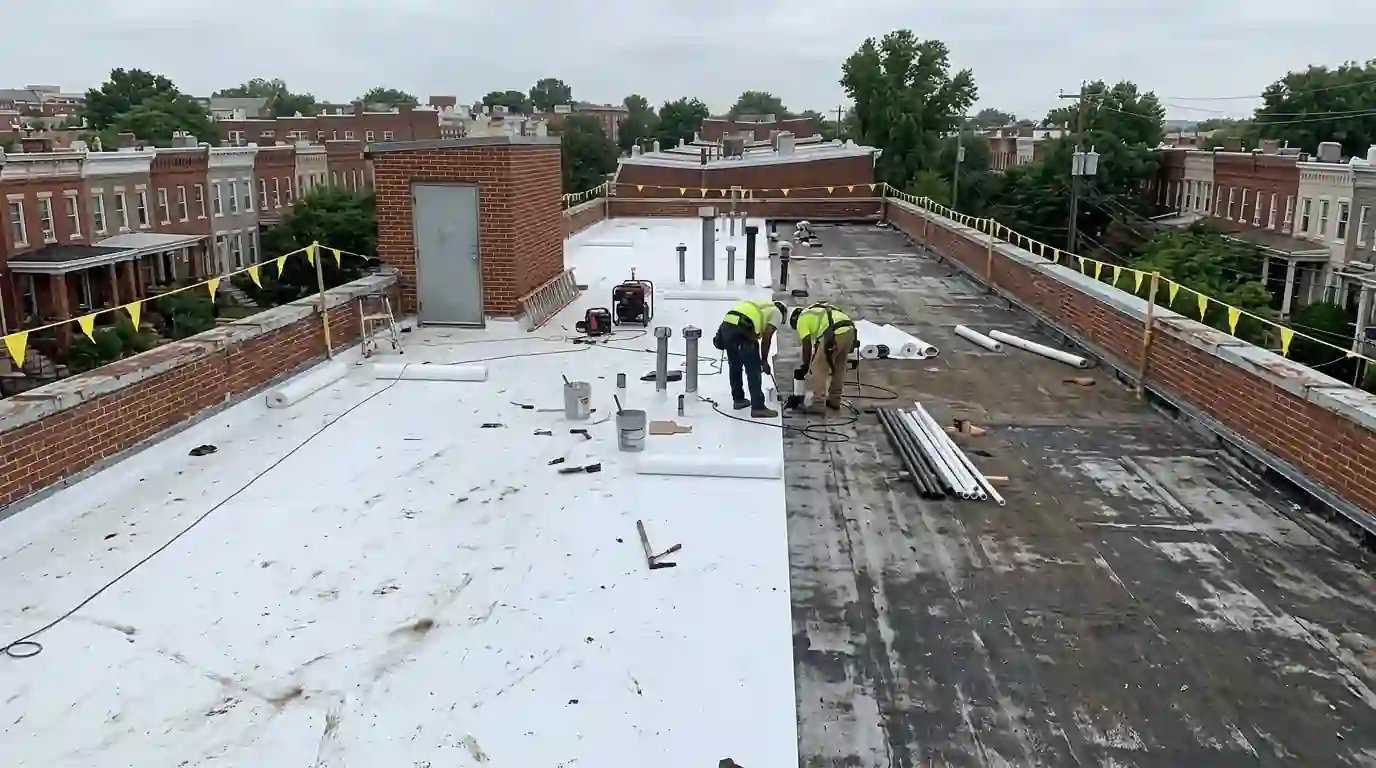
Condo and multifamily roofing is repair and replacement work on shared roofs: rowhouse condo conversions, garden-style apartment buildings, mid-rise co-ops and townhouse associations. It's needed when leaks repeat in top-floor units, the membrane has aged out or a reserve study says the roof is due. In the DC area, repairs commonly run $585-$3,240 and replacements about $8.75-$16.40 per square foot, depending on size, layers and access.
Condo conversions are everywhere in Columbia Heights, Petworth and Bloomingdale: a single rowhouse split into two to four units, often with a pop-up third floor and a roof deck belonging to the top unit. The roof is common property under most bylaws, while the deck is a limited common element. That split matters when deciding who pays for flashing around the deck posts.
Larger buildings range from 1920s and 1930s apartment blocks along Connecticut Avenue and in Mount Pleasant to the garden apartments of Silver Spring, Arlington and Alexandria. Many of those have low-slope roofs behind parapets, internal drains and a forest of plumbing vents, exhaust fans and old TV antenna mounts. Townhouse associations in Fairfax and Prince William often have pitched shingle roofs that are replaced building by building.
Co-ops work a little differently from condos, since the corporation owns the whole building. In both cases we deal with the board, a property manager or a building engineer, and we follow whatever approval steps your governing documents require.
Boards and managers don't need roofing jargon. They need to know what's wrong, what it will cost to fix now, what it will cost to put off and how long the roof has left. Our condition report covers each of those with photos, a roof plan marked with problem spots and a short list of options ranked by cost and expected life.
We write it so a volunteer treasurer can read it and so it can go into the meeting packet without editing. If your reserve study gives a remaining-life figure, we'll tell you whether what we see on the roof agrees with it. Reserve studies are often written from the ground and can be off by years in either direction.
For buildings with recurring leaks, we start with a detailed roof inspection, including a core cut to count layers and check insulation. That one visit often settles the repair-or-replace question that has been on the agenda for three meetings running.
Water rarely enters directly above the stain. On a flat roof it can travel along the deck or a joist for several feet before dropping through a light fixture in a top-floor unit. We go into the affected unit with the owner's permission, map the stain and then work outward on the roof from the nearest penetrations, seams and parapet flashings.
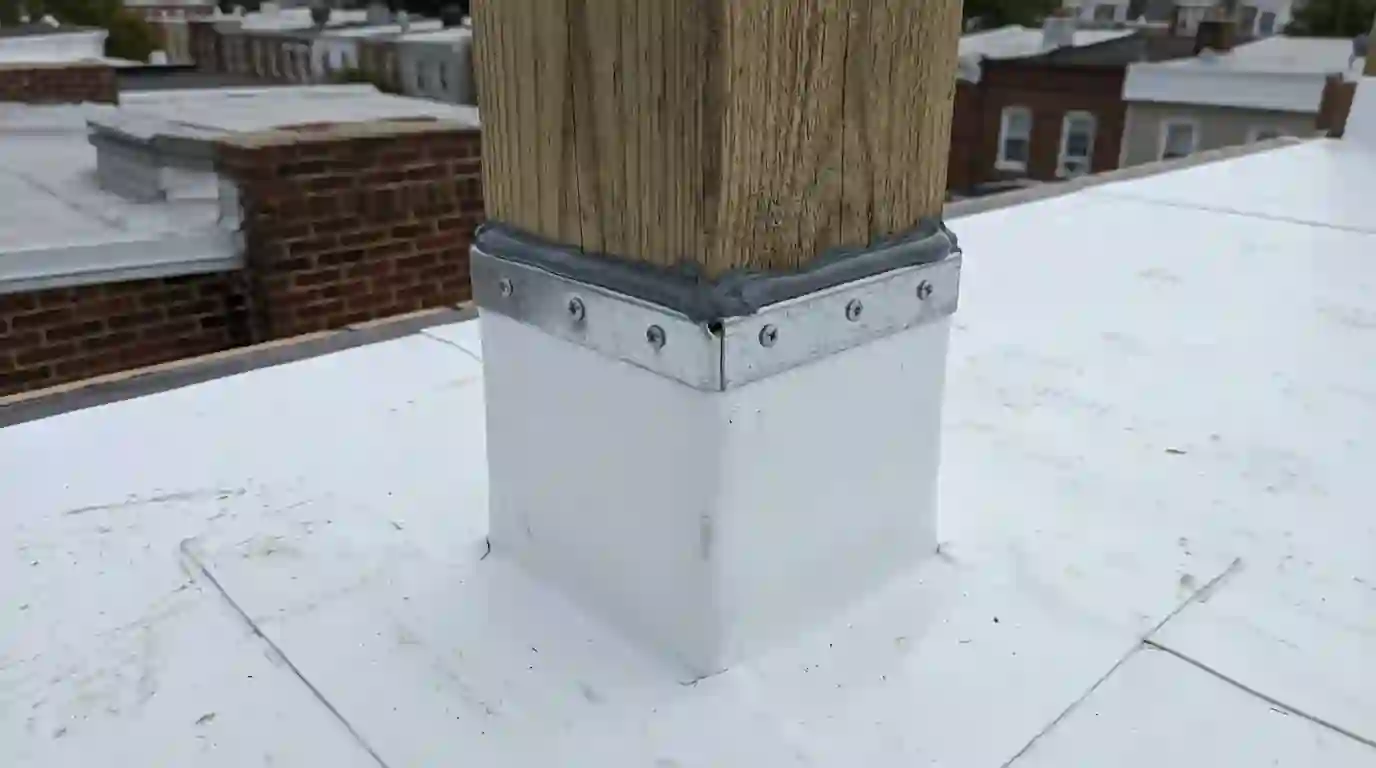
Roof decks over condo units are a frequent culprit. Posts or sleepers fastened through the membrane, planters that trap water and decking that blocks drainage all cause leaks that look like roof failures. When the deck is the problem, we explain where the waterproofing failed and what the deck owner and the association each need to address; our page on roof deck waterproofing covers the fix.
Party walls between separate rowhouse condo buildings cause trouble too. Where two roofs meet at a shared parapet, a gap in the flashing on the neighbor's side can send water into your building. We'll show you exactly where it is so the two associations can sort it out.
Residents stay home during most of our multifamily replacements, so the job is planned around them. We send a notice through the manager a week ahead with dates, hours, parking changes and what to expect inside: noise, dust from ceiling fixtures and the smell of adhesives or torch work. Top-floor residents get a direct contact.
Tear-off happens in sections no larger than we can dry in the same day. Every evening the open area is sealed, and we check the weather forecast before stripping each section. On larger buildings we stage materials by crane early in the morning to keep the street clear the rest of the day.
We usually recommend white TPO or a reflective modified bitumen system with tapered insulation for multifamily flat roofs. Reflective membranes keep top-floor units cooler and meet DC's cool-roof push on low-slope replacements. DC roof replacements generally need a permit from the Department of Buildings, and buildings in historic districts such as Mount Pleasant or Woodley Park may also need sign-off from the Historic Preservation Office for visible changes.
A roof replacement is often one of the biggest single expenses an association faces. Regular maintenance lets the board stretch the roof's life and plan the replacement into the reserves rather than voting on a special assessment after a bad winter. We offer twice-yearly maintenance visits that clear drains, reseal penetrations and update the condition notes for the board.
When the time comes, we can price the work in phases, for example one wing per year or the worst section first, so the cost lands across more than one budget cycle. Call (202) 771-7443 and ask for a condition report on your building.
When the same unit reports a leak after every heavy storm, patching has stopped working.
A roof covered in mismatched repairs is spending maintenance money that could go toward replacement.
Standing water near outlets means drains are clogged or the roof surface has sagged.
Splits where the membrane turns up the wall let water into exterior walls and top-floor units.
Stains under a private roof deck usually mean fasteners or sleepers have broken through the membrane.
If the study shows a few years of life left, it's time to verify that from the roof itself.
We walk the roof, take core samples and look at leaks inside units with owner permission.
You get a written condition report with photos, a marked roof plan and priced options.
Once the board votes, we set dates, pull permits and send resident notices through the manager.
Tear-off and installation proceed in daily sections, sealed watertight before we leave.
Deck posts, parapets, drains and vents are flashed to the new membrane with care.
The board receives photos, permit records and warranty documents for the association files.
These typical 2026 ranges cover small condo buildings, apartment blocks and co-ops in DC, Maryland and Northern Virginia.
| Job | Typical range |
|---|---|
| Leak tracing and repair over one unit | $585-$1,640 |
| Condition report for the board | $365-$845 |
| Rowhouse condo flat roof replacement | $11,850-$21,400 |
| Mid-size building TPO replacement, per sq ft | $8.75-$16.40 |
| Roof deck post and sleeper reflashing | $945-$2,380 |
Building height, crane access, number of layers, roof deck removal and reinstallation and wet insulation all change the price. We quote after inspecting the roof and the units below it.
That depends on your bylaws. The deck is often a limited common element belonging to one unit, while the roof is common property. We document exactly where the water entered so the board can apply its own rules.
Yes. We can attend in person or by video call, walk through the photos and answer questions from owners. Many boards find that faster than passing emails back and forth.
Only the area we can close the same day is opened, and each section is sealed watertight before we leave. We cover attic access points and give top-floor residents a direct number to call.
All at once is usually cheaper per square foot and gives one warranty start date. Phasing makes sense when reserves are tight, and we plan the seams between phases so they're watertight in the meantime.
Many do, since it spreads the cost and lets the board match each building's actual condition. We keep the same shingle line and color across phases so the community looks uniform when the last building is finished.
These are the places we drive to most for this work. We cover all 45 areas on our service area list.
Tear-off and new low-slope roofs for rowhouses and flats, with tapered insulation for ponding, new parapet flashing and reflective cool roof membranes.
Flat Roof Replacement detailsWaterproofing under new and existing rowhouse roof decks: tough membrane, protection board, pedestals and flashed post supports that never puncture the roof.
Roof Deck Waterproofing detailsLow-slope roof repair and replacement for storefronts, churches, offices and small mixed-use buildings, with work scheduled around tenants, services and business hours.
Commercial Roofing detailsSpring and fall roof visits that clear gutters and drains, reseal flashing and vents and catch small failures before they turn into ceiling stains.
Roof Maintenance detailsCall and a roofer will answer, any hour of any day. We stop the leak first and fix it properly once the roof is dry.