Water actively dripping
Any steady drip through a ceiling, light fixture or wall during rain needs a response that night, not next week.
Roof repair
Water pouring through a ceiling at 2 a.m. does not wait for business hours, and neither do we: the phone at (202) 771-7443 is answered every hour of every day.
Materials we install
Emergency roof repair is the work done to stop water from entering right now: a secured tarp, a temporary membrane patch, or a dry-in after a tree or limb breaks through. You need it when a leak is active, when wind has opened the roof, or when debris has punctured it. Most emergency visits in DC run about $485 to $1,580, more if a tree is involved.
A person picks up, asks where the water is and how bad it is, and gives you steps to take while we drive.
We load tarps, membrane, plywood, ladders and lights to suit your roof type and the damage you describe.
We look at the weather, the roof surface and the access before anyone climbs, and set up tie-off points.
We tarp, patch or dry in the opening using the method that suits that roof, then check inside that the drip has slowed or stopped.
Photos of the damage, the temporary work and the interior go to you the same day for your records.
Before we leave, we set a time to come back in daylight and price the full repair.
Any steady drip through a ceiling, light fixture or wall during rain needs a response that night, not next week.
A sagging bubble in plaster or drywall holds water and can come down without warning.
Even if no water is inside yet, a punctured deck will leak at the next rain and the limb can shift.
Wind that lifts the edge of a flat roof sheet keeps working on it, and each gust peels back more.
A bare patch of decking or underlayment showing after a storm leaves the house open to the next band of rain.
Leaks reaching wiring, fixtures or the panel area are a safety problem as well as a roofing one.
Move electronics, rugs and furniture out from under the water, and put a bucket or storage bin under the drip. If the ceiling plaster is bulging, poke a small hole at the lowest point with a screwdriver so the water drains into the bucket instead of bringing the whole ceiling down.
If water is near light fixtures or outlets, turn off that circuit at the panel. Do not go onto the roof in the dark or in lightning, especially on a rowhouse with a low parapet, and do not climb a wet ladder to a porch roof. Our post on steps to take while water is coming in covers the details.
Then call us. Tell us where the water is showing up, what kind of roof you have if you know, and how the roof is reached. That short conversation tells us whether to load a ladder for a front porch, a roof hatch kit for a rowhouse or saws and plywood for a fallen limb.
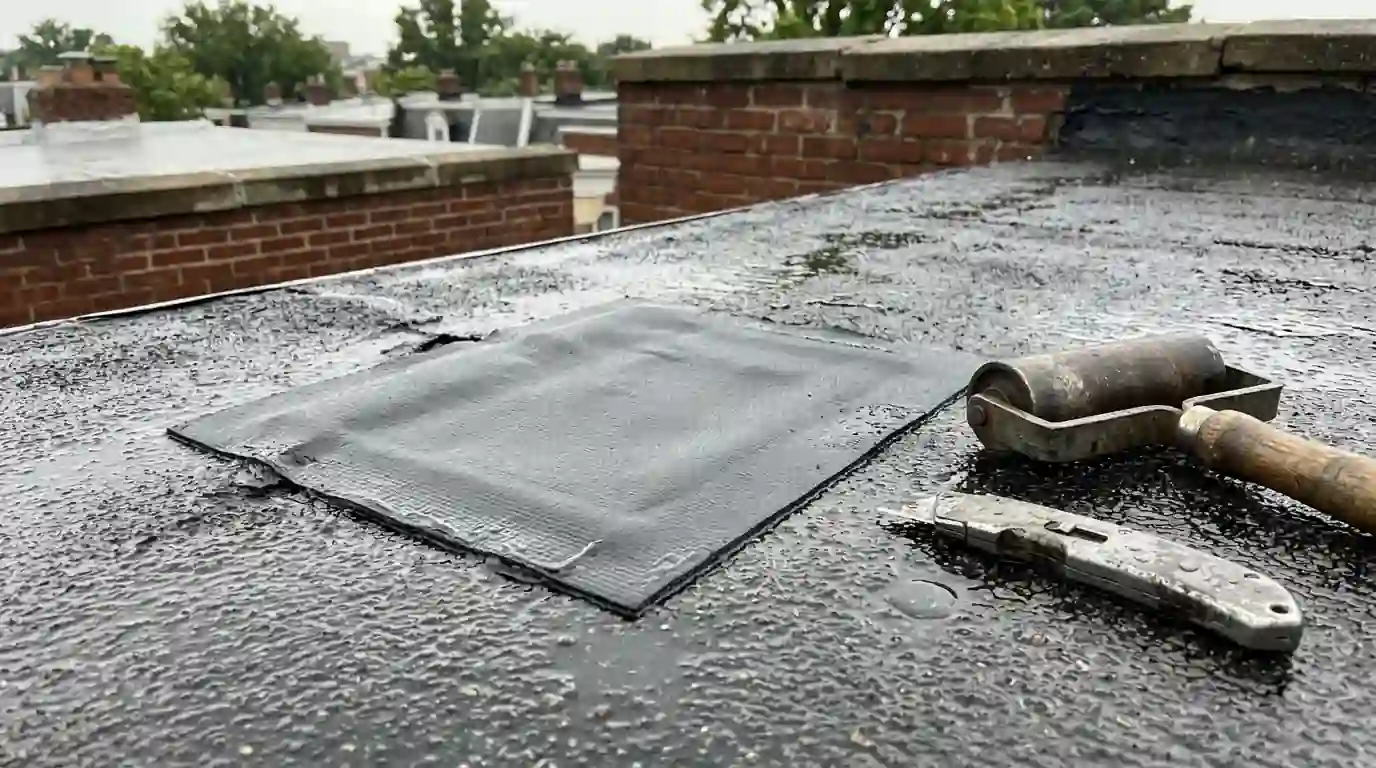
On a low-slope rowhouse roof, a tarp is often the wrong tool, because wind gets under it and parapets give us little to tie down to. We usually seal the opening with a self-adhering membrane or cut in a piece of compatible sheet, sealed at the edges. It holds until we can make a permanent repair in daylight.
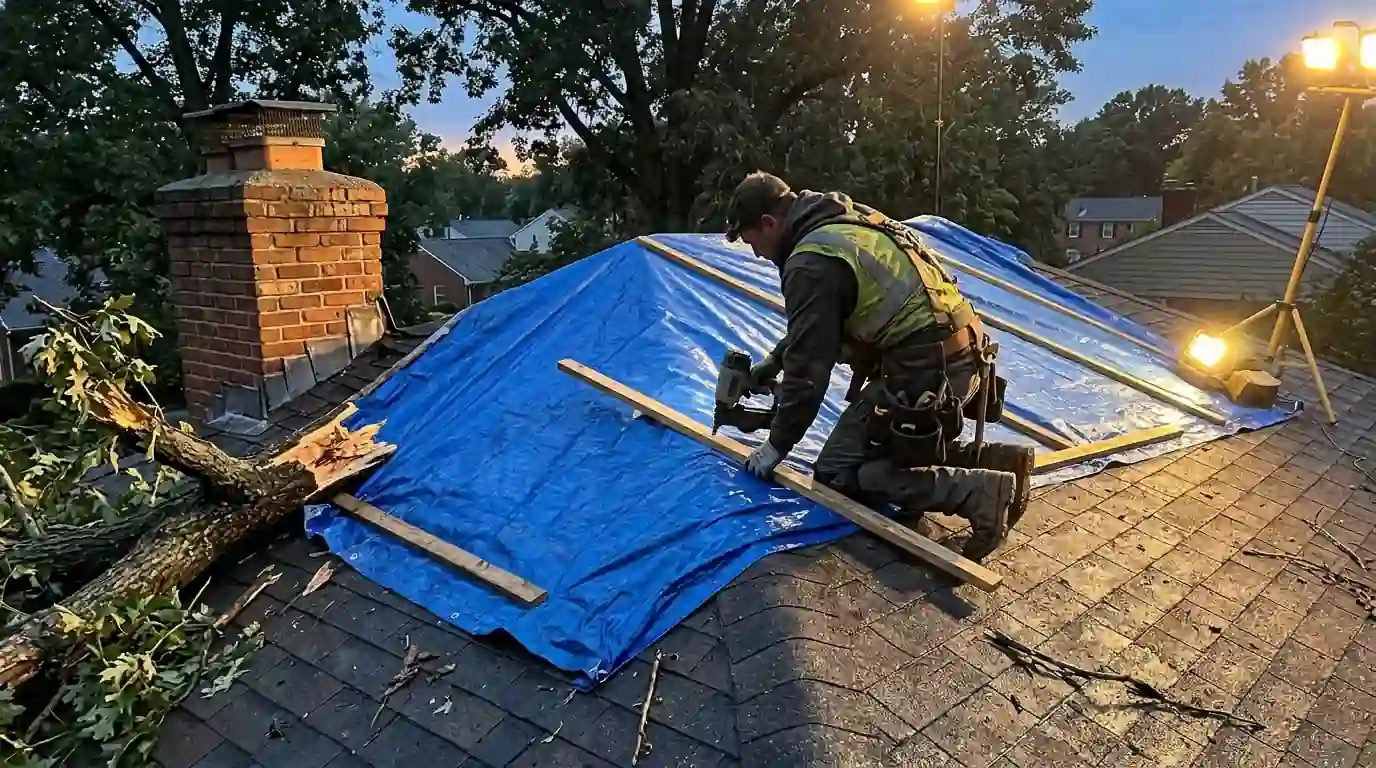
On a pitched shingle or slate roof, we run a heavy reinforced tarp over the ridge so water sheds over it rather than under it, and fasten it with wood battens screwed through the tarp, not with nails punched through the field. On slate we avoid walking the surface in the rain and work from a ladder hook or roof jacks to keep from breaking more pieces.
When a limb has come through the deck, we cut it back to the roof line, lift what we can off the roof, frame over the hole with plywood and cover the opening with membrane or tarp. Large trees on the house may need a tree crew with a crane first, and we coordinate the order of work so nothing shifts after we dry it in.
Working on a roof at night is slower and riskier, so we light the work area, tie off to anchors or a sound chimney mass, and keep the job to what is needed to stop water. Permanent repairs wait for daylight and a dry surface, when we can see the damage clearly and bond materials properly.
Rowhouse blocks add their own wrinkle. If the only roof hatch is in your neighbor's house, or the alley ladder spot is blocked by a parked car, we may need a few minutes to sort out access. Having a hatch key ready and the top-floor hallway clear saves time when we arrive.
In neighborhoods with heavy tree canopy such as Chevy Chase DC and Woodley Park, most night calls involve limbs. We bring saws, extra plywood and longer ladders on those trips, because the damage is usually on a steeper roof than a rowhouse.
An emergency fix is meant to keep water out for days or weeks, not years. Tarps degrade in sun, and temporary membrane over a wet deck will not bond as well as new material on a dry, clean surface. We tell you how long the temporary work should hold and schedule the follow-up before we leave.
The permanent repair may be a simple seam weld or a few replaced shingles, or it may be decking replacement, new flashing and a larger membrane section. Once the roof is dry and we can open it up in daylight, we price the full fix and walk you through photos of what we found.
Insurers want to see what happened before anything was cleaned up. We photograph the roof opening, the debris, the interior water path and the temporary work, and we note the time and weather. That record is often the most useful thing you have when an adjuster calls.
We do not decide coverage, but we can give your adjuster a clear scope of the permanent repair and meet them on the roof. Our page on documenting the damage for your claim explains what we provide and what you should keep.
Hold on to receipts for buckets, fans, dehumidifiers and any emergency service. Many policies cover reasonable steps taken to prevent further damage, and those receipts support that part of the claim.
Emergency pricing reflects the hour, the weather, the roof type and how much material it takes to close the opening. Expect numbers in roughly these bands for 2026 calls in and around the city.
| Job | Typical range |
|---|---|
| Tarp a pitched shingle or slate roof section | $485-$1,195 |
| Temporary membrane patch on a low-slope roof | $640-$1,580 |
| Emergency flashing seal at a chimney or wall | $415-$960 |
| Limb removal from roof and plywood dry-in | $1,380-$4,250 |
| Follow-up permanent repair | Priced after a daylight inspection |
Overnight and holiday calls, steep or tall roofs, slate surfaces and large openings cost more. We give you a price on site before the work starts, and the permanent repair is priced separately once we can see the full damage.
Yes. The line is answered around the clock, and we send a crew at night when water is actively entering or the roof is open. If lightning or high wind makes the roof unsafe, we tell you how to manage the water inside and arrive as soon as conditions allow.
Often not well. Without a ridge to drape over and with few places to fasten, wind can get under a tarp on a low-slope roof. We usually use a temporary adhered membrane patch instead, which stays down in gusts.
Call us first to stop the damage, then call your insurer. Most policies expect you to take reasonable steps to prevent more damage, and our photos taken before and during the temporary work help the claim.
The emergency visit and the permanent repair are separate jobs with separate prices. Some temporary materials, like plywood over a hole, may stay in place under the new roofing if they are sound, which can trim the permanent repair cost.
On attached rowhouses, water can travel along the party wall from the house next door. With permission we look at both roofs, stop the water on whichever side it is entering, and show both owners where the opening is.
These are the places we drive to most for this work. We cover all 45 areas on our service area list.
Repairs after thunderstorm gusts, nor'easters, hail and fallen limbs: lifted membrane, creased shingles, cracked slate, torn flashing and punctured decking around DC.
Storm Damage Roof Repair detailsWe trace roof leaks from the ceiling stain back to the real entry point, then fix that cause: seams, flashing, vent boots, skylights, parapets and drains.
Roof Leak Repair detailsAfter wind or a falling tree, we tarp the roof, document the damage with photos and measurements and meet your adjuster on the roof.
Insurance Claim Roof Help detailsTargeted fixes for open seams, slipped slate, lifted shingles and failed flashing on DC rowhouses, porch roofs and detached homes, sized to the actual damage.
Roof Repair detailsCall and a roofer will answer, any hour of any day. We stop the leak first and fix it properly once the roof is dry.