Roof replacement due soon
Green roofs make the most sense on a new membrane. Building one over a tired roof wastes both.
Rowhouse and specialty roofing
A green roof is a waterproofing job first and a garden second. If the membrane under the soil leaks, you'll be digging up plants to find it, so we build the roofing layers as if the plants weren't there.
Materials we install
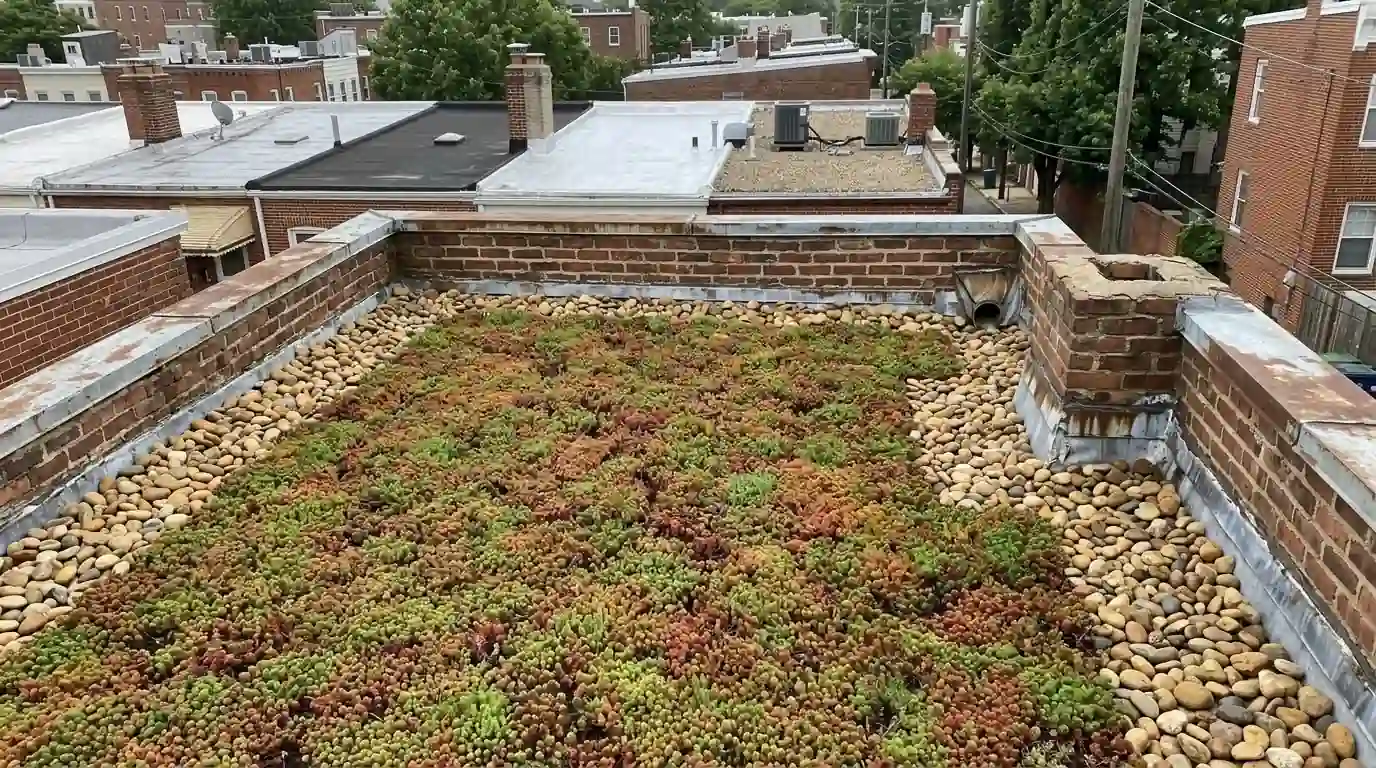
A green roof is a layered system of waterproofing, root barrier, drainage and lightweight growing media planted with drought-tolerant plants, usually sedum. In DC it suits rowhouses, garages and additions with low-slope roofs that can carry the added weight. An extensive green roof typically runs about $23.80-$36.70 per square foot installed, before any RiverSmart Rooftops rebate, whose current terms you should check.
Weight is the first question. A thin extensive green roof with three to four inches of growing media weighs roughly 15 to 25 pounds per square foot when saturated, on top of the roofing itself. Many rowhouse joists from the early 1900s were sized for a lighter load, and some have been notched for plumbing or weakened by old leaks.
So we don't start with plants. We start by opening the ceiling or roof at a few points, measuring joist size, span and spacing, and noting any damage. On most projects a structural engineer then confirms capacity or specifies sistered joists, and we build to the engineer's numbers.
Alley garages behind rowhouses in Brookland and Capitol Hill, along with newer rear additions, are often easier candidates than the main roof, since their framing is younger and the spans are shorter.
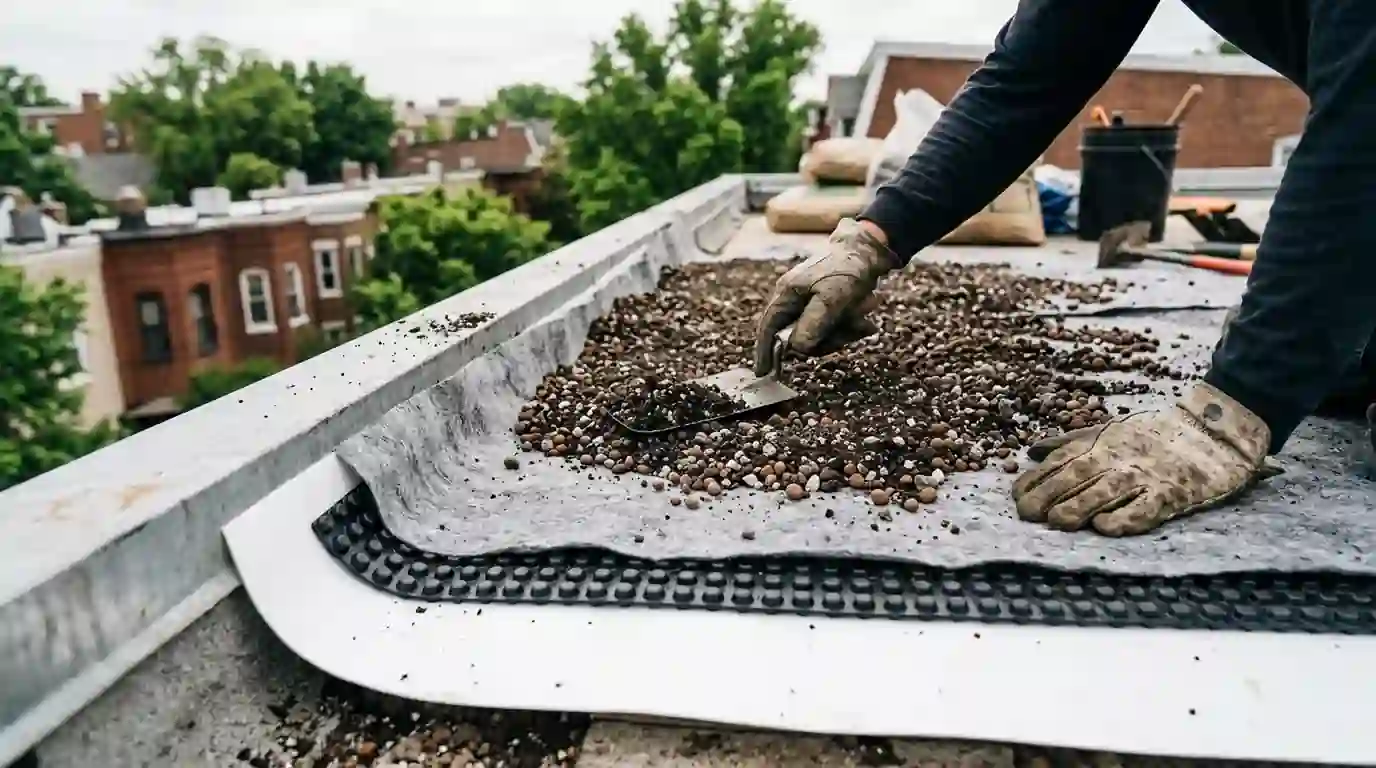
Below the plants sits a complete roofing assembly. We use a root-resistant membrane, typically PVC, TPO with a root barrier, or a modified bitumen sheet with copper-foil or chemical root resistance. Every seam is welded or torched and tested before anything covers it, because finding a leak later means removing soil.
Above the membrane we lay a protection fabric, then a drainage and retention mat that holds some water for dry spells and drains the rest toward the outlet. A filter fabric keeps fine soil from clogging the drain layer. Engineered growing media, mostly expanded shale or a similar mineral blend with a little organic matter, goes on top.
Plants go in as plugs, cuttings or pre-grown sedum mats. Mats give instant coverage and resist wind scour through the first exposed summer.
DOEE's RiverSmart Rooftops program has offered rebates for green roofs on District properties as part of its stormwater work. Amounts, eligibility and paperwork have changed over the years, so check current terms with DOEE before you plan around a number. Pre-approval before installation has typically been required, and we set our start date around that step.
We provide the drawings, layer specs and photos that rebate applications usually ask for. What you receive and when is between you and the program, so we never fold an expected rebate into our price.
The city also bills properties for stormwater through a charge tied to hard, paved and roofed area. Green roofs reduce runoff, and DOEE has offered discounts connected to that; ask about current terms there too.
Parapets, scuppers and the roof hatch get a border of washed river rock where no plants grow, usually 12 to 18 inches wide. That border keeps roots away from flashing and lets you inspect the most leak-prone spots without disturbing anything.
Drains and scuppers get inspection chambers, so leaves and sediment can be cleared. On rowhouses draining to a rear scupper, we size the scupper and downspout for the slower but longer outflow a green roof produces.
Where the green roof meets a neighbor's roof at a party wall with no parapet, we keep a wider gravel strip and raise the membrane at the joint. Our piece on party-wall leaks explains why that seam deserves extra care.
Sedum roofs are low-maintenance, not no-maintenance. Expect to water during the first dry summer while plants root, pull tree seedlings a couple of times a year, and clear the drain chambers each fall.
We offer a spring and fall visit to weed, fill bare spots and check the flashing. For many owners the bigger change is the view from an upstairs window: a green surface where hot tar used to be.
Most residential green roofs in the District are extensive systems: shallow media, low plants and little upkeep. Semi-intensive roofs run deeper, often six to ten inches, and can carry grasses, small perennials and a wider mix of native plants. They hold more stormwater but weigh considerably more and need irrigation in dry summers.
Intensive roof gardens with trees and deep beds are a structural project rather than a roofing add-on, and they rarely fit on a rowhouse. If you want something between a sedum mat and a garden, we can combine an extensive area with a few raised planters set on pads near the parapet, where the framing is strongest.
Green roofs make the most sense on a new membrane. Building one over a tired roof wastes both.
Roofs under about 2 in 12 with a scupper or drain hold media without slumping and shed extra water.
Joists reachable from below, or by opening a few spots, let an engineer confirm the load.
A hatch, stair penthouse or deck door makes seasonal weeding and drain checks realistic.
Sedum handles heat and drought but struggles under deep shade from big street trees or taller buildings.
We measure the roof, trace the drainage path and look at the existing membrane and deck.
An engineer confirms load capacity or calls for reinforcement, using framing details we expose.
If you're applying to RiverSmart Rooftops, we supply drawings and wait for approval before starting.
The root-resistant membrane goes down, then we flood or spark test it before covering it.
Mats, fabric and media are hoisted up, spread to depth and planted the same day.
We leave a watering schedule for the first summer and come back to check coverage.
Green roof pricing depends heavily on whether the roofing underneath is replaced at the same time. These 2026 ranges are typical for District rowhouses and garages.
| Job | Typical range |
|---|---|
| Extensive sedum green roof with new membrane, per sq ft | $23.80-$36.70 |
| Rowhouse main roof, about 800 sq ft, full system | $19,640-$29,370 |
| Alley garage roof, about 350 sq ft | $9,180-$13,860 |
| Joist sistering where an engineer calls for it | $2,740-$7,950 |
| Spring and fall upkeep visit | $265-$490 |
Hoisting media to the roof, framing repairs, membrane type, media depth and planting method move the price most. Rebates, if approved, come from the program, not off our invoice.
A thin extensive system usually weighs about 15 to 25 pounds per square foot saturated, plus the roofing beneath. That's why we have the framing checked before we settle on a final layout.
The program has typically required pre-approval before work begins, but terms change. Check the current requirements with DOEE first, and we'll hold the start date until you have an answer.
Not with the right membrane. We install a root-resistant sheet or a dedicated root barrier, and keep a stone border at parapets, outlets and penetrations where roots could find a weak spot.
Only if the membrane is young, root-resistant and tests watertight. On most older rowhouse roofs, replacing the membrane first is cheaper than lifting soil later to fix leaks.
Sedum species do most of the work because they tolerate shallow media, summer heat and drought. Deeper systems can carry native grasses and perennials, which need more watering and more structural capacity.
These are the places we drive to most for this work. We cover all 45 areas on our service area list.
Tear-off and new low-slope roofs for rowhouses and flats, with tapered insulation for ponding, new parapet flashing and reflective cool roof membranes.
Flat Roof Replacement detailsHeat-welded white TPO membranes for rowhouse and low-slope roofs, built to meet DC cool roof expectations and shrug off ponded water.
TPO Roofing detailsLeaking scuppers through rowhouse parapets, rusted conductor heads and clogged internal roof drains rebuilt so flat roofs empty fast after a storm.
Roof Drain and Scupper Repair detailsWhite, high-reflectance low-slope roofs for DC rowhouses and flats, built over tapered insulation and detailed for the District's reflective roof expectations.
Cool Roof Installation detailsCall and a roofer will answer, any hour of any day. We stop the leak first and fix it properly once the roof is dry.