Leaks that keep moving
One drip gets fixed and a new stain appears a few feet away. That pattern means the whole covering is breaking down, not one spot.
Roof replacement and new roofs
Your roof has been patched so many times that each storm brings a fresh stain on the ceiling, and the next repair feels like money thrown at a system that is already finished.
Materials we install
A roof replacement means stripping the old covering down to the deck, fixing whatever rot sits underneath, and installing a new system with new flashing. You need one when leaks keep moving, the deck feels soft, or the material is past its service life. Around DC, most rowhouse flat roofs land near $9,850-$18,600 and detached shingle homes near $12,400-$31,400, depending on size, layers and access.
We judge a roof by its deck and its flashing, not by how the surface looks from the sidewalk. A tired-looking covering can have years left, while a clean one can be failing at every wall joint. On a rowhouse we probe the membrane along the parapets and the rear wall, because that is where water reaches the joists first. On a pitched roof we lift shingle tabs near the eaves to see whether the mat has turned brittle.
The real question is whether repairs are buying time or chasing water. One failed seam gets a seam repair. Soft decking in three spots, grit piling in the gutters and patches stacked on patches usually mean a new roof costs less than the next five years of service calls. You see photos of everything we found before anyone talks numbers.
Some roofs sit right on the line. When that happens, we price a targeted repair of the worst areas next to the full replacement and tell you how long the repair should hold, so you can schedule the new roof for a season that suits your budget.
Washington housing falls into a few broad roof types, and each one points toward a different system. The classic rowhouse in Petworth, Bloomingdale or Columbia Heights has a low-slope roof hidden behind a brick parapet, draining to a rear gutter or a scupper. Those roofs want a membrane, usually in a light reflective color.
Victorian rowhouses and detached homes on Capitol Hill and in Mount Pleasant often pair a flat main roof with a slate mansard on the front and a small bay roof finished in tin or copper. That puts two or three systems on one building, and the transitions between them cause most of the trouble we see.
In upper Northwest, Bethesda and the Virginia suburbs, the usual house is a colonial, Cape Cod or split-level with a steep roof. Architectural shingles cover most of them, though slate, synthetic slate, standing seam steel and cedar shake each make sense for certain styles and for owners who plan to stay a long time.
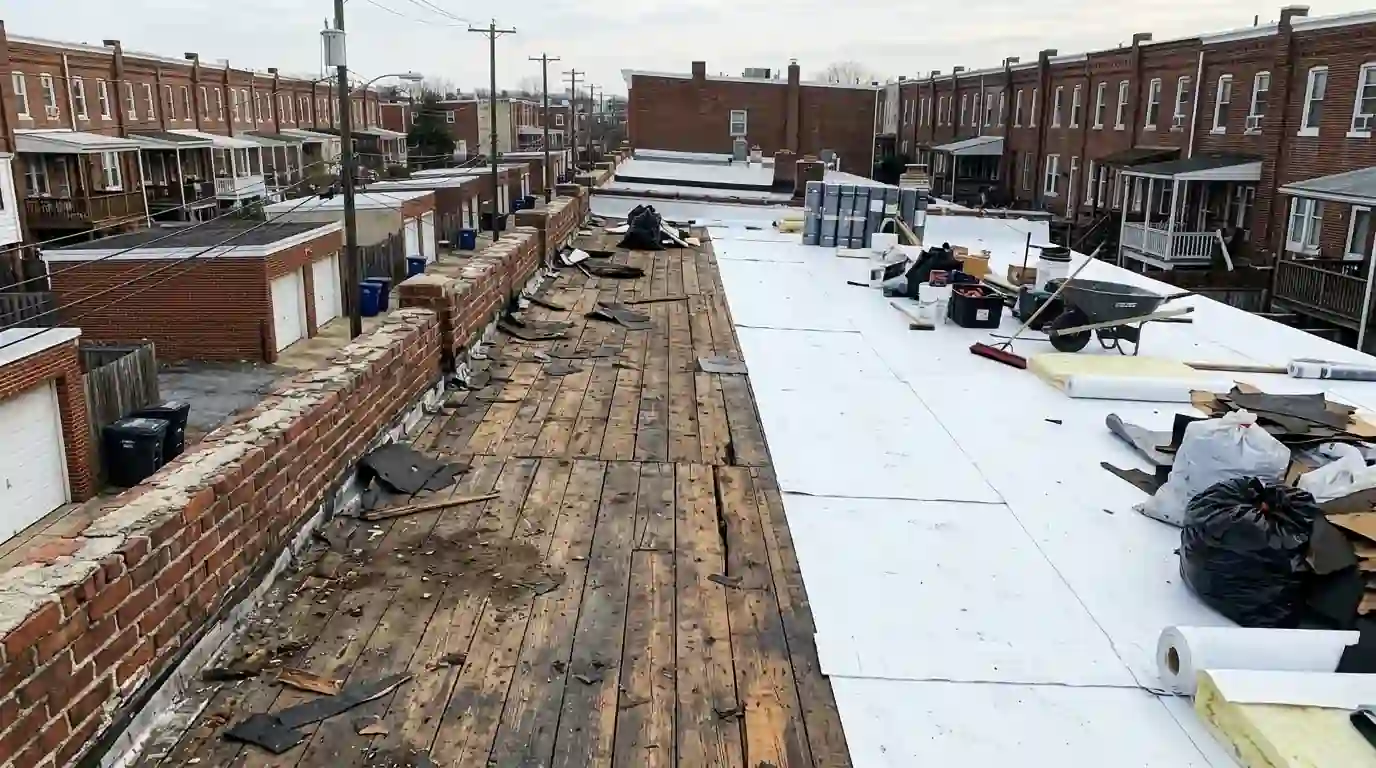
Tear-off tells the truth about a building. On older DC rowhouses we often uncover two or three layers of built-up roofing and silver coating over tongue-and-groove boards that have been damp for years. Everything comes down to the boards, the soft ones get replaced, and the deck is refastened tight before insulation or membrane goes back.
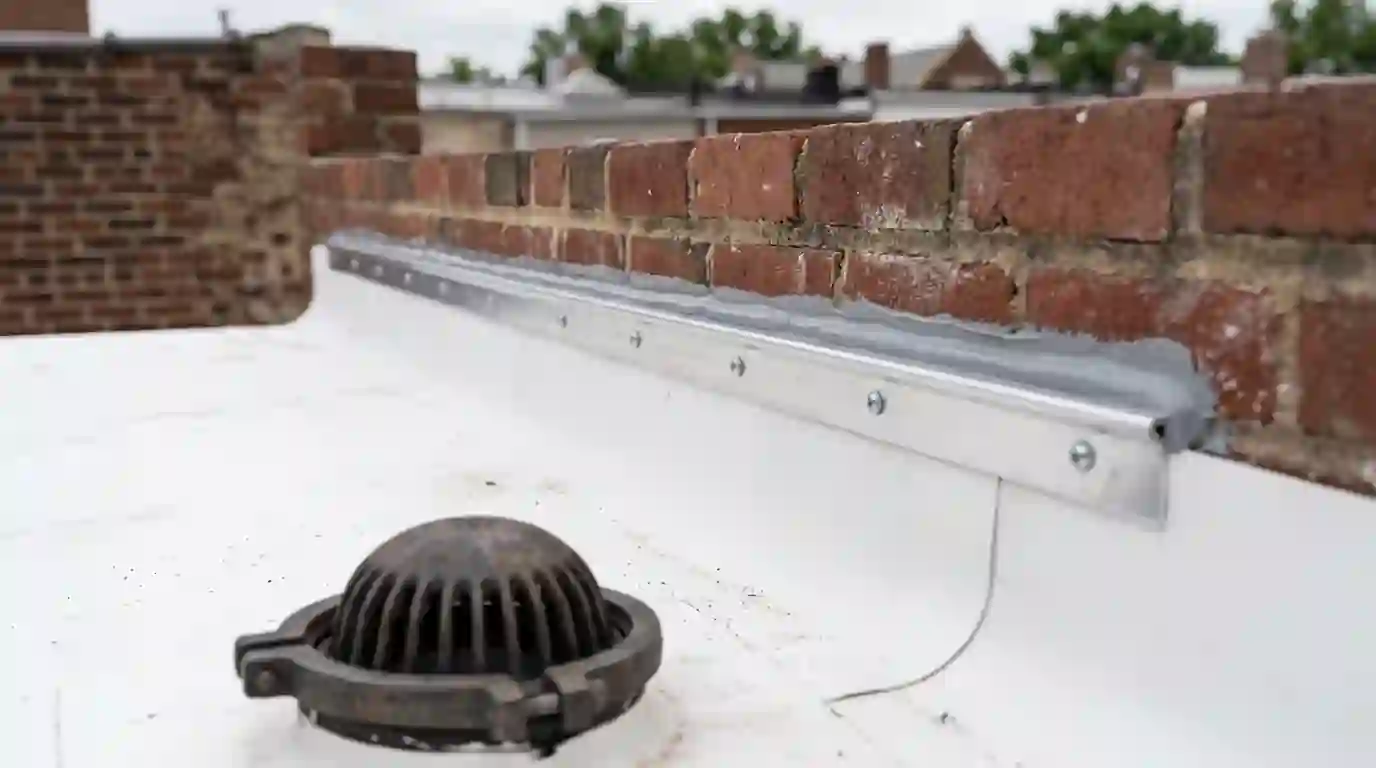
At the walls we cut out the old base flashing and run new flashing up the parapet and under the coping, or into a reglet cut in the brick. Chimneys on pitched roofs get new step and counter flashing. On low-slope roofs, every pipe, vent and hatch gets a proper boot or curb wrap instead of a smear of mastic.
Drainage gets corrected while the roof is open. Water that ponds against the rear wall calls for tapered insulation to push it toward the outlet. A new roof draining into a rusted scupper and downspout only relocates the leak, so we size and replace those at the same time.
Most roof replacements inside the District need a permit from the DC Department of Buildings, and we file it before the dumpster arrives. When the dumpster has to sit on the street instead of the alley or a driveway, a separate public space permit is required, and we handle that paperwork too.
Homes in historic districts such as Capitol Hill, Shaw, LeDroit Park, Mount Pleasant and Cleveland Park carry an extra step. Visible changes, like trading a slate mansard for another material, go through the Historic Preservation Office. A flat roof hidden behind a parapet rarely draws comment, but the street slope does, and our guide to DC permits and historic review walks through the details.
DC energy rules push reflective cool roof surfaces on low-slope replacements, so most rowhouse membranes we install are white or light gray. In Maryland and Virginia the county permit office handles approvals, and we confirm what each office expects before ordering material.
Access shapes the schedule more than most owners expect. Rowhouse jobs usually stage from the alley, with material lifted by hoist or passed up through the roof hatch when there is no room for a lift. We cover skylights, protect the neighbor's roof where our crew crosses the party wall, and tarp the yard so old gravel and nails stay out of the garden.
A typical rowhouse flat roof takes one to three working days. A shingle roof on a suburban colonial often runs two days, while slate and copper take longer because every piece is cut and fitted by hand. We never open more roof than we can dry in before dark, and we watch the radar closely during summer thunderstorm season.
Before we pack up, you get a photo set showing deck repairs, flashing details and finished drains. Keep those images with your house records, since the next buyer's inspector will ask what is under the new surface.
One drip gets fixed and a new stain appears a few feet away. That pattern means the whole covering is breaking down, not one spot.
A roof that flexes underfoot usually has rotted boards below. That calls for tear-off, not another coat.
Shingle granules collecting at downspout outlets show the asphalt is exposed to sun and aging quickly.
On flat roofs, blisters, split seams and alligatored coating mean the membrane has dried out beyond patching.
Wet attic insulation, dark rafter stains or light between boards point to failures spread across the roof.
Once a roof carries several layers, the next one has to start with a full strip anyway.
We go up, probe the deck, check every wall joint and drain, and show you pictures of what we found.
You get a scope covering tear-off, deck repairs, flashing and the recommended system, with unit prices for any hidden rot.
We file with DC DOB or the county permit office and book a dry weather window.
Old roofing comes off to the boards, rotted sheathing is replaced, and the deck is refastened.
Insulation, underlayment and the new covering go on, with fresh metal at walls, chimneys, vents and edges.
We magnet-sweep the yard and alley, haul debris, and send a final photo set of the finished roof.
These are typical 2026 ranges for jobs across DC, suburban Maryland and Northern Virginia. Your actual number comes from measuring and walking your roof.
| Job | Typical range |
|---|---|
| Rowhouse flat roof, single layer strip | $9,850-$18,600 |
| Cape Cod or rambler, architectural shingles | $12,400-$22,700 |
| Two-story colonial, architectural shingles | $16,900-$31,400 |
| Rowhouse front mansard, natural slate | $17,300-$43,800 |
| Detached home, standing seam steel | $31,700-$68,400 |
Extra layers, rotted decking, parapet rebuilding, steep pitch, chimney count and tight alley access all push the price up. Simple roofs with a sound deck and easy staging sit at the low end.
Most single-layer rowhouse flat roofs take one to three working days. Jobs with several old layers, parapet work or a slate mansard on the front can stretch to a week. We dry the roof in every evening, so the house is never left open overnight.
Some suburban jurisdictions allow a second shingle layer, but we rarely suggest it. A recover hides rotted decking, adds weight and shortens the life of the new shingles. On rowhouse flat roofs, the old layers usually have to come off to fix drainage and wall flashing properly.
No, though we like to talk before we start and again when we finish. Some rowhouse jobs need access to the top-floor roof hatch, and we ask you to move cars and anything fragile near the alley side.
Natural slate and copper can run well past a century when installed with the right fasteners and flashing. Standing seam steel often lasts 40 to 60 years, and a good TPO or modified bitumen roof around 20 to 30. Architectural shingles usually give 22 to 30 years here, shortened by summer heat and tree debris.
We photograph it, show you, and replace it at the per-sheet or per-board price written into your scope. Nothing beyond that happens without your okay. On rowhouses we sometimes find damaged joist ends at the rear wall, and that conversation happens before anything gets covered.
These are the places we drive to most for this work. We cover all 45 areas on our service area list.
Tear-off and new low-slope roofs for rowhouses and flats, with tapered insulation for ponding, new parapet flashing and reflective cool roof membranes.
Flat Roof Replacement detailsArchitectural shingle roofs for colonials, Cape Cods and split-levels, with ice barrier at eaves, new valley metal and balanced ridge venting.
Asphalt Shingle Roofing detailsNatural slate replacement for Victorian mansards, turrets and steep roofs, with copper flashing, salvaged slate matching and historic district coordination.
Slate Roof Replacement detailsStanding seam steel and aluminum roofs for porches, bays, low-pitch additions and whole homes, with concealed clips and site-formed panels.
Standing Seam Metal Roofing detailsCall and a roofer will answer, any hour of any day. We stop the leak first and fix it properly once the roof is dry.