Tree or large limb on the roof
Any tree contact can crack decking or rafters even where the surface looks intact.
Gutters, trim and commercial
A limb through the roof or shingles scattered across the yard after a storm leaves you with two jobs at once: stopping the water and dealing with your insurance company. We handle the roofing side of both, from the tarp to the adjuster meeting.
Materials we install
Insurance claim roof help means we secure the roof after storm or tree damage, document the damage with dated photos and measurements, write a repair or replacement scope and meet your adjuster on the roof. We don't negotiate your claim or predict what your policy pays. Emergency tarping around DC usually runs $465-$1,690, and inspection and documentation typically $245-$495, often credited toward the repair.
Our part is the roof. We stop further water entry, figure out exactly what was damaged, put it in writing with photos and measurements and explain it to the adjuster in roofing terms. Once the claim is settled, we do the repair or replacement.
What we don't do matters just as much. We don't act as a public adjuster, we don't negotiate your settlement and we don't tell you what your policy covers or how much it will pay. Those questions belong to you, your insurance company and, if you choose to hire one, a public adjuster or attorney. Any roofer promising you a new roof paid by insurance before an adjuster has seen it is guessing.
We also won't inflate damage, sign anything on your behalf or ask you to hand over your claim. You stay in charge of it. Our job is making sure the roofing facts in front of the adjuster are complete and accurate.
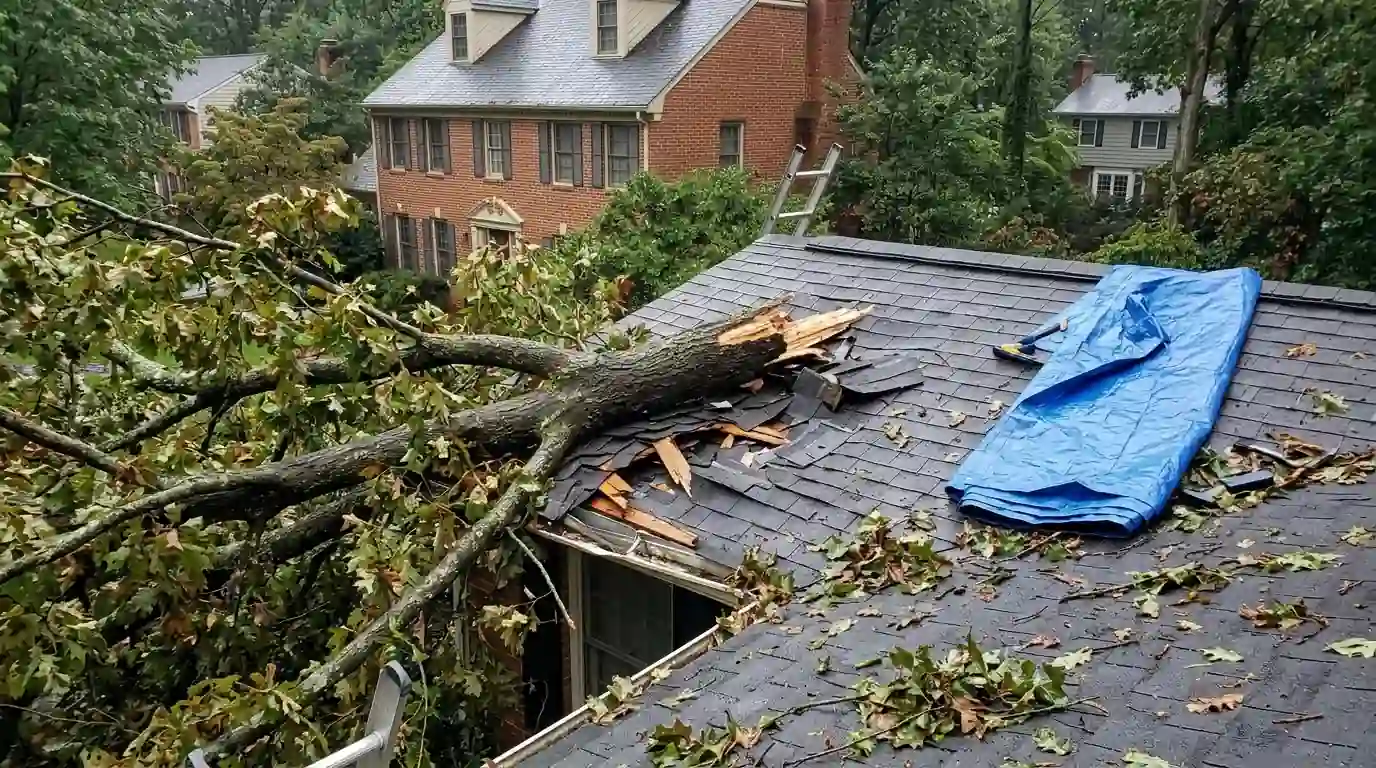
Big oaks and tulip poplars give upper Northwest, Chevy Chase, McLean and much of Montgomery and Fairfax counties their character, and they're the reason so many of our claim calls involve trees. A summer derecho or a saturated-ground windstorm drops whole trees and heavy limbs onto houses with very little warning.
When a tree is on the roof, the order of work matters. A tree service removes the trunk and limbs first, carefully, because pulling them off the wrong way can tear open more of the roof. Then we cut back broken decking, check the rafters and get the opening dried in. If rafters or framing are cracked, the house may need a carpenter or engineer before final roofing, and we'll say so.
Smaller limbs cause damage that's easier to miss: punctures in shingles, cracked slates, dented gutters and torn flashing where a branch dragged across. We walk the whole roof after any tree contact, not just the spot where it landed.
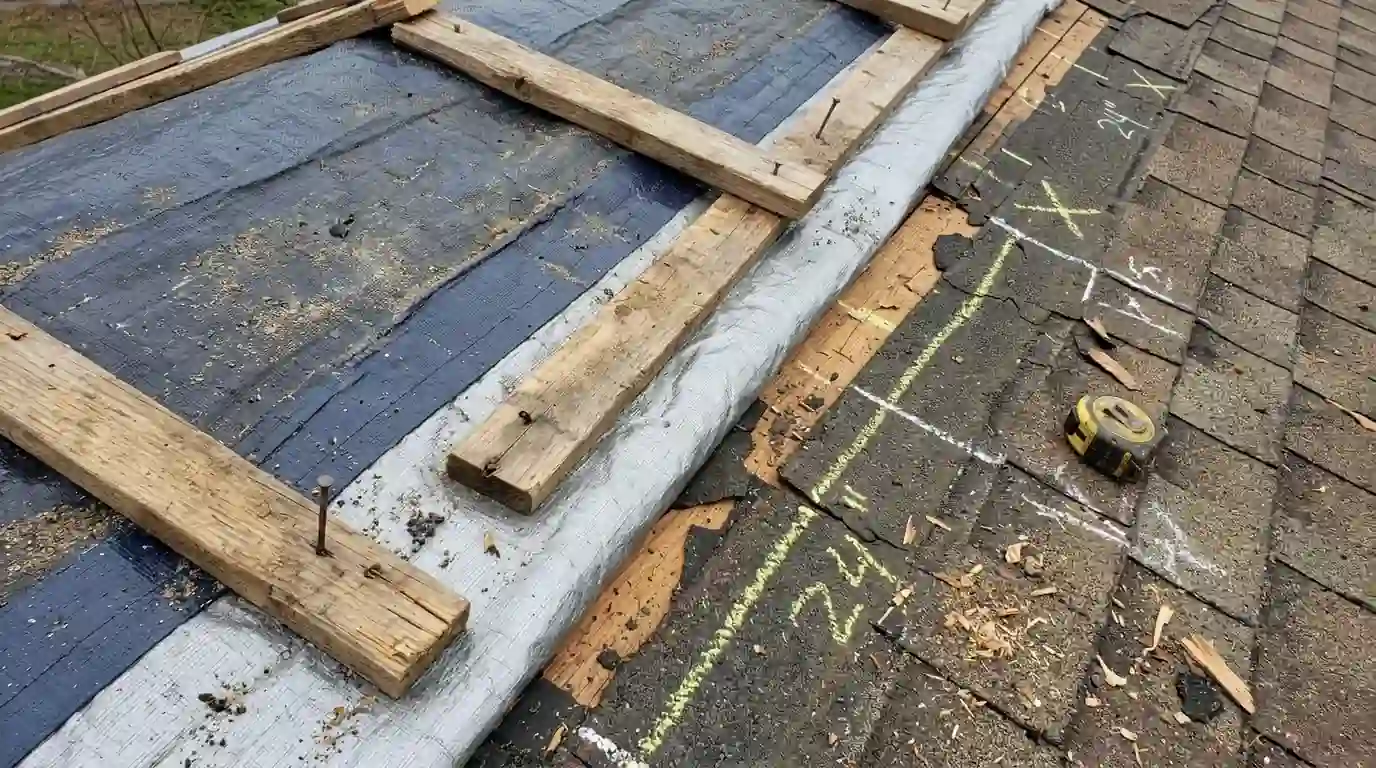
Wind lifts shingle tabs and breaks the sealant strip that holds them down. Sometimes shingles blow off entirely; often they're left creased and loose, which can be harder to spot from the ground but still lets water in during the next storm. We photograph creased and lifted tabs individually because adjusters look for that evidence.
On slate roofs, wind snaps slates and pulls rusted nails, and on flat rowhouse roofs it peels back edge metal and lifts membrane at the parapet. A flat roof that has lost its edge can unzip quickly in the next gust. Our storm damage repair page covers those repairs in more depth.
We also note what isn't storm damage. Old granule loss, long-standing leaks and worn-out flashing usually aren't covered as storm losses, and pretending otherwise damages your credibility with the adjuster. A clear line between new damage and old wear helps your claim more than it hurts it.
Documentation starts at the first visit. We take dated, wide photos of each roof slope to show location, then close-ups of every damaged area with a tape measure or chalk marks for scale. Inside, we photograph ceiling stains, wet insulation and any daylight showing through the deck. Tarping and emergency work are photographed before, during and after.
Then we write a roofing scope: roof type and size, number of layers, damaged areas by slope, materials needed to match and any code items a repair or replacement would trigger. In DC a full roof replacement generally needs a permit from the Department of Buildings, and on houses in historic districts such as Cleveland Park or Takoma, visible changes may need Historic Preservation Office sign-off. Those details can affect what a proper repair costs, so they go in the scope.
You get copies of everything. You decide what to send your insurer and when.
Adjusters often inspect from a ladder at the eave or with a drone. On steep slate or a three-story rowhouse, they may not see the damage in the middle of the roof. With your permission, we meet them on site, set ladders and show each damaged area directly, along with our photos from the first visit.
We stick to facts about the roof: what's damaged, how it was damaged and what it takes to fix it to match the existing materials. If the adjuster's scope leaves out something we found, we point to the photo and the measurement. If the insurance company's estimate and ours differ, we explain the roofing reasons in writing so you can raise them with your insurer.
For slate roofs, matching is a frequent sticking point. Patching a 1920s slate roof with mismatched slate is a real cost question, and we explain what a proper slate repair involves so the adjuster understands why it isn't a shingle job.
Your policy almost certainly expects you to prevent further damage after a loss. That means getting the roof covered quickly. We install heavy reinforced tarps secured with wood battens screwed over the damaged area, not just weighted down with bricks, and we seal around the edges so wind can't get under them. On flat roofs we may use a temporary membrane patch instead.
Keep receipts for tarping and emergency work, since they're often part of the claim. If water is coming in right now, call (202) 771-7443 any time of day or night, and see our emergency roof repair page for what to do while you wait.
Any tree contact can crack decking or rafters even where the surface looks intact.
Creased tabs mean the sealant bond broke, and those shingles will leak or blow off next.
Roofing material on the ground after wind is a clear sign the roof surface was torn.
Peeled edge flashing on a rowhouse roof lets wind and water get under the membrane.
Fresh stains that appear right after a storm point to an opening that should be documented quickly.
Damage to metal parts often shows where wind or debris struck the roof.
We come out, make the area safe and install a secured tarp or temporary patch.
Every damaged area is photographed and measured, inside and out, with dates recorded.
You receive a scope describing damage, materials and the work needed to repair or replace.
You contact your insurer and share our photos and scope as you see fit.
With your permission, we meet the adjuster on the roof and show each damaged area.
Once you decide how to proceed, we pull any permits and complete the roofing work.
Our 2026 prices for claim-related roof work in the DC area usually fall in these bands. What your insurer pays is between you and your insurer; these are our prices for the work.
| Job | Typical range |
|---|---|
| Emergency tarp with battens, single area | $465-$1,190 |
| Large tarp or tree damage dry-in | $985-$1,690 |
| Damage inspection, photos and written scope | $245-$495 |
| Adjuster meeting on site | $145-$285 |
| Storm repair to shingle or flat roof, typical | $745-$4,380 |
Roof height and pitch, slate or specialty materials, damaged rafters or decking and night or weekend emergency calls change the price. The documentation fee is often credited if we do the repair.
No. Coverage depends on your policy and your insurer's decision. We document the roof damage accurately and explain it to the adjuster, but we don't interpret policies or predict claim results.
No, and we don't act as one. We don't negotiate your settlement. If you want someone to represent you in the claim, you can hire a public adjuster or an attorney separately.
No. Most policies expect you to prevent further damage, so get the roof covered right away. We photograph the damage before tarping so the adjuster can still see what happened.
A tree service removes the tree and large limbs. We coordinate timing with them and are ready to tarp the opening as soon as it's clear.
Often, yes, using salvaged slate of similar type and color. We note the slate type in the scope so the adjuster understands what a matching repair requires.
These are the places we drive to most for this work. We cover all 45 areas on our service area list.
Repairs after thunderstorm gusts, nor'easters, hail and fallen limbs: lifted membrane, creased shingles, cracked slate, torn flashing and punctured decking around DC.
Storm Damage Roof Repair detailsDay or night roof emergencies in DC: tarping, temporary membrane patches, tree limb dry-ins and active leak control, with a crew answering (202) 771-7443 around the clock.
Emergency Roof Repair detailsFull tear-off and new roof systems for DC rowhouses, Victorians and suburban colonials, from low-slope membranes to shingle, slate and metal.
Roof Replacement detailsSlate repair for Victorian mansards, turrets and steep DC roofs: broken slates replaced with copper hooks or nail-and-bib, plus valley and flashing rebuilds.
Slate Roof Repair detailsCall and a roofer will answer, any hour of any day. We stop the leak first and fix it properly once the roof is dry.