Top floor overheats
Bedrooms under a dark or aging silver-coated roof that stay hot into the evening are classic TPO candidates.
Roof replacement and new roofs
A black or silver-coated rowhouse roof turns the top floor into an oven every July, and a seam that opens under standing water can wreck a ceiling in one storm.
Materials we install
TPO is a single-ply thermoplastic membrane, usually white, whose seams are fused with hot air into one continuous sheet. It suits DC rowhouses, flats and additions with low-slope roofs, especially where cool roof rules apply or water tends to pond. A tear-off and new 60-mil TPO roof on a typical rowhouse runs about $9,780-$17,950, with thicker sheet, taper and parapet work moving it higher.
Two things drive it: heat and code. A rowhouse roof deck often sits right above the top floor ceiling, and dark surfaces push bedrooms with no attic above them into the 90s by late afternoon. A white TPO sheet reflects most of that sunlight, and DC energy rules push reflective cool roof surfaces on low-slope replacements anyway, so TPO checks both boxes in one material.
The seams are the other reason. EPDM and older built-up roofs rely on tapes, adhesives or hot asphalt at the laps. TPO laps are melted together with a robotic or hand welder, and a good weld is as strong as the sheet itself. On roofs in Bloomingdale and Petworth where water sits near the rear wall, that welded seam is what keeps the ponded area dry.
TPO is also light. A rowhouse already carrying old joists and parapets does not need more dead load, and a mechanically fastened or adhered TPO system adds very little compared with a multi-ply asphalt roof.
We install 60-mil sheet as a baseline and 80-mil where a roof sees heavy foot traffic, rooftop units or a lot of ponding. Brands we commonly install include Carlisle, GAF EverGuard and Firestone UltraPly TPO, chosen by what fits the job and what our supplier stocks in the right width that week.
Attachment depends on the deck. Over a sound plywood or plank deck with polyiso insulation, we usually fully adhere the sheet so there is no flutter in wind and no fastener rows to read through. On larger multifamily roofs with steel or concrete decks, induction welded plates or mechanically fastened seams can make more sense.
Flashing is where TPO roofs succeed or fail. We use TPO-coated metal for edges and coping, prefabricated boots for pipes, and field-wrapped curbs for hatches and skylights. At the parapet, the membrane runs up the brick and terminates under a counterflashing or new coping, never just glued to the masonry face.
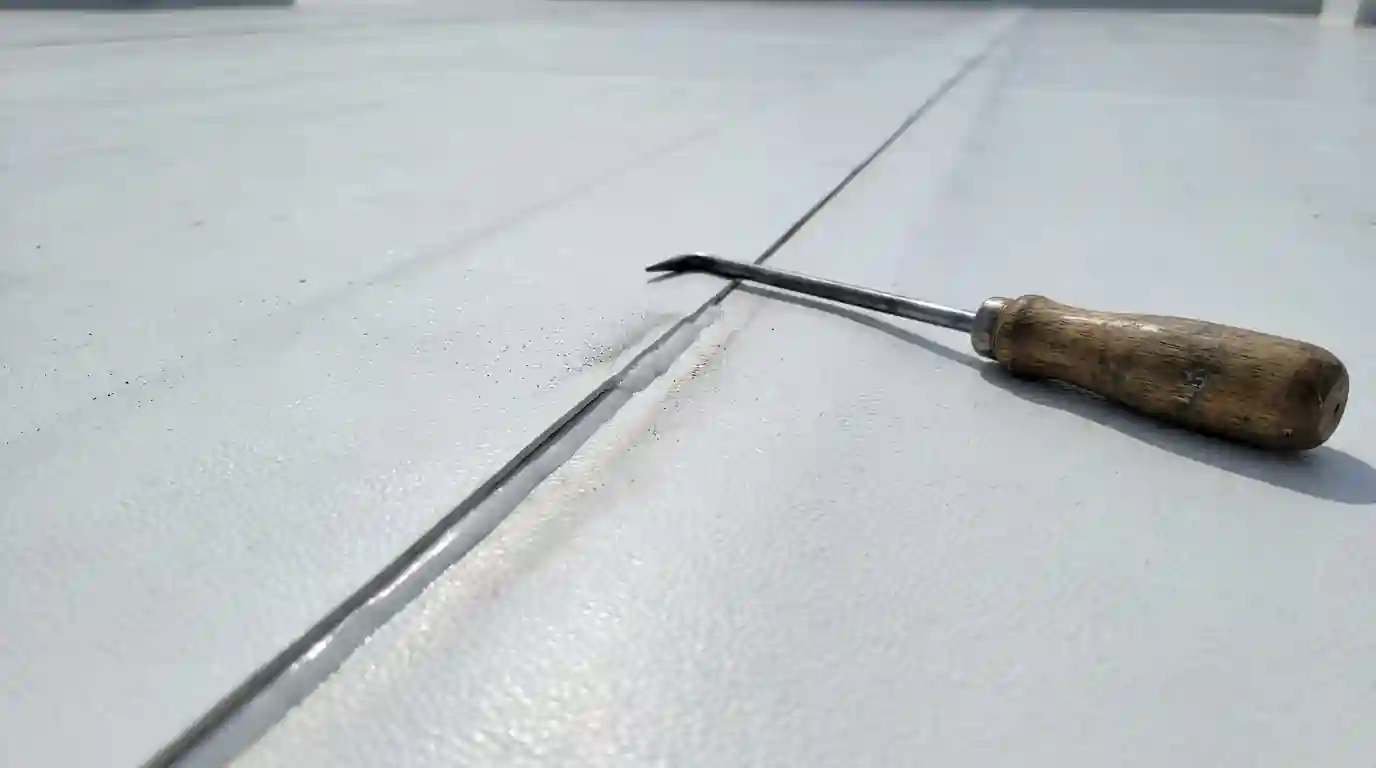
A TPO roof is only as good as its welds. Before welding starts each day, we cut a test strip, weld it and peel it apart by hand. If the sheet tears before the seam lets go, the welder settings are right for that day's temperature and humidity. Cold mornings and hot afternoons need different settings, so we test again when conditions change.
Once the roof is down, a crew member runs a seam probe along every lap, feeling for voids or cold welds that a quick look would miss. Any soft spot gets rewelded or covered with a patch. T-joints, where three layers of sheet meet, get a pre-cut patch so water cannot wick along the step.
That step takes time, but it is the difference between a roof that leaks in its first August storm and one that runs for decades. You'll see seam probe photos in the handover set.
Rowhouse roofs rarely stay empty. Owners add condensers, solar racks, satellite mounts and decks, and each one brings traffic and fasteners. We lay TPO walkway pads between the hatch and any equipment so service techs don't scuff the membrane, and we set equipment on raised stands with flashed supports.
If you plan a roof deck in the next few years, tell us now. We can add blocking, flashed sleepers and thicker sheet in the deck area, which avoids cutting a new roof later. Our write-up on roof decks on rowhouses covers the waterproofing side, and our roof deck waterproofing crews handle the details.
Solar works well over TPO when the racking is ballasted or uses flashed attachment points designed for single-ply. We coordinate with your solar installer so their penetrations get flashed to TPO standards, not sealed with whatever caulk is in the truck.
TPO dislikes certain oils and greases, so roofs directly under restaurant exhaust fans or older asphalt-heavy details sometimes do better with another membrane. Very small, cut-up roofs with dozens of penetrations can also be simpler in EPDM, which our EPDM rubber roofing page explains.
On a pitched roof that is visible from the street, TPO is a poor match for a historic house. Those slopes belong in slate, metal or shingles. We keep TPO to the low-slope areas where it shines and tie it neatly into whatever covers the steeper parts.
Budget can also tip the choice. On a tiny back porch that sits in shade most of the day, the reflectance advantage shrinks, and a simpler membrane may be the sensible spend. We lay out both options with prices so you can decide with the numbers in front of you.
Bedrooms under a dark or aging silver-coated roof that stay hot into the evening are classic TPO candidates.
Water that lingers at the outlet end is where welded TPO seams outperform taped or glued laps.
If an EPDM or built-up roof keeps opening at laps, the next roof should have welded seams.
Replacements under DC rules often call for a reflective surface, which white TPO meets easily.
New condensers or solar make it a good time to install a membrane that takes walkway pads and flashed stands well.
We count old layers, check for wet insulation and map slope, drains and penetrations.
The old roof comes off to the deck, and damaged boards are replaced and refastened.
Polyiso, often tapered, goes down with a cover board to give the sheet a firm, flat base.
TPO is adhered, laps are hot-air welded, and test welds are peeled each session.
Parapets, coping, scuppers, pipes and curbs are flashed with matching TPO details.
Every seam is probed, any voids are fixed, and you receive the full photo record.
TPO prices depend on sheet thickness, how much insulation goes back and how complicated the edges are. These 2026 ranges are typical for the area.
| Job | Typical range |
|---|---|
| Rowhouse TPO, 60-mil, single layer tear-off | $9,780-$13,640 |
| Rowhouse TPO with tapered polyiso | $12,850-$17,950 |
| Rear addition or porch roof in TPO | $3,470-$6,920 |
| Upgrade to 80-mil sheet, per square | $64-$97 |
| Walkway pads to hatch and units | $385-$910 |
Extra layers to remove, parapet coping replacement, hoisting where no alley exists and multiple rooftop units raise cost. A clean deck and simple edges keep it near the low end.
A well installed 60-mil TPO roof typically lasts 20 to 30 years here, and 80-mil sheet adds margin. Drainage, foot traffic and how well the seams were welded matter more than the label. Keeping the scupper clear helps a lot.
It does gray over time from soot, pollen and tree debris, especially on shaded blocks. A gentle wash every few years restores much of the reflectance. Even weathered, it runs far cooler than a black or silver-coated roof.
Some manufacturers allow it with a separation layer, but on DC rowhouses we almost always tear off. Old built-up roofs often hide wet insulation and soft boards, and a recover locks that moisture in.
Fully adhered TPO over insulation and cover board is quiet. Loose or mechanically fastened sheets can flutter slightly in wind, which is one reason we prefer adhered systems on small residential roofs.
Call us at (202) 771-7443 and keep traffic off the spot. TPO punctures are repaired by cleaning the area and heat-welding a patch, and it is a quick job when caught early. Avoid tapes or caulk, which make the later weld harder.
These are the places we drive to most for this work. We cover all 45 areas on our service area list.
Tear-off and new low-slope roofs for rowhouses and flats, with tapered insulation for ponding, new parapet flashing and reflective cool roof membranes.
Flat Roof Replacement detailsWhite, high-reflectance low-slope roofs for DC rowhouses and flats, built over tapered insulation and detailed for the District's reflective roof expectations.
Cool Roof Installation detailsFully adhered EPDM rubber roofs for rowhouses, porches and additions, with seam tape, new edge metal and white EPDM where cool roof rules apply.
EPDM Rubber Roofing detailsTwo-ply modified bitumen roofs with reflective granulated caps for rowhouses, porches and roofs that carry decks, condensers and steady foot traffic.
Modified Bitumen Roofing detailsCall and a roofer will answer, any hour of any day. We stop the leak first and fix it properly once the roof is dry.