Ceiling stain that grows
A brown ring that darkens or widens after each storm means water is still getting in, even if you never see a drip.
Roof repair
A small roof problem in Washington rarely stays small: one open seam on a rowhouse roof or one slipped slate on a mansard lets water into plaster that takes weeks to dry out.
Materials we install
Roof repair means fixing the specific failure, such as a split membrane seam, a cracked pipe boot, missing shingles or loose flashing, without replacing the whole roof. You need it when a leak appears, after wind lifts material, or when an inspection finds a weak spot. Most DC repairs we handle fall between about $385 and $1,840, and complex flashing or slate work can run higher.
Most of the city sits under three kinds of roof. Rowhouses from Shaw to Trinidad have low-slope roofs hidden behind a front parapet, usually covered in modified bitumen, EPDM, aging coated roll roofing or a newer white TPO sheet. Victorian blocks carry steep slate mansards on the street face. Upper Northwest and the inner suburbs add detached colonials and bungalows with asphalt shingles, cedar or slate on pitched roofs.
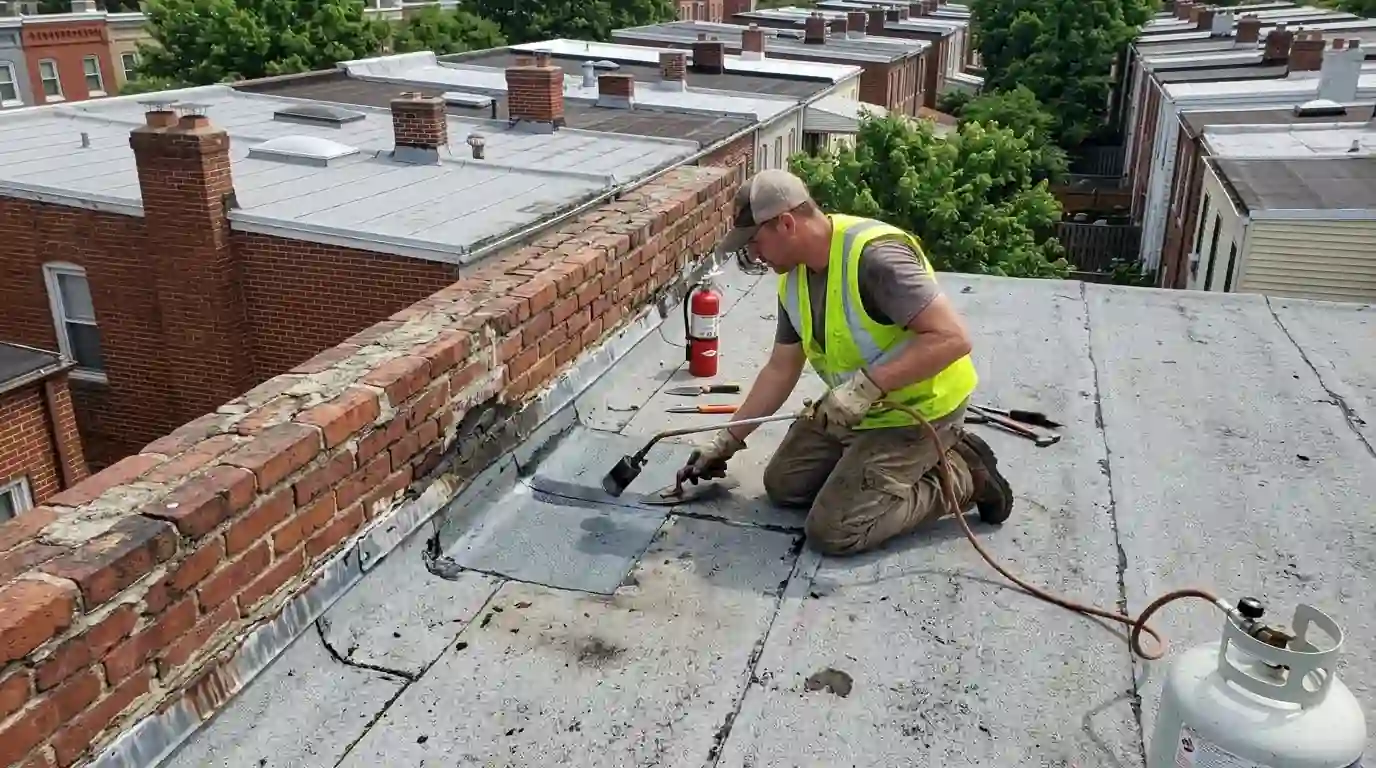
Each one fails differently, so we arrive with materials for the roof we are walking onto rather than a generic patch kit. On a low-slope rowhouse that means membrane, primer, a torch or heat welder and termination bar. On a mansard it means slate of the right size and thickness, copper nails and slate hooks. On a colonial it means shingles in the closest available color, ice and water underlayment and new pipe boots.
Porch roofs and rear bay roofs deserve their own mention. They are shallow, often tied into a brick wall with tired flashing, and they collect leaves from street trees. A large share of the calls we get from Petworth porch-front homes trace back to that wall joint rather than the main roof.
We repair when the damage is local and the rest of the roof still has life. A membrane that is pliable, well adhered and without widespread blisters can take a patch that lasts as long as the field around it. Shingles that still hold their granules and lie flat can take a few replacements and a new boot without trouble.
We start talking about full replacement when the problems are everywhere at once: alligatored coating over brittle felt, seams opening in several places, soft decking under foot, or shingles that have lost most of their granules. Patching a roof in that state buys a season at most, and you pay for another trip up the ladder the next time it rains hard.
Slate is the exception that surprises people. A slate roof with broken pieces and rusted nails is usually still a repair job, because good Pennsylvania or Vermont slate outlasts the nails holding it. Our page on repairing a slate roof explains how we replace individual pieces without disturbing the course above.
Rowhouse roofs are reached through an interior hatch, from a neighbor's roof with permission, or by ladder from the alley. We ask about access when you call so the right ladder and fall protection come on the first trip. Street parking near Logan Circle or Capitol Hill can be tight, so we often stage from the alley and carry materials up by hand.
On the roof, we look past the obvious spot. Water on a ceiling under the middle of the house can start at a parapet cap, a vent stack or the gutter at the rear wall. We probe seams, check the flashing where the roof turns up the party wall, look at the scupper and downspout, and photograph everything before we cut anything.
Then we fix the cause with materials that bond to what is already there. Mod bit gets torched mod bit, EPDM gets EPDM with the correct primer and seam tape, and TPO gets hot air welded TPO. Mixing incompatible products is one of the most common reasons a patch from another crew lets go after one summer.
Summer in DC brings afternoon thunderstorms that can dump an inch of rain in an hour, and that is when weak seams show themselves. Heat also helps us: membranes weld and adhere best on warm, dry days, so June through September is good repair season for low-slope roofs.
Winter work is possible but has limits. Adhesives and sealants have minimum temperatures, and slate becomes brittle when it is cold. On a 30-degree morning we can still replace shingles, reset flashing and make a sound temporary repair, then come back for permanent membrane work when the forecast warms.
Fall is the season we push for small repairs before they grow. Leaves from oaks and tulip poplars pile up in gutters and scuppers, and a clogged outlet on a flat roof turns a minor seam problem into standing water against the parapet. Clearing and repairing in October heads off the January leak.
You get photos of the damage, the repair in progress and the finished work, plus a short note on what else we saw. If another part of the roof is close to failing, we tell you plainly and give you a rough idea of what it would cost, so you can plan instead of reacting.
Keep an eye on the ceiling below the repair after the next two or three heavy rains. A dry ceiling means the cause was found. A stain that grows tells us water is entering somewhere else, and we come back to trace it rather than adding sealant over a guess.
A brown ring that darkens or widens after each storm means water is still getting in, even if you never see a drip.
Raised bubbles in a flat roof membrane, or a seam edge you can lift with a finger, let water run under the sheet.
Pieces of asphalt shingle or broken slate on the sidewalk after wind mean a gap has opened somewhere above.
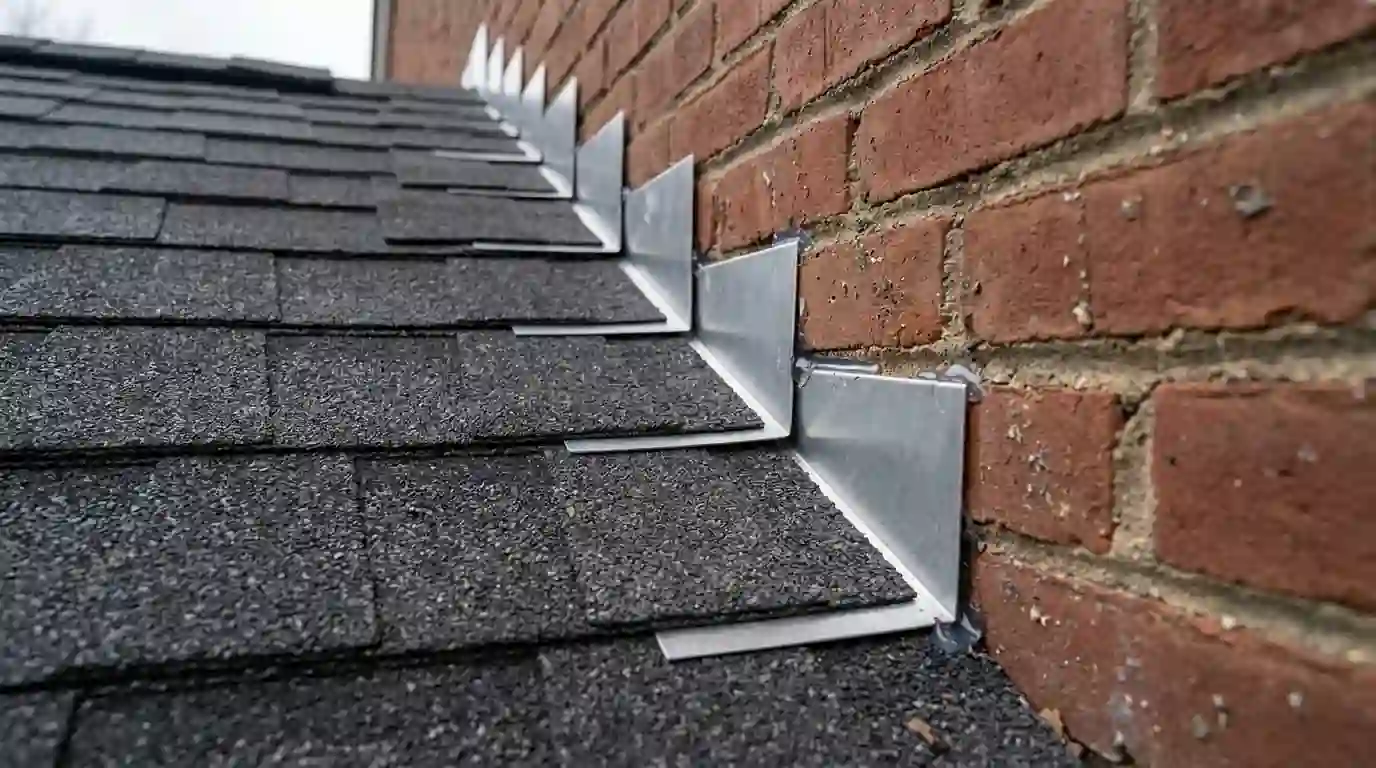
Rusted step flashing, cracked caulk at a counterflashing line or a gap where the roof meets brick is a common entry point.
A pile of dark grit at the bottom of a downspout means shingles are wearing through their protective surface.
Puddles that sit on a flat roof two days after rain point to sagging decking or a blocked drain.
We ask what you see inside, the age and type of roof, and how we get up there, so we bring the right materials.
We trace the water path from the stain back to the source and photograph every defect we find.
You get the cause, the fix and a price before we start, with any larger concerns flagged separately.
We cut out wet membrane, pull broken slates or lift damaged shingles until we reach sound material.
New material is tied into the existing roof with the right primer, weld, nails or flashing for that roof type.
We hose the area when practical, clear debris from gutters and send you the finished photos.
Most repairs are priced by the scope of the damage, the roof type and how hard the roof is to reach. These ranges reflect typical DC jobs in 2026.
| Job | Typical range |
|---|---|
| Replace a few asphalt shingles or a pipe boot | $365-$890 |
| Patch a flat roof seam or blister area | $485-$1,260 |
| Replace several broken slates | $540-$1,480 |
| Rework wall or chimney flashing | $690-$1,850 |
| Repair a porch or rear bay roof section | $1,240-$3,460 |
Access, the number of layers on a flat roof, rotten decking found under the surface and historic district material requirements all move the number. The real figure comes from seeing your roof, and we quote it before any work begins.
A patch made with the same membrane, properly primed and welded or torched, should last as long as the roof around it. Patches fail early when someone puts roof cement or a peel-and-stick product over a wet or dirty surface. If the surrounding membrane is near the end of its life, the patch will not outlast it.
Yes. The mansard face and the low-slope roof behind it are separate systems, and we often repair one while the other is still sound. We also check the gutter between them, since that joint is often the actual source of water on the front wall.
Small repairs generally do not need a permit from the DC Department of Buildings, while full replacements generally do. In a historic district such as Capitol Hill or Mount Pleasant, visible changes to materials or color can go through the Historic Preservation Office, so we use like-for-like materials on street-facing repairs.
Ask what is failing and why. Sealant has its place at counterflashing and small details, but it does not fix an open seam, a split membrane or a broken slate. We are happy to look and tell you whether the sealant plan addresses the cause.
Yes. We repair shingle, slate and low-slope roofs on houses in Montgomery and Prince George's counties, Arlington, Fairfax and Prince William counties and Alexandria. The approach is the same everywhere: find the cause, fix it with compatible materials and show you photos.
These are the places we drive to most for this work. We cover all 45 areas on our service area list.
We trace roof leaks from the ceiling stain back to the real entry point, then fix that cause: seams, flashing, vent boots, skylights, parapets and drains.
Roof Leak Repair detailsLow-slope roof repair for DC rowhouses and additions: modified bitumen, EPDM, TPO and coated roll roofing, plus ponding areas, curbs and parapet base flashing.
Flat Roof Repair detailsSlate repair for Victorian mansards, turrets and steep DC roofs: broken slates replaced with copper hooks or nail-and-bib, plus valley and flashing rebuilds.
Slate Roof Repair detailsA walk of the whole roof with photos and a written condition report: membrane, slate, shingles, flashing, drains, parapets and attic, for owners, buyers and sellers in DC.
Roof Inspection detailsCall and a roofer will answer, any hour of any day. We stop the leak first and fix it properly once the roof is dry.