Brick pieces on the roof or in the gutter
Chips of brick or chunks of mortar below the chimney mean the masonry is breaking up and will keep shedding.
Roof repair
Loose bricks on the roof, a crown split down the middle or mortar washing out of the joints all mean the part of your chimney that sits in the weather is falling apart. Left alone, it lets water down the inside of the masonry and eventually drops brick onto the roof.
Materials we install
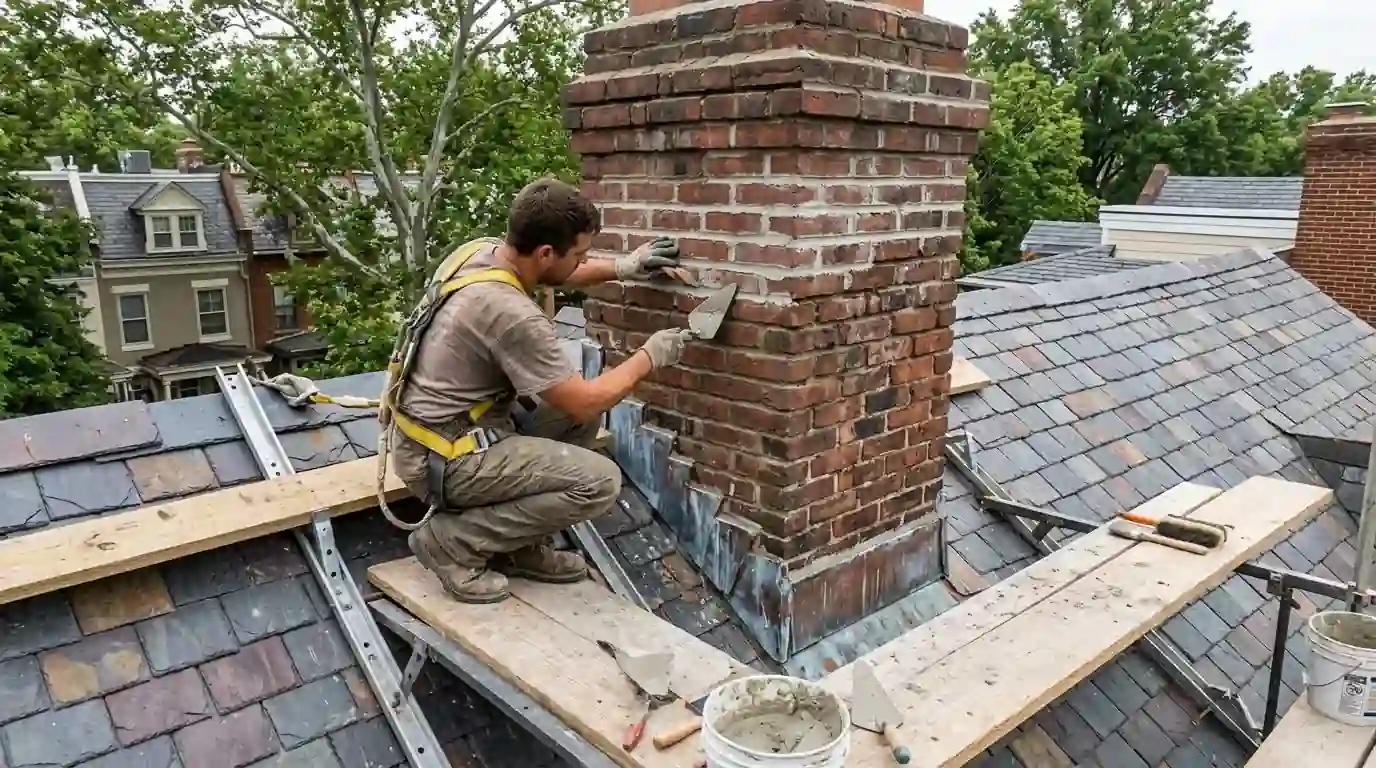
Chimney repair covers the masonry above the roofline: the crown on top, the cap over the flue, the mortar joints and the brick itself. You need it when the crown cracks, mortar erodes or bricks start spalling and loosening. Most repairs around DC run about $385-$2,940, and rebuilding the top courses or removing an unused rowhouse chimney costs more.
This page is about the brick and mortar you see sticking up through your roof. The crown, the cap, the joints and the top courses take direct rain, wind and freeze-thaw on all four sides, and they wear out long before the chimney inside the house does.
The metal where the roof meets the brick is a separate job. If your problem is a leak at the base of the chimney, the step and counterflashing are the first suspect, and our page on chimney flashing repair covers that work. On many houses we do both at once, because new flashing needs sound mortar joints to hold it.
We don't work inside the flue or the firebox. If anything we see from the top, like crumbling clay tile liners or heavy soot, suggests the flue needs a look, we'll ask you to have a chimney sweep inspect it before the chimney is used again, and we'll time our masonry work around their visit.
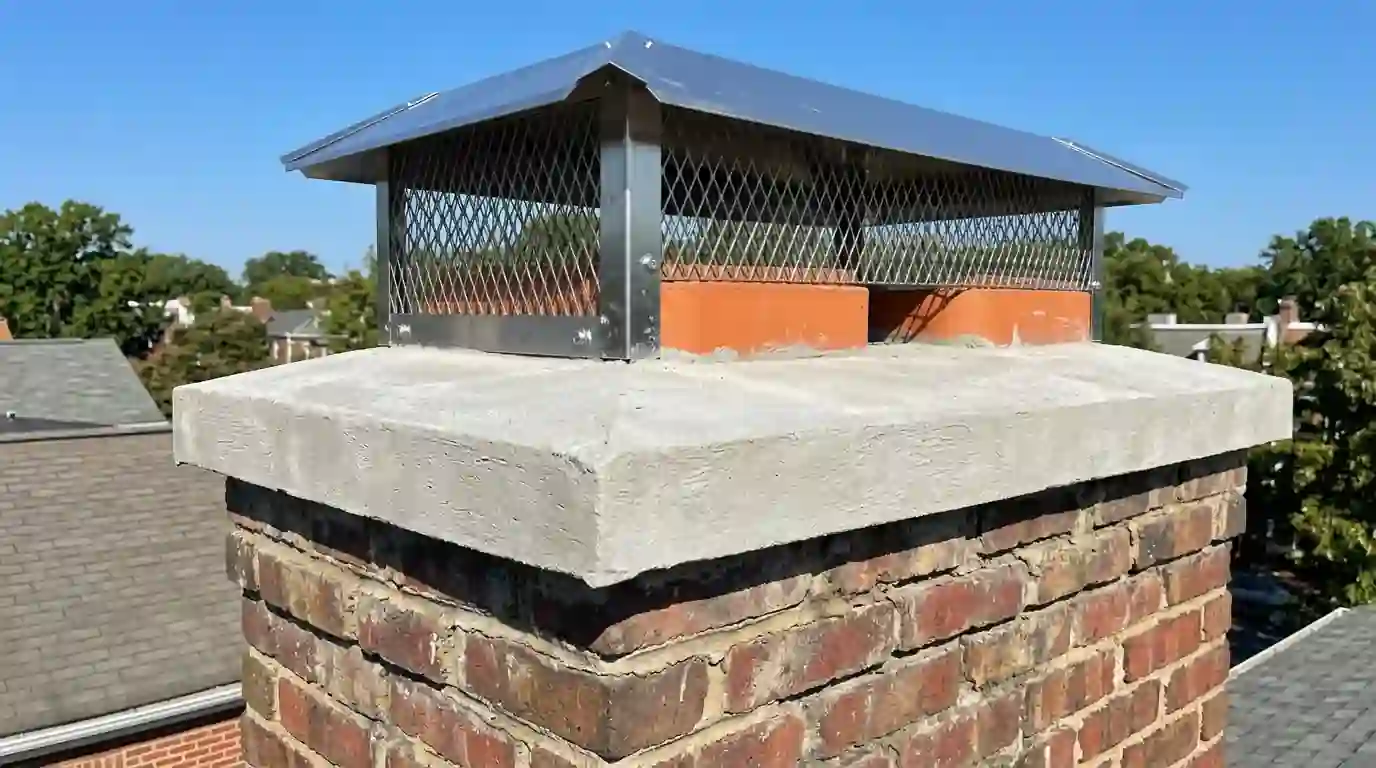
The crown is the concrete or mortar slab that covers the top of the chimney around the flue. On most older houses around Washington it's just a sloped mound of mortar troweled over the last course of brick. That mortar shrinks, cracks and lets water straight down into the core of the chimney.
A proper crown is cast or formed at least two inches thick, overhangs the brick by an inch or more with a drip groove underneath, and is separated from the flue tile by a bond break so the two can move independently. When a crown has only hairline cracks we seal it with a breathable crown coating; when it's broken into pieces we chip it off and form a new one.
The cap is the metal hood over the flue opening. Without one, rain falls straight down the flue, and squirrels, raccoons and nesting birds move in. We install stainless steel or copper caps with a screen, sized to cover each flue or the whole crown on a multi-flue chimney.
Washington winters swing above and below freezing dozens of times. Water soaks into soft brick and mortar, freezes and expands, and over the years the joints wash out and the brick faces pop off in flakes. That flaking is called spalling, and once the hard outer face is gone the brick soaks up water even faster.
Much of the spalling we see on older chimneys was caused by an earlier repair. Brick laid before about 1930 was set in soft lime mortar, and someone later repointed it with hard Portland cement mortar. The hard mortar doesn't give, so the stress goes into the brick instead. We grind out the joints to about three quarters of an inch and repoint with a lime-rich mortar that's softer than the brick.
Individual spalled or cracked bricks get cut out and replaced with salvaged or reclaimed brick close to the original in size and color. We don't paint or seal over damaged brick, because trapping moisture behind a film usually makes spalling worse.
When the top two to six feet of a chimney have loose bricks, open joints all the way through or a visible lean, repointing won't hold it together. The fix is to take the chimney down course by course to solid masonry and rebuild it on that sound base.
We set up roof brackets and planks around the chimney, lower the old brick to the ground in buckets, and clean and reuse the good brick where we can. The rebuild goes back to the same height and corbel pattern, with new flue tile extensions if needed and a new formed crown and cap on top.
On slate roofs we stage the work so nobody stands on the slate, and we replace any pieces cracked by falling mortar. Our slate roof repair crew handles that part on the same visit. If the flashing is old, it makes sense to replace it while the chimney is rebuilt, because the new counterflashing can be built into the new joints.
Most rowhouses in DC were built with coal-burning fireplaces, and their chimneys rise from the party walls. Many haven't carried smoke in decades. They still catch rain, and an unused chimney with a broken crown is one of the most common sources of damp walls we trace on a Capitol Hill or Columbia Heights rowhouse.
You have three choices. We can repair and cap the chimney with a vented metal cover, which keeps rain out and lets the stack breathe. We can rebuild the top if it's unstable. Or we can take it down below the roofline, fill or cap the flues, and roof over the opening so the membrane runs straight across.
Taking a chimney down needs some planning. If it sits on a shared party wall, your neighbor's flues may run through it, so we talk with them first. In a historic district, removing a chimney visible from the street goes through the Historic Preservation Office, and the job generally needs a DC Department of Buildings permit. Our rowhouse roofing crew patches the membrane once the stack is gone. Call (202) 771-7443 to set up a look.
Chips of brick or chunks of mortar below the chimney mean the masonry is breaking up and will keep shedding.
Visible cracks across the top, or a crown that's broken into pieces, let water straight into the core of the chimney.
Joints recessed more than a quarter inch, or gaps you can see light through, are due for repointing.
Spalled bricks with their faces popped off soak up water and get worse every winter.
Powdery white deposits on the chimney or the attic side of the chimney show water is moving through the masonry.
A visible tilt or a top that's shifted off the stack below needs a rebuild before it gets worse in high winds.
Birds, squirrels or raccoons going in and out mean there's no cap, or the cap has failed.
We look at the crown, cap, joints and brick on every face, photograph the damage and check the attic side for moisture.
Roof brackets and planks go around the chimney so we can work all four sides without loading the roofing.
We grind out bad joints, cut out spalled brick and chip off a broken crown, lowering debris to the ground.
New mortar softer than the brick goes into the joints, and replacement brick goes in where the old faces failed.
A new crown is formed with an overhang and drip edge, then a screened cap is fastened over the flues.
We clear mortar dust from the roof and gutters, replace any roofing damaged during the work and send you photos.
Height, roof pitch, roof material and how much brick has failed set the price. These ranges reflect typical Washington area chimney work in 2026.
| Job | Typical range |
|---|---|
| Install a stainless steel cap with screen, single flue | $385-$745 |
| Seal a crown with hairline cracks | $395-$810 |
| Remove and form a new chimney crown | $945-$2,140 |
| Repoint the exposed part of a typical chimney | $1,180-$2,940 |
| Rebuild the top two to six feet of brick | $2,860-$6,780 |
| Remove an unused rowhouse chimney below the roofline and roof over | $2,340-$5,860 |
Tall chimneys on steep or slate roofs, hard-to-find brick and historic district work raise the cost. We'll set the real number after we've been on the roof and seen every side.
If the bricks are tight and only the joints are worn, repointing is the right fix and costs much less. Once the top courses move by hand, the chimney leans, or joints are open all the way through, the masonry has to come down to solid brick and be relaid. We test the brick by hand on every face before recommending either.
The most likely cause is mortar that's harder than the brick. Older Washington brick is soft, and a cement-rich mortar forces the stress of freezing and thawing into the brick faces instead of the joints. The cure is to grind out the hard mortar and repoint with a softer lime mix.
Usually, yes, but it depends on what's inside it and whose it is. If the chimney sits on a party wall, your neighbor may still have a working flue in it, so we confirm that first. Houses in historic districts need approval before a chimney visible from the street can come down.
Only a breathable silane or siloxane repellent, and only after the crown, cap and joints are fixed. A film-forming sealer or paint traps moisture in the brick and speeds up spalling. On sound, properly capped chimneys we often recommend skipping repellents entirely.
We'll tell you what we can see from the top, like a cracked tile or a missing section, but we don't inspect or reline flues. If anything looks wrong, we'll ask you to have a chimney sweep look before the fireplace or furnace vent is used, and we schedule our masonry around their visit.
These are the places we drive to most for this work. We cover all 45 areas on our service area list.
New step, apron, counter and cricket flashing around brick chimneys on slate, shingle and flat roofs, cut into mortar joints instead of glued to the face.
Chimney Flashing Repair detailsSlate repair for Victorian mansards, turrets and steep DC roofs: broken slates replaced with copper hooks or nail-and-bib, plus valley and flashing rebuilds.
Slate Roof Repair detailsTear-off and new low-slope roofs for DC rowhouses, with party-wall parapets, rear ells, neighbor tie-ins and the rear scupper that carries all the water handled properly.
Rowhouse Roofing detailsWe trace roof leaks from the ceiling stain back to the real entry point, then fix that cause: seams, flashing, vent boots, skylights, parapets and drains.
Roof Leak Repair detailsCall and a roofer will answer, any hour of any day. We stop the leak first and fix it properly once the roof is dry.