What a box gutter is and where to find one
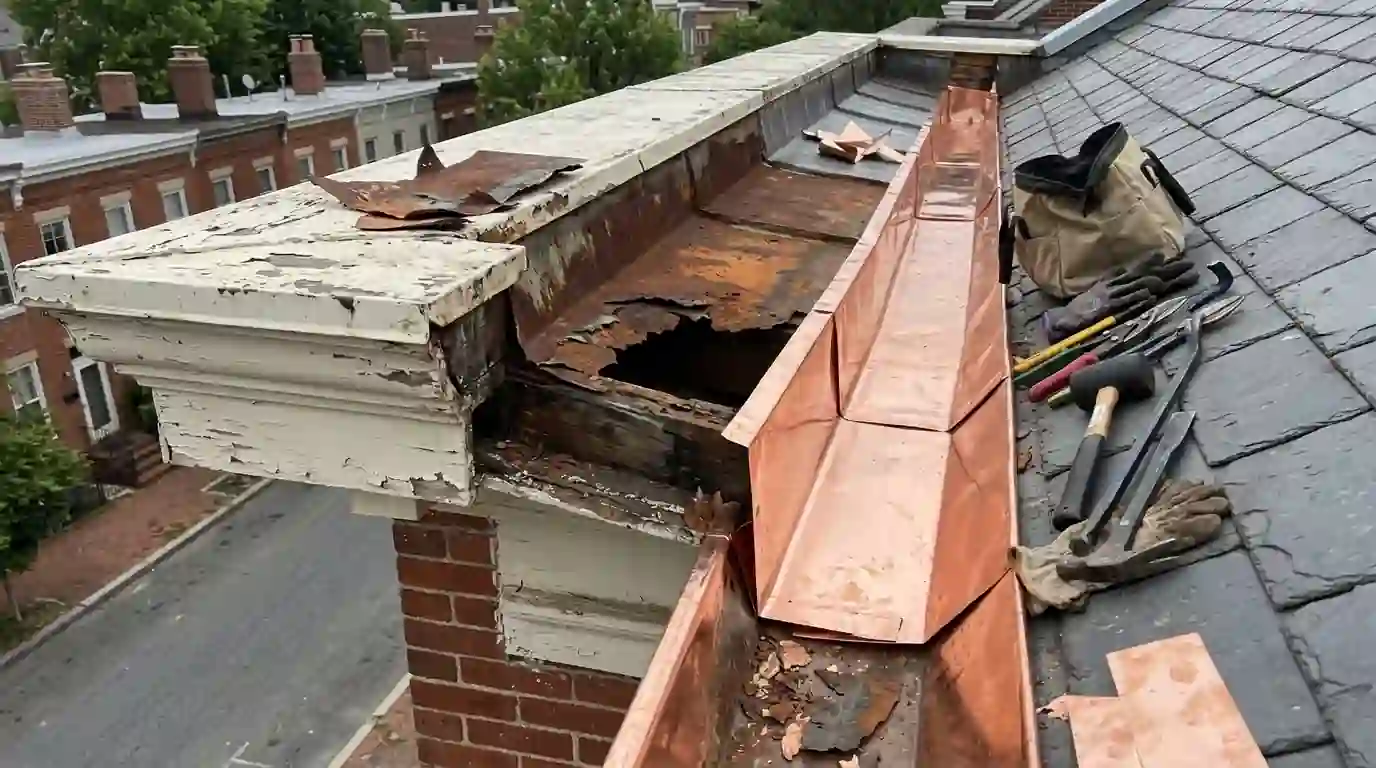
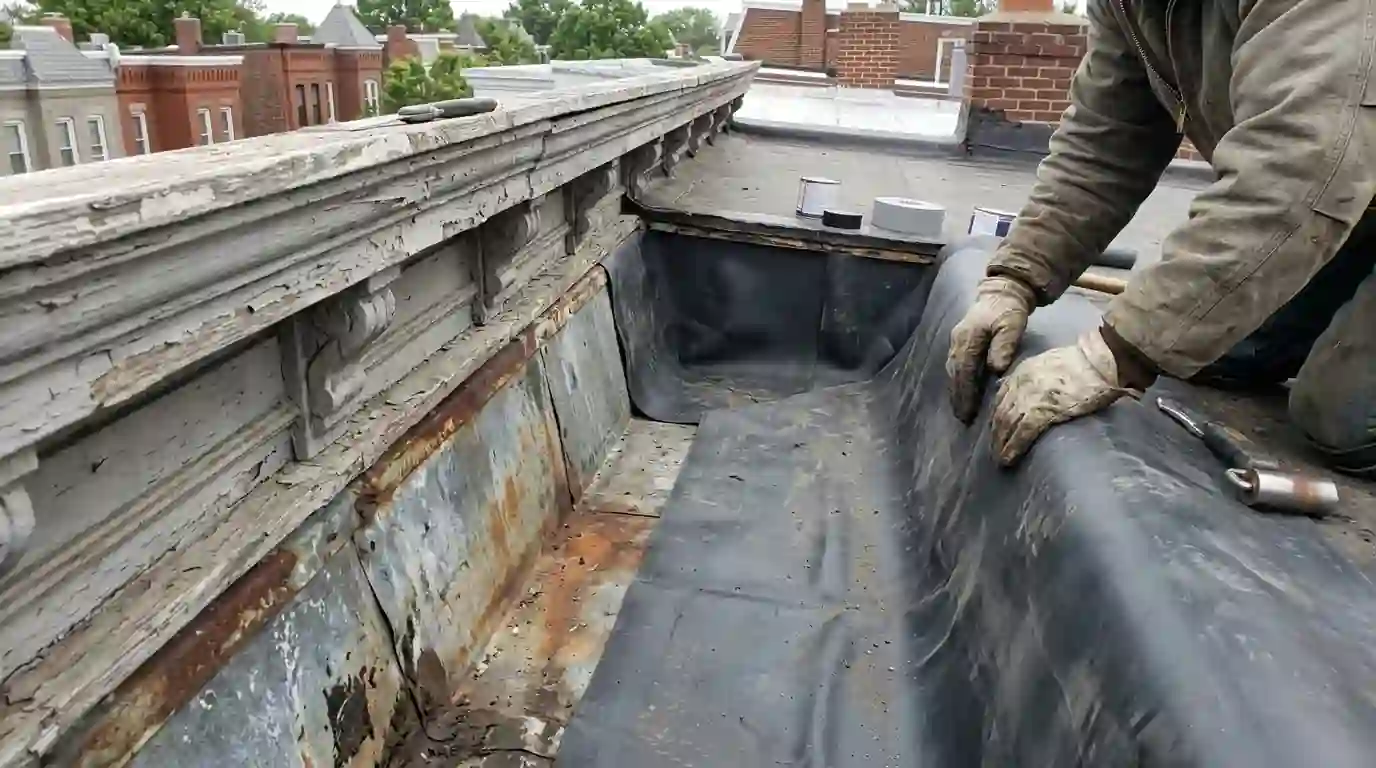
A box gutter, also called a built-in or Yankee gutter, is a channel framed into the roof edge or cornice and lined with sheet metal. On rowhouses in LeDroit Park, Capitol Hill and Shaw, you'll often find one along the front cornice or behind a low front parapet, draining to a leader head and downspout at one end.
The original liners were usually terne-coated steel or copper, soldered at the seams. Over the decades, many have been coated with tar, patched with roll roofing or covered in elastomeric paint. Those layers hide rust and holes until the metal is gone.
Detached houses in Cleveland Park, Chevy Chase and older parts of Takoma Park have them too, often along the eaves of Victorian and Colonial Revival homes, where the gutter is hidden behind a molded wood fascia so the roof edge looks clean from the street.
Why box gutters fail out of sight
Box gutters sit nearly flat, so leaves and grit settle in them easily. Wet debris holds moisture against the metal, and terne steel rusts from the inside face out once its paint is gone. Copper lasts much longer, but solder joints crack as the metal expands and contracts through hot summers and cold nights.
When the liner fails, water leaks into the wooden box frame and down into the cornice blocking, then into the top of the front wall. Because the cornice is decorative and sturdy-looking, rot can travel far before the wood shows soft spots from the street.
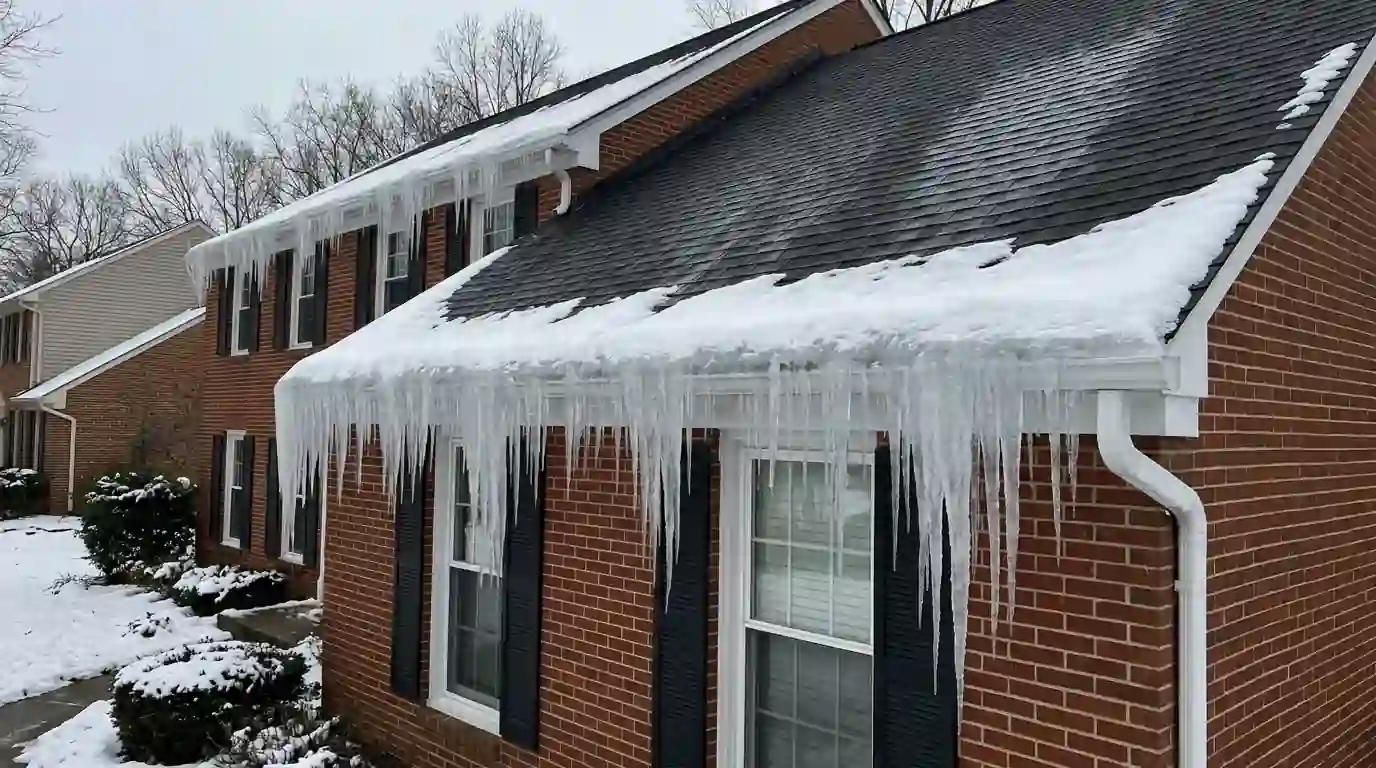
Ice adds to the strain. On a cold night, slush in a shallow box gutter freezes and expands, pushing at soldered seams and lifting tar patches. The next thaw finds every new gap, and water runs back under the roof edge where the liner meets the shingles or membrane.
Signs you can spot from the sidewalk or inside
Stand across the street with binoculars after a rain. Look for paint peeling on the cornice, dark stains on the brick right below it, and water dripping off the front edge instead of running to the downspout. Plants or moss growing out of the cornice line are a clear sign the gutter has held water for years.
Inside, check the top floor front wall and the ceiling just inside it. Damp plaster, cracked paint and stains along the window heads point to a gutter problem more often than a roof field leak.
Please don't lean a ladder against a cornice or try to reach the gutter from a front window. Those cornices may be weaker than they look, and a fall from that height is serious.
- Peeling or blistered paint on the cornice and fascia
- Brown streaks or white salt stains on brick under the cornice
- Water spilling over the front edge during rain
- Weeds or seedlings growing out of the cornice line
- Damp plaster on the top floor along the front wall
Repair options, from patch to full relining
Small pinholes in otherwise sound copper can be cleaned and resoldered. Short rusted sections of terne can sometimes be cut out and patched with new metal soldered in. Those fixes work when most of the liner is still solid.
When the liner is rusted through in many places, relining is usually the right repair. The old liner comes out, rotted framing and blocking get replaced, and new metal goes in with the right pitch toward the outlet. Options include soldered copper, which can last decades, a membrane liner of EPDM or TPO with metal edging, or a modified bitumen liner on lower-cost jobs.
Some owners ask about switching to a hanging gutter. That can work on rear walls, but on fronts in historic districts like Capitol Hill or LeDroit Park, changing the cornice profile usually needs historic preservation sign-off. Relining in kind keeps the look and avoids that hurdle.
What box gutter work tends to cost
Cleaning, resoldering and sealing a short section of a sound box gutter often runs $440-$1,290. Relining a typical rowhouse front gutter with a membrane liner and new edge metal commonly lands around $2,360-$5,180. A soldered copper relining with framing repairs often runs $5,720-$11,400 or more.
Price moves with gutter length, how much wood is rotten under the liner, the height of the cornice, the need for scaffolding or a lift on a busy street, and the metal chosen. We set a price once the liner is opened up enough to see what's beneath it.
How we reline a box gutter on a rowhouse
The crew sets up access, usually a ladder rig from the roof or scaffold from the sidewalk, and protects the cornice face. The old liner and any tar patches come out, and we probe every board for rot. Bad wood is cut back to sound framing and replaced with treated lumber, shimmed to restore an even slope to the outlet.
New liner metal or membrane goes in with the back edge carried up under the roofing and the front edge folded over the cornice drip. The outlet gets a new drop tube into a resized leader head. Last, we water test the gutter with a hose before cleaning up. Our box gutter repair service handles both the wood and metal in one visit.
Keeping a rebuilt box gutter healthy
Cleaning twice a year, once after the spring tree seeds fall and once after fall leaves, keeps most box gutters working for decades. A leaf screen at the outlet helps, though full guards on box gutters can trap debris if they're not chosen with care. Our gutter guard options cover the types that work here.
Check the paint on the cornice every few years too. Peeling paint lets water into wood joints, and a cornice that stays painted protects the box gutter frame. If you also have a party wall leak, see our post on why rowhouse roofs leak at the party wall for how the two can be linked.
Call before the cornice starts to sag
A box gutter problem caught early is a liner job. Caught late, it can turn into rebuilding cornice brackets and framing. Call (202) 771-7443 any hour if you see stains below the cornice or water spilling over the front.
We'll photograph the gutter from the roof, show you the liner condition, and explain the patch and reline options in plain numbers before any work starts.