Shingle pieces or slate in the yard
Debris on the lawn or sidewalk means something on the roof is missing and the layer below is exposed.
Roof repair
Storm damage on a roof is often invisible from the sidewalk, and the creased shingle or peeled membrane edge you cannot see is the one that leaks at the next downpour.
Materials we install
Storm damage roof repair restores a roof hurt by wind, hail, heavy rain, snow load or falling trees. You need it after a severe thunderstorm, derecho, nor'easter or tropical remnant, even when nothing is dripping yet. Small storm repairs in the DC area run about $465 to $1,690, while limb strikes and large wind blow-offs reach several thousand dollars.
We inspect the whole roof, not only the obvious spot, and check framing where limbs hit.
Openings are tarped or sealed with membrane the same day to stop further water damage.
You get dated photos and a written list of every damaged component for your insurer.
If you want, we meet the adjuster on site and walk them through the damage.
Cracked rafters, broken sheathing and crushed fascia are rebuilt before roofing goes back on.
New shingles, slate, membrane or metal is installed and flashed to match the rest of the roof.
Debris on the lawn or sidewalk means something on the roof is missing and the layer below is exposed.
A drip edge or parapet cap sticking up lets wind and water under the roofing at its weakest spot.
Fresh dings on soft metal after a storm are a quick sign that hail hit the roof too.
Even a small branch can hold moisture against shingles or puncture a membrane where it landed.
Patches where granules are gone, especially in a random pattern, can mean hail bruising.
Water appearing after a storm that never leaked before points to fresh damage rather than age.
Summer thunderstorms do most of the harm here. A line of cells crossing from the Shenandoah toward the Chesapeake can bring straight-line gusts that peel up roof edges and snap oak limbs in minutes. Derechos, like the one in June 2012, are rarer but take down trees across whole neighborhoods at once.
Late summer and early fall add the remnants of tropical systems, which drop several inches of rain over a day and test every drain and seam. In winter, nor'easters drive rain and sleet sideways off the ocean for hours, pushing water under flashing that handles straight-down rain without trouble.
Hail is less common than in the Plains, but small to moderate hail does fall in spring and summer storms. On asphalt shingles it knocks off granules and bruises the mat. On older slate it cracks thin pieces, and on aging skylights it can fracture the acrylic dome.
Wind does not push a roof down, it pulls it up. On a low-slope rowhouse roof, suction is strongest at the corners and along the front parapet, where a loose metal edge or an unsealed lap gives the wind something to grab. Once a membrane edge lifts, every gust works it further back.
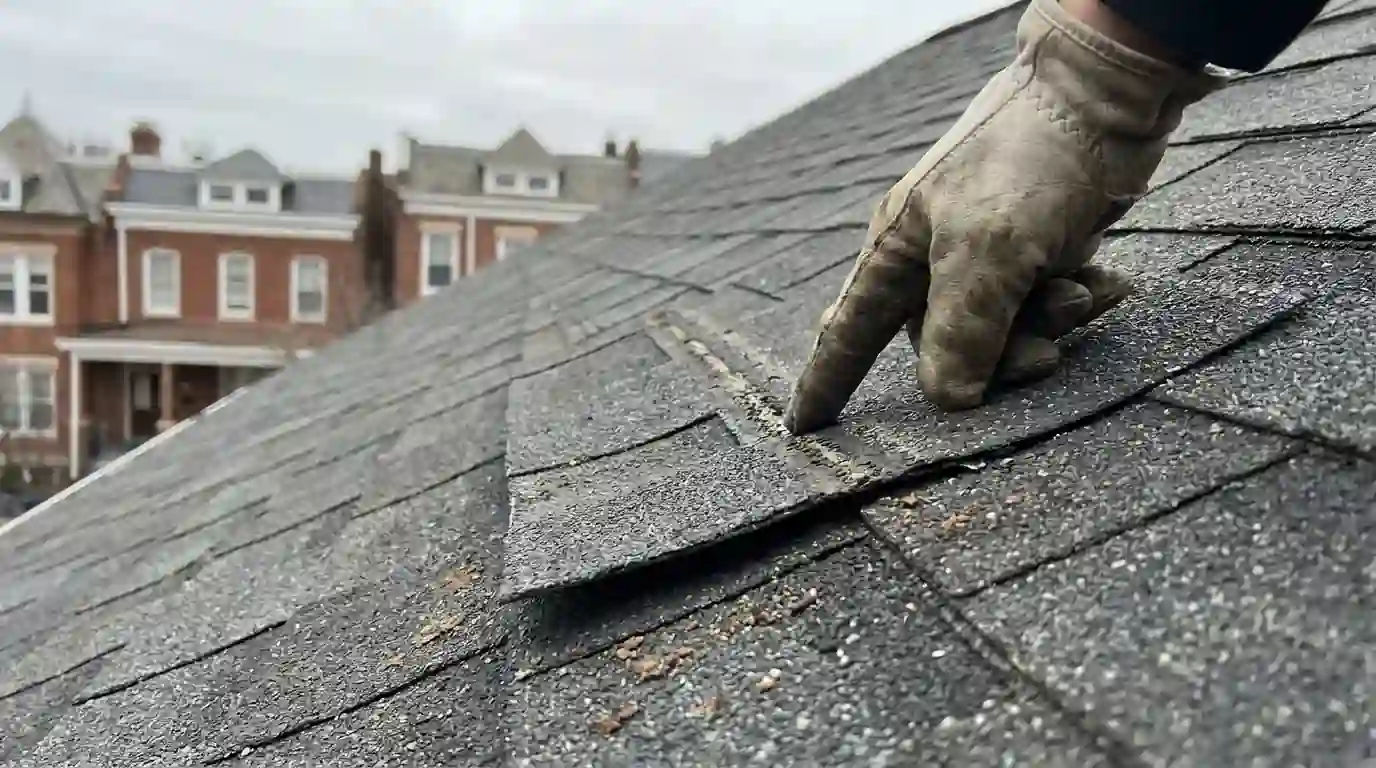
On shingle roofs, the damage is often a crease line just above the nail strip, where a tab folded back in a gust and laid down again. The shingle looks fine from the yard, but the seal is broken and the mat is cracked. We hand-check tabs on the windward slopes to find these, because they leak and blow off in the next storm.
Slate and metal fail at the fasteners. Corroded nails let go under a gust and a slate slides into the gutter. Standing seam panels with tired clips can rattle and lift at the eave. Our page on repairing older metal roofs covers how we refasten those panels.
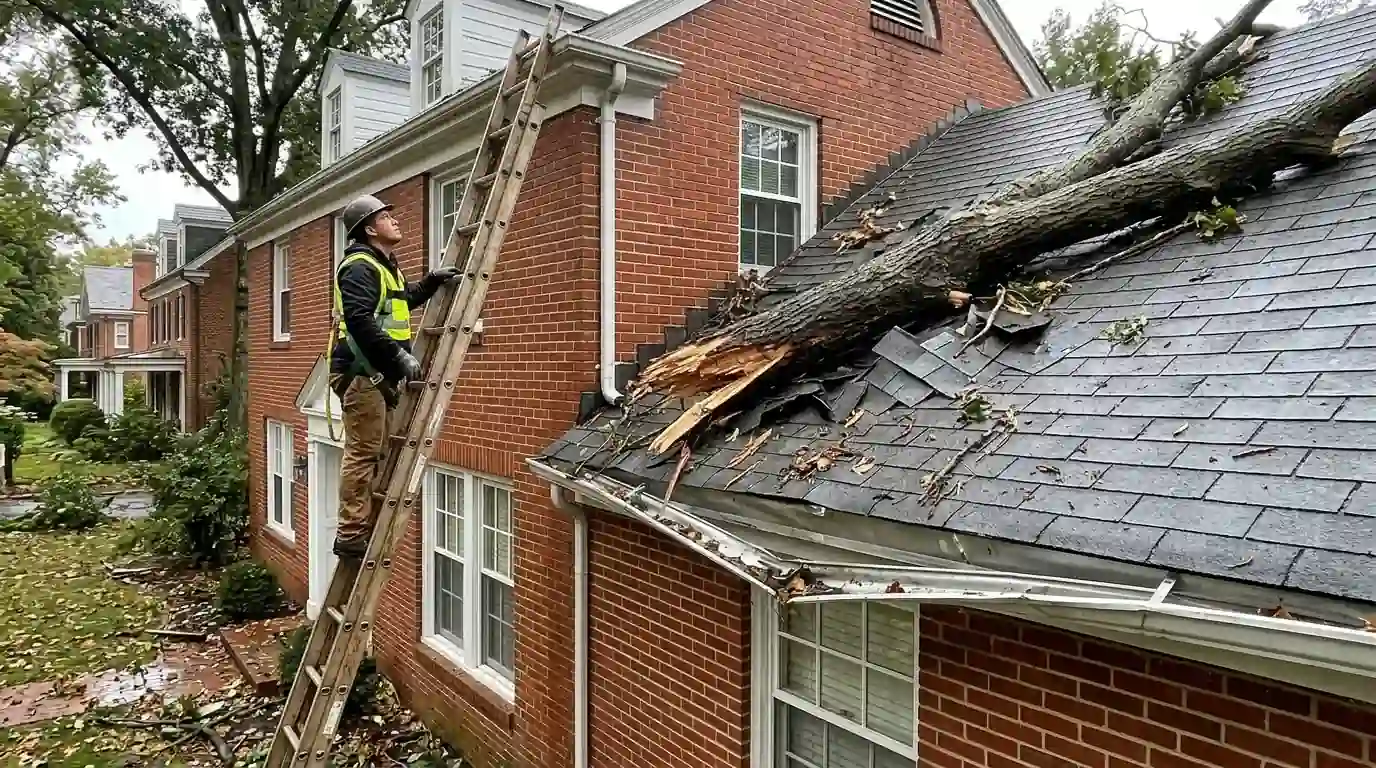
Neighborhoods with big canopy, such as Cleveland Park, Takoma and much of Montgomery County, see most of their storm calls from falling limbs. A heavy oak branch can crack rafters even when the roof surface looks only scraped, so we check the framing from inside the attic or top floor before we close anything up.
If a whole tree is on the house, the tree removal comes first, ideally with a crane rather than cutting pieces off the roof. We coordinate with the tree crew, then sister or replace damaged rafters, put down new decking, and rebuild the roof layers to match the rest. Gutters, fascia and soffit damaged by the fall are part of the same repair.
Most homeowner policies cover sudden storm damage, and the adjuster's first question is what the roof looked like right after the event. Our photos, taken before temporary work and with notes on the date and weather, give you that record.
We write a line-item scope for the permanent repair: the square footage of shingle or membrane, the flashing, the decking and any matching issues. When a storm damages part of a slate or shingle roof that cannot be matched, we explain that clearly so the adjuster understands the problem. See our insurance claim help page for more on what we provide.
We never tell you what your policy covers or promise a claim outcome. What we can do is show the adjuster exactly what is broken, meet them on the roof, and answer their technical questions.
A roof can lose its first line of defense and still stay dry for weeks, because underlayment or the layer beneath the membrane holds for a while. When it finally leaks, the damage gets blamed on age rather than the storm, and the claim window may have passed.
If a strong storm passed over your block, look from the ground for shingles in the yard, metal edges sticking up, slates in the gutter and limbs resting on the roof. If you see any of that, or neighbors are getting repairs, a roof check soon after the storm is cheap insurance against a much larger bill later.
Snow load is the other storm risk people forget. A heavy, wet snowfall on a low-slope rowhouse roof can sit for days with drifts piled against the parapets, and when it melts, water backs up under ice at the scupper. After a big snow, look at the top-floor ceilings near the rear wall for a few days.
Storm repair costs depend mostly on how much of the roof was hit and whether framing is involved. These are typical 2026 ranges before any insurance payment.
| Job | Typical range |
|---|---|
| Replace wind-creased or missing shingles | $465-$1,240 |
| Reattach and reseal lifted flat roof edge | $690-$1,690 |
| Replace hail-cracked or slipped slates | $585-$1,770 |
| Limb strike: rafter repair, decking and roofing | $2,860-$7,450 |
| Large wind blow-off section on a flat roof | $1,940-$5,380 |
Roof height, steepness, matching older materials, framing damage and whether temporary work was done first all move the total. The real number comes after we inspect the roof, and we put it in writing for you and your insurer.
Within a few days is best, and right away if anything is dripping or a limb is on the roof. Early photos help insurance claims, and temporary repairs prevent a small opening from soaking insulation and ceilings.
Yes. Wind can lift a membrane enough to break the adhesive bond without tearing it, leaving the sheet loose and flapping. You may hear it rumble in the next gust. We walk the field and press along the edges to find loose areas.
Hail here is usually small, but it can bruise asphalt shingles, crack thin or aged slate, dent metal vents and break plastic skylight domes. We look for a random damage pattern and dented soft metal, which separates hail damage from normal wear.
We separate storm damage from age-related wear in our photos and scope, so you and your adjuster can see which is which. You can then decide whether to handle the older issues at the same time while the crew and materials are on site.
We bring the closest available product and source salvaged slate when needed. Older shingle colors are often discontinued, so a small difference may show at first and soften as the new shingles weather. On visible historic fronts we prioritize a close match.
These are the places we drive to most for this work. We cover all 45 areas on our service area list.
Day or night roof emergencies in DC: tarping, temporary membrane patches, tree limb dry-ins and active leak control, with a crew answering (202) 771-7443 around the clock.
Emergency Roof Repair detailsAfter wind or a falling tree, we tarp the roof, document the damage with photos and measurements and meet your adjuster on the roof.
Insurance Claim Roof Help detailsTargeted fixes for open seams, slipped slate, lifted shingles and failed flashing on DC rowhouses, porch roofs and detached homes, sized to the actual damage.
Roof Repair detailsWe trace roof leaks from the ceiling stain back to the real entry point, then fix that cause: seams, flashing, vent boots, skylights, parapets and drains.
Roof Leak Repair detailsCall and a roofer will answer, any hour of any day. We stop the leak first and fix it properly once the roof is dry.