Nobody has been up in years
If you can't remember the last time someone walked your roof, small problems have almost certainly built up.
Gutters, trim and commercial
Most roofs around Washington don't wear out all at once; they fail at a few small spots that nobody looked at for five years. A short visit twice a year catches cracked sealant, clogged scuppers and lifted flashing while they're still cheap fixes.
Materials we install
Roof maintenance is a scheduled visit, usually each spring and fall, where we clear gutters and drains, check and reseal flashing, vents and seams, fix small defects and photograph the roof's condition. It suits nearly any roof, but flat rowhouse roofs, older slate and roofs under heavy trees benefit most. In the DC area, a visit typically costs $235-$585 for a house and more for larger buildings.
If you can't remember the last time someone walked your roof, small problems have almost certainly built up.
Overflow during an average storm usually means outlets are packed with leaves or grit.
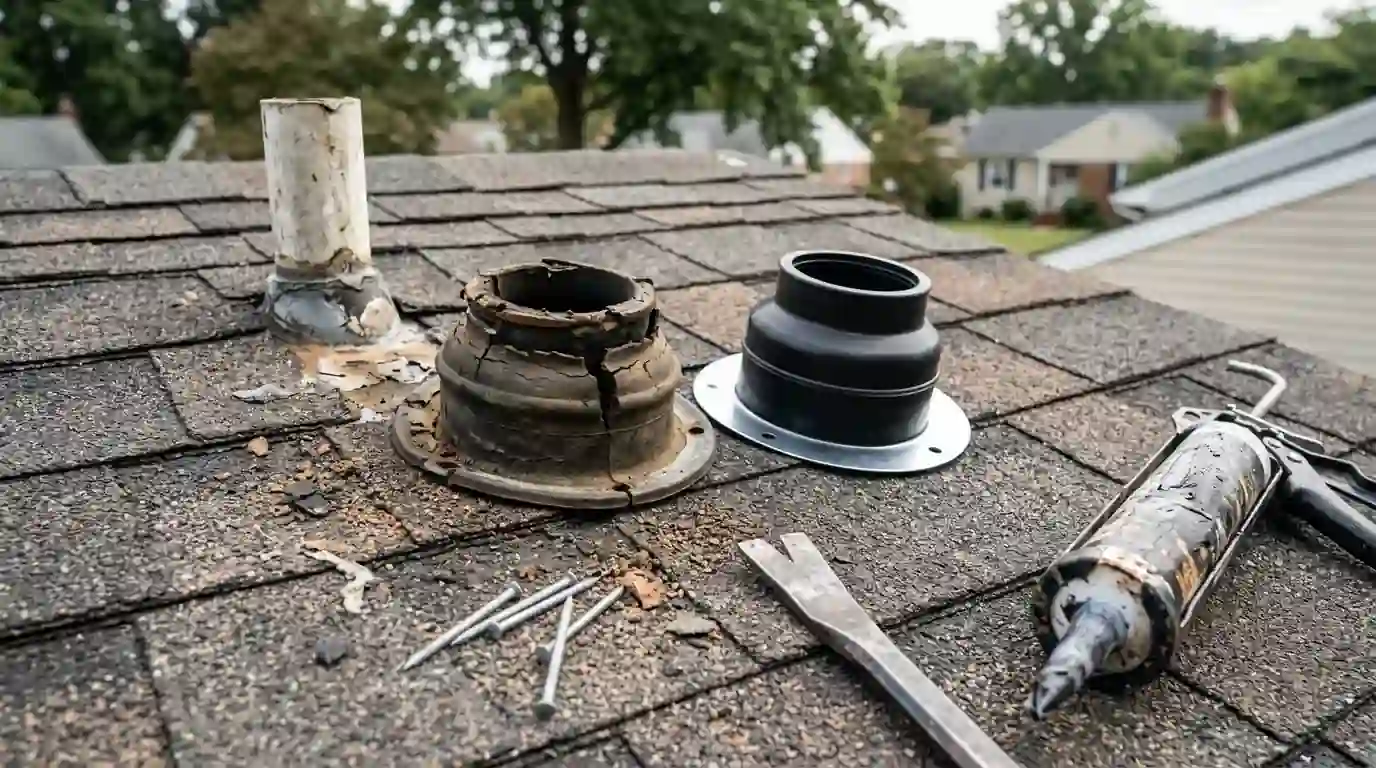
Dried, split sealant around flashing is the kind of small failure maintenance exists to catch.
Black membrane showing through a silver or white coating means it's exposed to UV and heat.
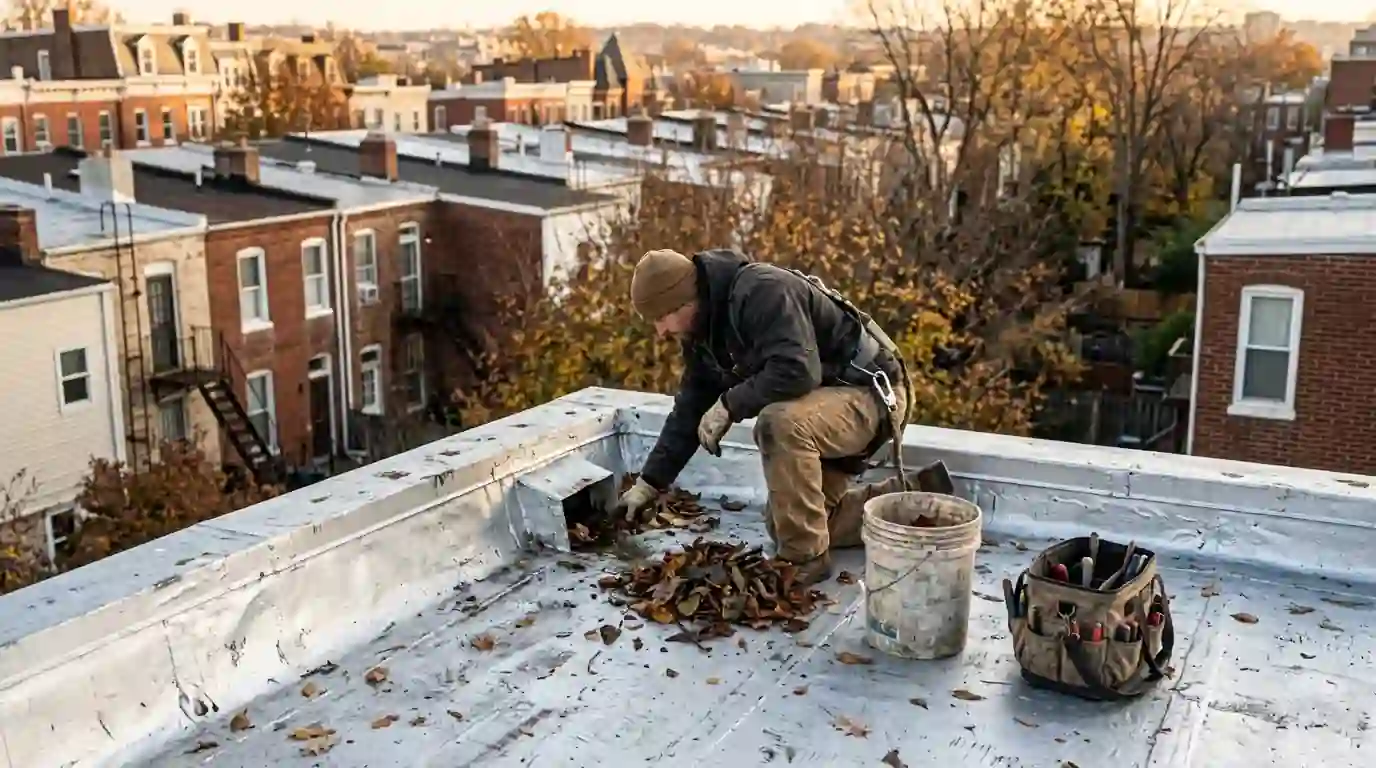
Leaves gathered behind chimneys and in valleys hold moisture against the roofing for weeks.
A change of hands is a good time to set a baseline and learn what condition the roof is in.
On a flat rowhouse roof, we start at the rear: scupper, conductor head and the gutter or leader below. Then we walk the field of the roof looking for blisters, open seams, ponding and spots where the coating has worn through to the base membrane. Parapet flashing, coping joints, plumbing vents, the hatch and any skylights get checked one by one.
On a pitched shingle or slate roof, we look at valleys, chimney flashing, pipe boots, ridge vent and any slipped or cracked pieces. Rubber pipe boots dry out and split in our summer sun after ten to twelve years, and they're one of the most common slow leaks we find. Replacing one during a maintenance visit takes minutes.
Small repairs are part of the visit: resealing a counterflashing joint, replacing a cracked vent boot, refastening a lifted piece of edge metal, swapping a broken slate. Anything bigger we photograph, price and leave for you to decide.
Fall visits come after the leaves drop, usually mid-November in DC and a bit earlier in the Maryland and Virginia suburbs. Clearing the outlets then sets the roof up for winter, when a clogged drain can freeze and a blocked gutter helps ice form at the eave. It's also the last good weather for sealants and coatings to cure.
Spring visits, after the oak catkins and maple seeds fall, catch whatever winter did: freeze-thaw cracks in sealant, slates popped by ice, flashing loosened by wind and gutters bent by snow sliding off a steep roof. That visit also prepares the roof for the summer thunderstorm season, when outlets have to move a lot of water quickly.
Houses under heavy canopy in upper Northwest, Takoma Park or the older parts of Arlington County may need a third visit in early summer. We'll tell you after the first year whether yours is one of them.
Storms change the calendar. After a derecho, a tropical remnant or a night of high wind, a quick look at the roof is worth more than waiting for the next scheduled visit. Maintenance customers get priority for those post-storm checks, since we already know the roof and have its last photos on file to compare.
A flat roof's life depends heavily on upkeep. A modified bitumen or EPDM roof that gets its drains cleared and seams checked twice a year will typically outlast an identical neglected roof by years. Ponding water, UV exposure and clogged outlets are what age a membrane fastest, and all three are things maintenance addresses.
Silver or white coatings on DC rowhouse roofs wear thin at walkways, around the hatch and near the rear outlet first. Touching those spots up during a maintenance visit costs little compared with a full recoat, and it keeps the sun off the membrane underneath. When the coating has worn across most of the roof, we'll suggest a full recoat and price it.
We also look at what's been added to the roof since the last visit: a new satellite mount screwed through the membrane, an HVAC condenser on unprotected sleepers or a new deck. Those additions cause a surprising share of leaks we trace.
Many houses in Cleveland Park, Chevy Chase and Takoma have slate roofs installed nearly a century ago. Good slate can keep going, but individual slates crack and the nails holding them rust off. Replacing a few slates each year with copper nails and slate hooks keeps the roof tight; ignoring them for a decade turns into a much larger slate repair job.
Standing seam and flat-lock metal roofs on porches and bay windows need their paint watched. Once bare steel shows, rust spreads quickly. We spot-prime and paint small areas during maintenance, which can delay a full repaint or replacement for years.
On both, we walk carefully. Slate breaks under careless feet, so we use hook ladders and roof jacks rather than walking the field, and soft-soled shoes on metal.
Every visit ends with dated photos and a brief note on what we found and fixed. Over a few years, that becomes a history of the roof. It helps when a buyer's inspector asks about the roof, when an insurer wants proof the roof was maintained or when you're deciding whether replacement can wait another year.
If you're planning to sell, those records also make a roof certification simpler, because we already know the roof's condition and history. Call (202) 771-7443 to put your roof on our spring and fall schedule.
These typical 2026 prices assume a routine visit with small repairs included and larger items priced separately.
| Job | Typical range |
|---|---|
| Rowhouse flat roof visit | $235-$445 |
| Single-family pitched roof visit | $285-$585 |
| Slate roof visit with up to five slate replacements | $465-$935 |
| Small commercial or condo roof visit | $545-$1,290 |
| Coating touch-up on worn flat roof areas | $185-$460 |
Roof size and height, the number of outlets, heavy tree debris and how much small repair work turns up change the price. We set a visit price after seeing the roof the first time.
We inspect the whole roof, photograph every area and note anything that needs repair.
Gutters, drains, scuppers and downspouts are cleared and tested with a hose.
Sealant, vent boots, loose metal and single slates or shingles are fixed during the visit.
Anything bigger is photographed and priced so you can plan it when it suits you.
You get dated photos and a short summary of what changed since the last visit.
We call to schedule the next visit in spring or fall so the roof doesn't slip off the calendar.
Twice a year, in spring and late fall, works for most rowhouse roofs. Roofs under large trees or with a roof deck that collects debris may need a third check in early summer.
A new roof needs less, but the outlets still clog and the flashing still moves. Many manufacturer warranties also expect reasonable upkeep, and a simple record of visits helps if a claim ever comes up.
Yes. Clearing gutters, scuppers and downspouts is part of every visit, since blocked outlets cause more roof leaks than almost anything else.
We photograph it, explain what it is and give you a price. You decide when to do it. If it's leaking actively, we'll offer a temporary fix that day so no more water gets in.
Sometimes. On a roof with two or three years left, maintenance keeps it dry while you save for replacement and helps you pick the timing. On a roof that's already leaking in several places, the money is better spent on replacement, and we'll say so.
These are the places we drive to most for this work. We cover all 45 areas on our service area list.
A walk of the whole roof with photos and a written condition report: membrane, slate, shingles, flashing, drains, parapets and attic, for owners, buyers and sellers in DC.
Roof Inspection detailsLeaking seams, sagging runs, crushed downspouts and clogged alley tie-ins fixed on the spot, so you keep sound gutters instead of replacing them early.
Gutter Repair detailsSilver aluminum and white reflective coatings for DC low-slope roofs, applied over a cleaned, repaired surface to add years to a membrane that's still sound.
Roof Coating detailsLeaking scuppers through rowhouse parapets, rusted conductor heads and clogged internal roof drains rebuilt so flat roofs empty fast after a storm.
Roof Drain and Scupper Repair detailsCall and a roofer will answer, any hour of any day. We stop the leak first and fix it properly once the roof is dry.