Ponding after 48 hours
Standing water two days after rain breaks down membranes and finds every weak seam.
Roof replacement and new roofs
Water that sits on your rowhouse roof for days after rain, a ceiling stain that returns every spring, and a roof surface buried under years of silver coating all point to the same thing.
Materials we install
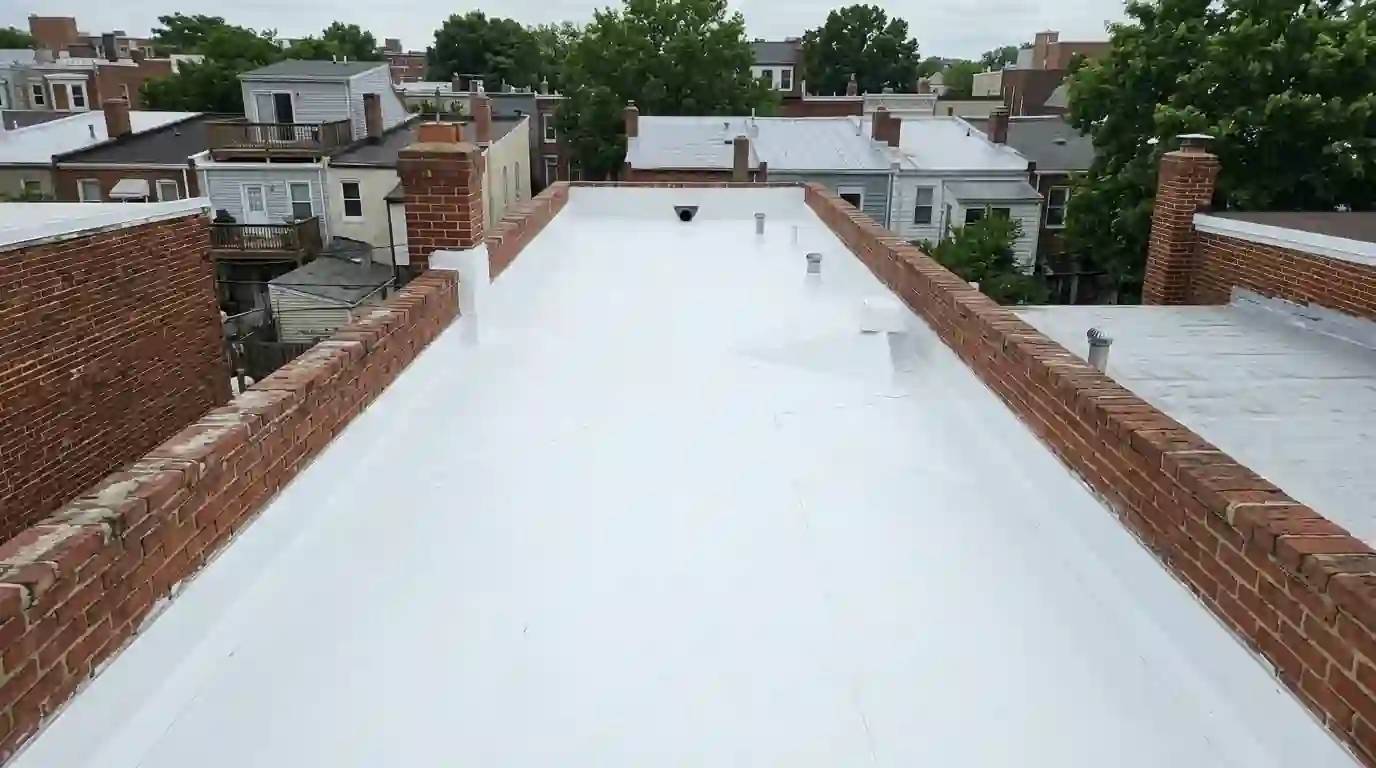
A flat roof replacement removes the worn low-slope covering, repairs the deck and installs a new membrane such as TPO, EPDM or modified bitumen with new wall flashing. It is due when ponding, blisters, split seams and repeat leaks outpace repairs. On a typical DC rowhouse of 650 to 1,100 square feet, expect about $9,640-$19,300, depending on old layers, insulation and parapet condition.
Most DC rowhouse roofs are not truly flat. They pitch gently from the front parapet toward the rear wall, where water exits through a scupper, an internal drain or a box gutter. Over a century, joists settle, boards cup and the slope flattens out, so water collects in shallow ponds that cook the membrane every summer.
Leaks usually start at the edges, not the middle. The base flashing running up the parapet, the joint along the party wall shared with the house next door, and the outlet at the rear are where old roofs open up. Our article on why party walls leak explains the details if you've been chasing a stain on the side wall.
Layer stacking makes it worse. Many roofs in Shaw, Eckington and Trinidad carry an original built-up roof, a later roll roofing layer and several coats of aluminum paint. Each layer traps moisture against the deck, and the added weight sits on joists that were never sized for it.
A new membrane laid over the same dips will pond in the same places. During tear-off we map the low spots with a level and string, then design a tapered polyiso insulation layout that moves water toward the outlet. Crickets go behind chimneys and between drains, where water would otherwise stall.
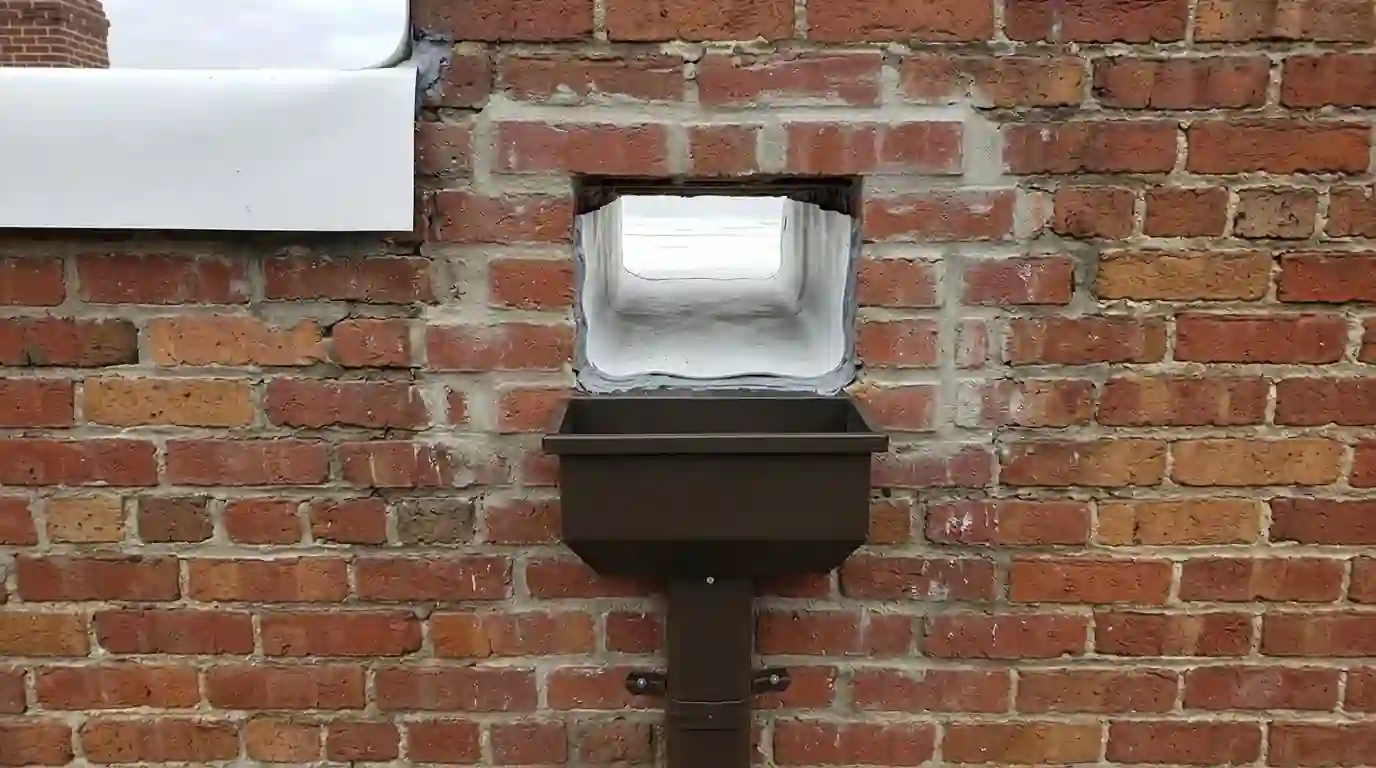
The outlet gets as much attention as the field. A rowhouse scupper that's too small, set too high or rusted through will back water up behind the parapet no matter what membrane you choose. We rebuild or enlarge scuppers, fit new conductor heads and downspouts, and clear internal drains down to the stack.
Insulation helps twice. Rowhouse top floors are hot in July because the roof deck sits right above the ceiling, often with nothing between. Adding polyiso board under the membrane cuts heat gain, and the taper solves ponding, which means the whole roof works harder for the same tear-off.
There is no single right membrane for every rowhouse. White TPO is our most common choice for open roofs because it meets DC cool roof expectations and its heat-welded seams resist ponded water. EPDM suits roofs with lots of penetrations and odd shapes, and a white EPDM is available where reflectivity is needed. Two-ply modified bitumen with a reflective cap handles foot traffic and rooftop units well.
We look at what will sit on the roof before choosing. A future deck, solar racking, condenser stands and a lot of maintenance traffic all push toward tougher surfaces or added walkway pads. Our comparison of TPO, EPDM and modified bitumen goes deeper into the tradeoffs.
Whatever membrane goes on, the wall details get the same care. New flashing runs up the parapet, under the coping or into a reglet, and every pipe, vent and hatch is flashed with a matching boot or curb wrap.
Replacing a flat roof in the District usually needs a DC Department of Buildings permit, and DC energy code rules push low-slope replacements toward reflective cool roof surfaces. In practice, that means white or light gray membranes on most rowhouses. We pull the permit and note the membrane's reflectance on the paperwork.
Owners sometimes ask about green roofs while the deck is open. DOEE's RiverSmart Rooftops program has offered rebates for vegetated roofs in the past, and terms change, so check what's current before planning around it. We can prepare the deck and membrane for a later green roof if the structure supports it.
Historic districts rarely care about a flat roof hidden behind a parapet, but rooftop additions, decks and visible equipment can trigger Historic Preservation Office input. We flag that early so the schedule doesn't slip.
Flat roof jobs in the city happen in tight quarters. Material usually comes up from the alley by ladder hoist, and on blocks without alley access we lift through the front with a small crane or carry rolls through the roof hatch. We tell your neighbors which days we'll be loading, since shared alleys get crowded fast.
Old built-up roofing is heavy and messy, so it goes down a covered chute into a dumpster or straight onto a truck. We cover adjoining skylights and the roof surfaces next door, and we sweep the alley for nails and gravel at the end of every shift.
Most single rowhouse roofs are stripped and dried in on the first day. If a storm cell builds in the afternoon, we stop tearing off and seal what's open, then pick up the next morning. The house is never left uncovered overnight.
Standing water two days after rain breaks down membranes and finds every weak seam.
Raised pockets show moisture or air trapped between layers, often in old built-up roofs.
Silver paint that has crazed and flaked means the asphalt beneath is exposed and drying out.
Flashing pulled away from the parapet brick lets water straight down the inside of the wall.
A spongy feel near the rear wall or the hatch usually means rotted boards.
Brown rings or peeling paint below the roof, especially along exterior walls, follow failing edges.
We cut a small sample to count layers and check for wet insulation, then map slope and drains.
You get a written plan for tear-off, taper layout, flashing and the membrane that suits your use.
We pull the DOB permit, arrange alley or street staging and protect skylights and neighboring roofs.
All old layers come off, rotted boards are replaced, and the deck is refastened.
Tapered insulation, cover board and membrane go down, with new parapet and penetration flashing.
We run water to the outlets, clear debris and share before and after photos.
Flat roof pricing depends mostly on how many layers come off, how much insulation goes back and how much wall flashing is needed. The ranges below reflect what DC rowhouse owners are paying in 2026.
| Job | Typical range |
|---|---|
| Small rowhouse roof, single layer strip, TPO | $9,640-$13,850 |
| Average rowhouse, two or three layers, TPO with taper | $12,700-$19,300 |
| Rowhouse roof in EPDM with new insulation | $10,950-$17,400 |
| Two-ply modified bitumen with reflective cap | $11,600-$18,750 |
| New scupper, conductor head and downspout | $685-$1,580 |
Board replacement, parapet coping work, rooftop units that must be lifted and reset, and hoisting where there is no alley access all add cost. Final pricing comes from the core cut and roof survey.
A properly installed TPO, EPDM or modified bitumen roof usually gives 20 to 30 years here. Good drainage and annual cleanouts of the scupper matter as much as the membrane brand. Our article on flat roof lifespan in DC covers the factors in more detail.
Usually yes. Rowhouse top floors often have little or no insulation between the ceiling and roof deck. Polyiso board under the membrane cuts summer heat and lets us build slope into the roof at the same time.
DC energy rules push reflective cool roof surfaces on low-slope replacements, which is why most rowhouse membranes we install are white or light gray. Specific requirements can change, so we confirm the current rule when we file the permit.
We protect it with boards and tarps where our crew crosses or works at the party wall. The flashing at the shared wall has to tie into their roof cleanly, so we look at its condition first and tell you if it's going to cause trouble.
We don't recommend it. Aluminum coated built-up roofs often hold moisture, and a new membrane laid over them traps that water against the deck. Tearing off lets us fix boards and drainage before the new system goes down.
These are the places we drive to most for this work. We cover all 45 areas on our service area list.
Low-slope roof repair for DC rowhouses and additions: modified bitumen, EPDM, TPO and coated roll roofing, plus ponding areas, curbs and parapet base flashing.
Flat Roof Repair detailsHeat-welded white TPO membranes for rowhouse and low-slope roofs, built to meet DC cool roof expectations and shrug off ponded water.
TPO Roofing detailsFully adhered EPDM rubber roofs for rowhouses, porches and additions, with seam tape, new edge metal and white EPDM where cool roof rules apply.
EPDM Rubber Roofing detailsTwo-ply modified bitumen roofs with reflective granulated caps for rowhouses, porches and roofs that carry decks, condensers and steady foot traffic.
Modified Bitumen Roofing detailsCall and a roofer will answer, any hour of any day. We stop the leak first and fix it properly once the roof is dry.