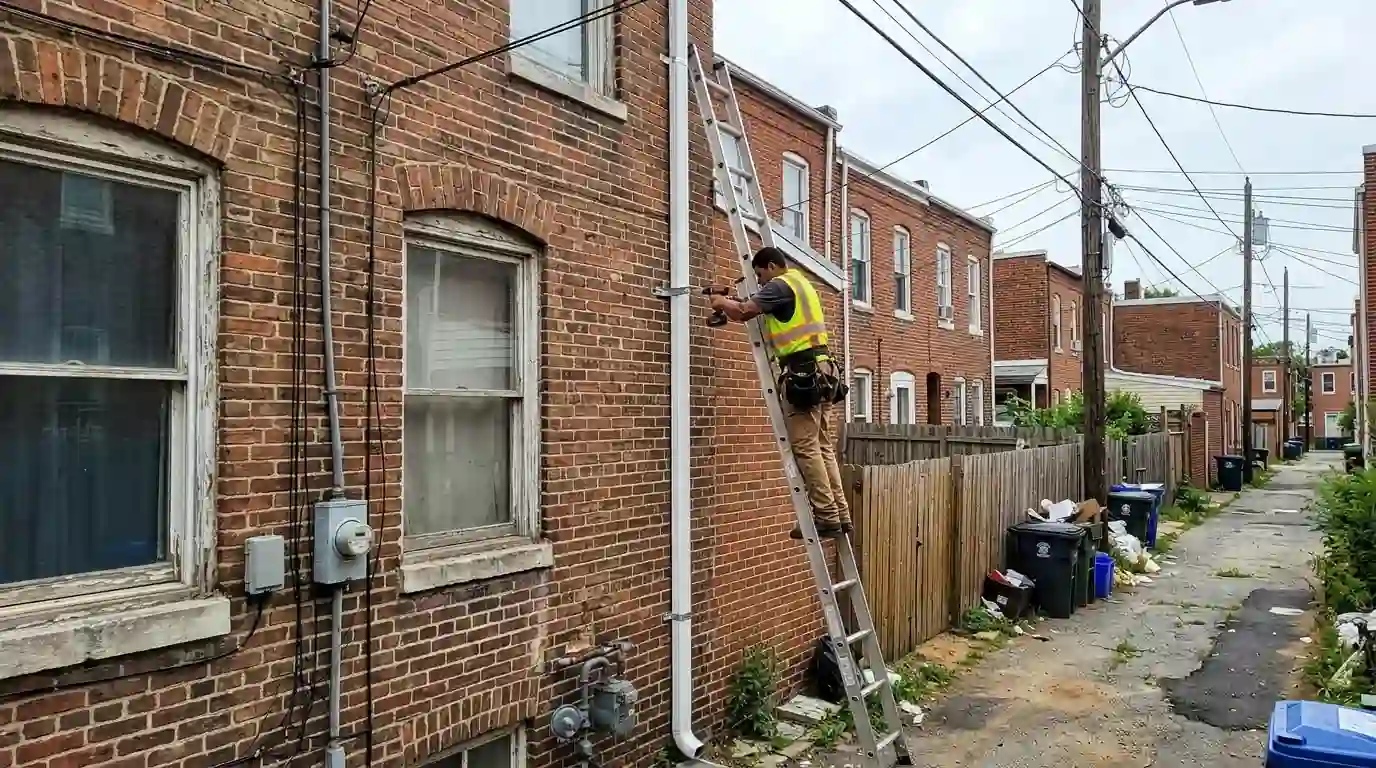
A ceiling stain that grows after rain
Brown rings on the top-floor ceiling usually trace back to a seam, a flashing or a clogged drain several feet away from the stain.
Roofers for Washington, DC, answering 24/7
A stain on the top-floor ceiling, a parapet that keeps weeping, a slate mansard shedding pieces onto the sidewalk: we find where the water gets in and fix the roof that is actually on your house.
Materials we install
We repair and replace roofs across Washington, DC and the close-in Maryland and Northern Virginia suburbs. Most DC rowhouses have a low-slope roof behind a parapet, so the bulk of our work is membrane repair, flashing, coatings and full flat-roof replacement, alongside slate, shingle and metal roofs. Call (202) 771-7443 at any hour and a roofer will talk through the problem with you.
Forty-three roofing services, grouped the way the work shows up on DC houses. Pick the closest match or call and describe what you are seeing.
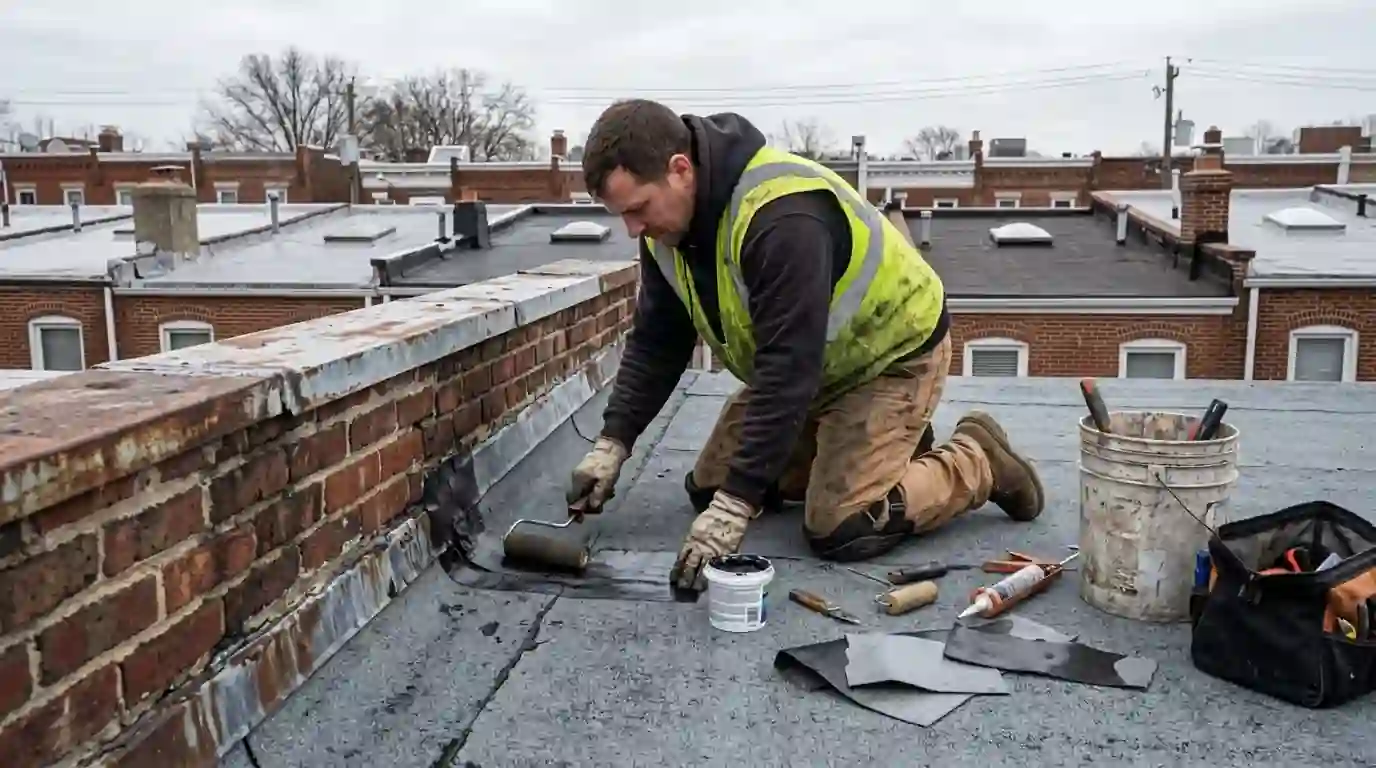
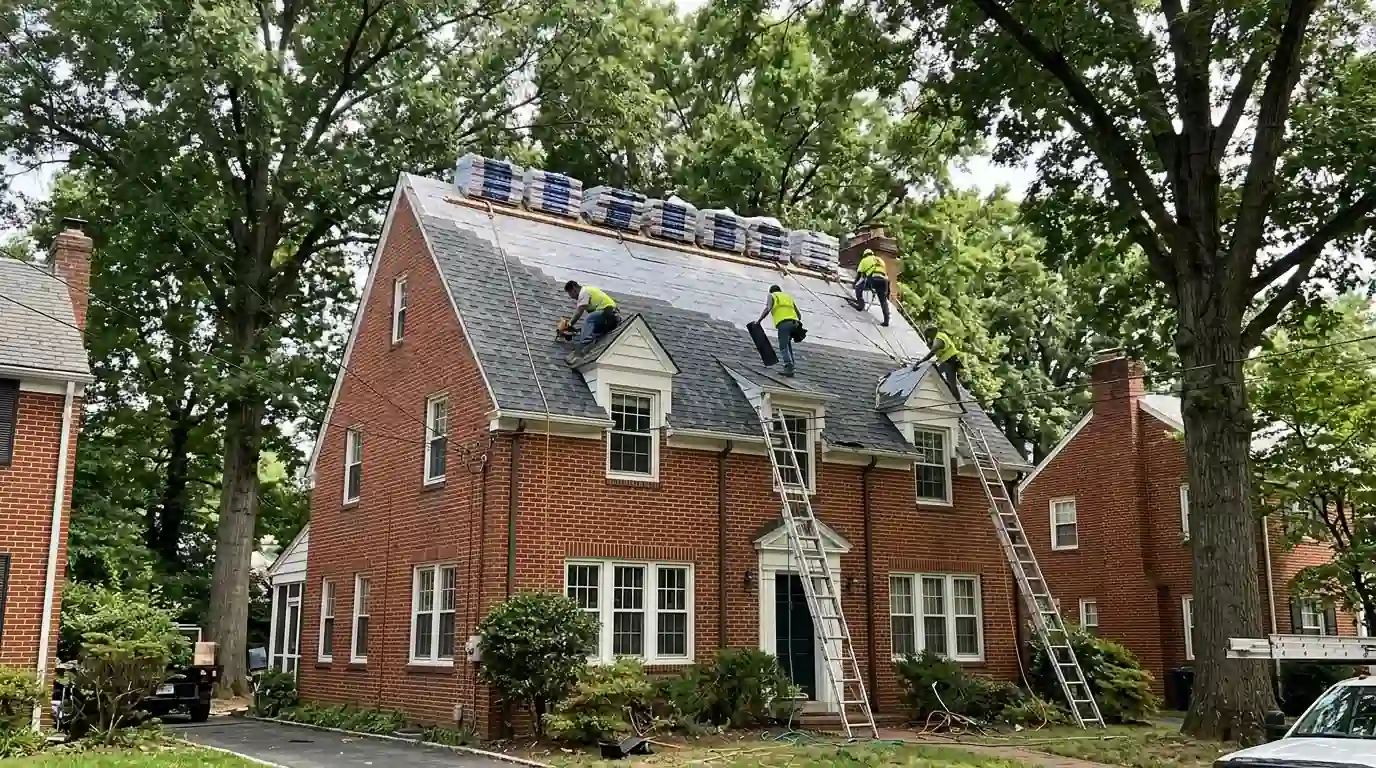
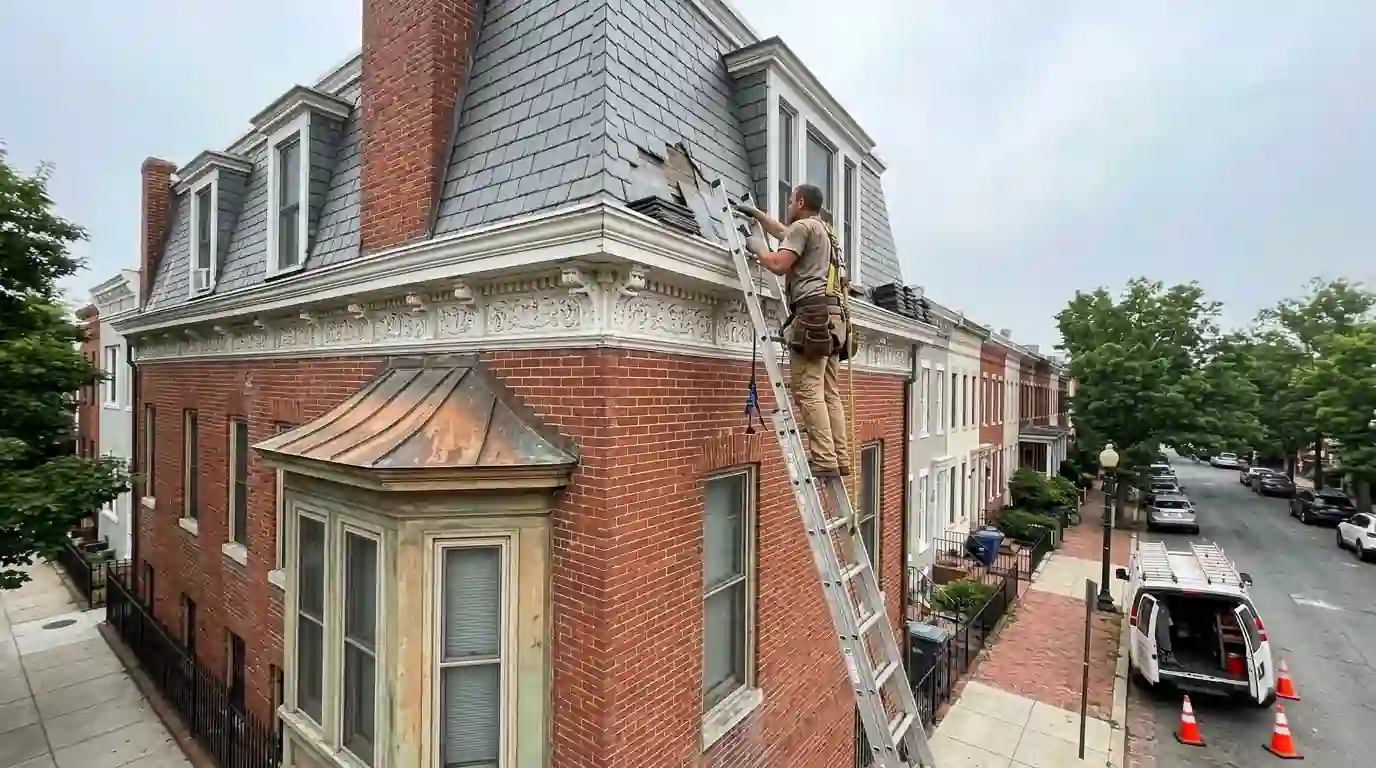
Any one of these is worth a call. Two together usually means water is already in the ceiling or the walls.
Brown rings on the top-floor ceiling usually trace back to a seam, a flashing or a clogged drain several feet away from the stain.
Wet plaster beside the shared wall points to failed coping or counterflashing on the parapet, one of the most common rowhouse leaks.
A slipped or broken slate on a mansard front leaves felt and sheathing open to the next storm, and loose pieces can fall on passers-by.
Water sitting on a flat roof long after a storm stresses the membrane and finds every weak seam it can.
Water spilling over the front cornice or staining the brick below often means a box gutter or downspout outlet has failed.
Creased or missing shingles after a thunderstorm let water reach the deck even when nothing shows inside yet.
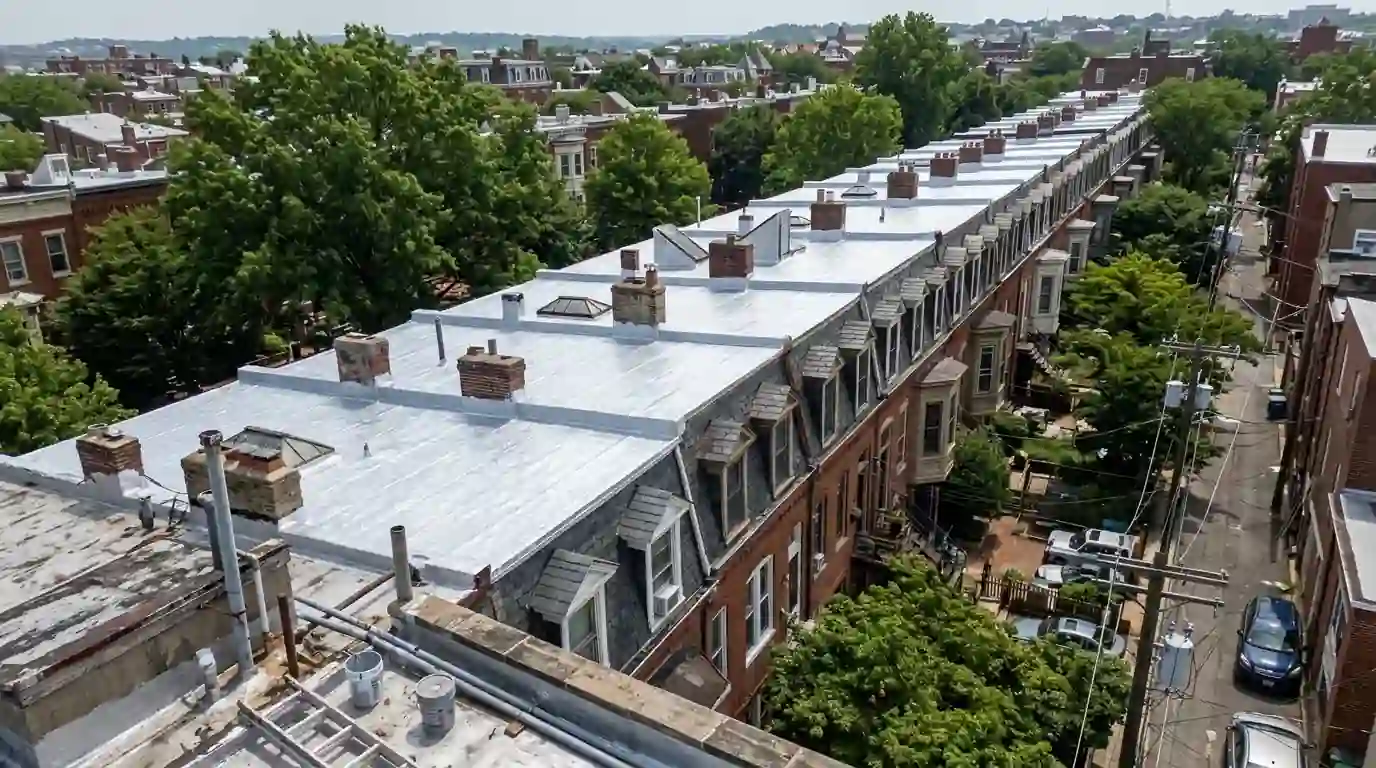
Walk any block in Petworth, Shaw or Capitol Hill and look up: the front may show a slate mansard or a decorative cornice, but behind it sits a low-slope roof that drains toward the rear. Those roofs carry rolled roofing, modified bitumen, EPDM, TPO or an old built-up roof under a silver coating. Each one fails in its own way, and repairs have to match what is already there.
Because the roof is shared at the party walls, flashing at the parapets matters as much as the field of the roof. A tired coping joint on your neighbor's side can still put water into your top floor. We look at the whole run of the wall, note what belongs to which house, and explain it before any work starts. Our rowhouse roofing work is built around those details.
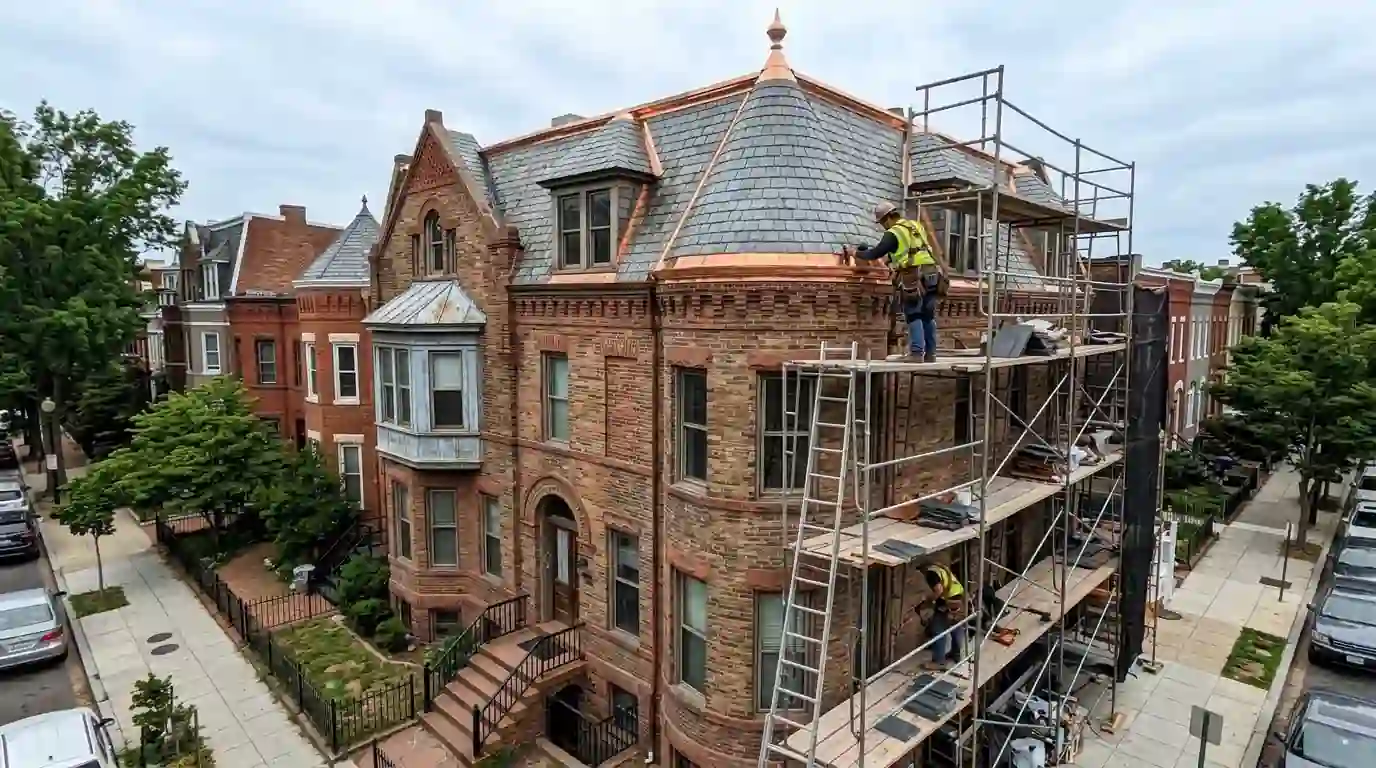
Many late 1800s rowhouses and the larger houses in Mount Pleasant and Cleveland Park carry slate on mansard fronts, turrets and bays, often next to terne or copper flashing. Slate can last a century, but the nails and flashings give out first. Replacing a handful of broken slates with matched pieces usually beats tearing off a roof that still has decades in it, which is why we start most slate roof repair calls with a close look rather than a replacement quote.
In historic districts, visible changes to slate, cornices or roof shape go through the Historic Preservation Office. We plan materials with that review in mind so the job is not held up.
Upper Northwest, Brookland and most of the Maryland and Virginia suburbs have pitched roofs with asphalt shingles, valleys, chimneys and gutters full of oak and maple leaves. Here wind damage, failed pipe boots and worn valleys cause most leaks. A roof inspection before a big storm season catches the small things while they are still small.
Washington summers push dark roofs past 150 degrees, which is why DC's energy rules favor reflective membranes when a low-slope roof is replaced. Summer thunderstorms bring sideways rain and falling limbs, and a few winter freeze cycles each year open cracks in old coatings and push ice into box gutters. Each of those seasons leaves a different kind of damage, and we check for the one that fits the time of year.
The same five steps whether it is a single cracked seam or a full tear-off.
Day or night, a person picks up (202) 771-7443, asks what you are seeing and how much water is coming in.
If it is actively leaking, we set a temporary patch or tarp first so the ceiling stops taking on water.
On the roof we trace the leak from the stain back to the seam, flashing, drain or slate that let it in, with photos.
You get a scope in writing that says what we will fix, the material, the price range and how long it takes.
We do the work, haul away debris, and check the repair with water or a follow-up visit after the next rain.
The Jose Roofing System office on 7th Street NW sits a short drive from most of the District, and our Woodbridge head office covers the Virginia side. Type a ZIP code to check your street.
Leaks do not wait for business hours. The phone is answered 24/7, every day of the year.
We show you what we found on the roof before we talk about fixing it, so you see the problem yourself.
Materials, the work and the price range in plain words, with nothing hidden behind roofing jargon.
Parapets, box gutters, rear ells and shared walls are everyday work for us, not an odd job.
Most calls inside the District get a roofer the same day, and active leaks during a storm are handled as soon as it is safe to get on the roof. Call (202) 771-7443 and we will give you a real arrival window rather than a guess.
Yes. Low-slope rowhouse roofs make up a large share of our work, and we repair and replace slate on mansards, bays and turrets. We match existing slate where it can be repaired and explain when replacement makes more sense.
A full roof replacement in the District generally needs a permit from the DC Department of Buildings, and homes in historic districts also need sign-off for visible changes. We tell you what applies to your house when we write the scope. Small repairs usually do not need one.
We work across Montgomery and Prince George's counties in Maryland and Arlington, Fairfax and Prince William counties plus Alexandria in Virginia. See the full list on our service area page or call to check your address.
Small flat-roof and flashing repairs often run from about $385 to $1,450, while a full rowhouse roof replacement commonly lands between about $7,800 and $15,600. The real figure depends on the roof, the layers underneath and access, so we price it after looking.
Practical articles from the roof, written for houses in and around the District.
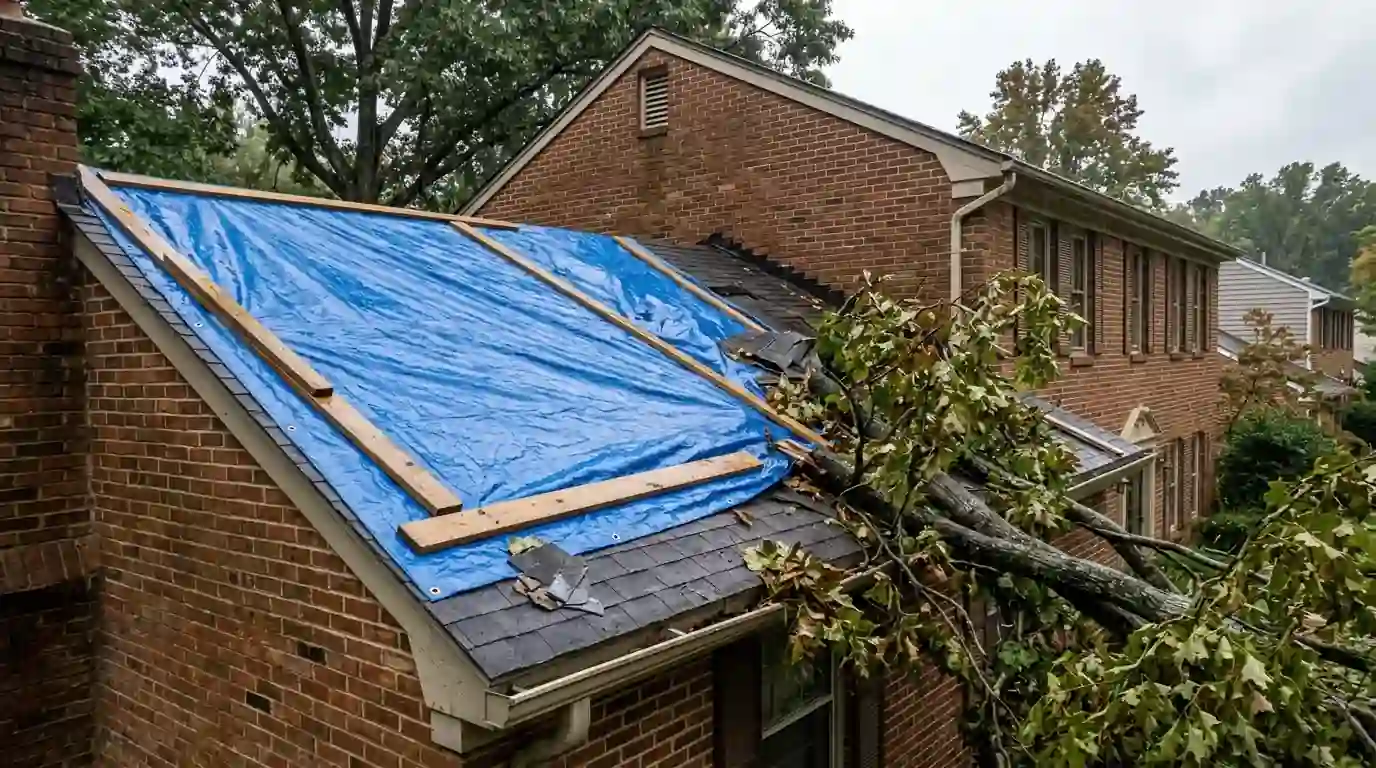
Summer thunderstorms and fall nor'easters can turn a small roof weakness into water on your floor in minutes. The first half hour matters most, and almost everything useful you...
Read the article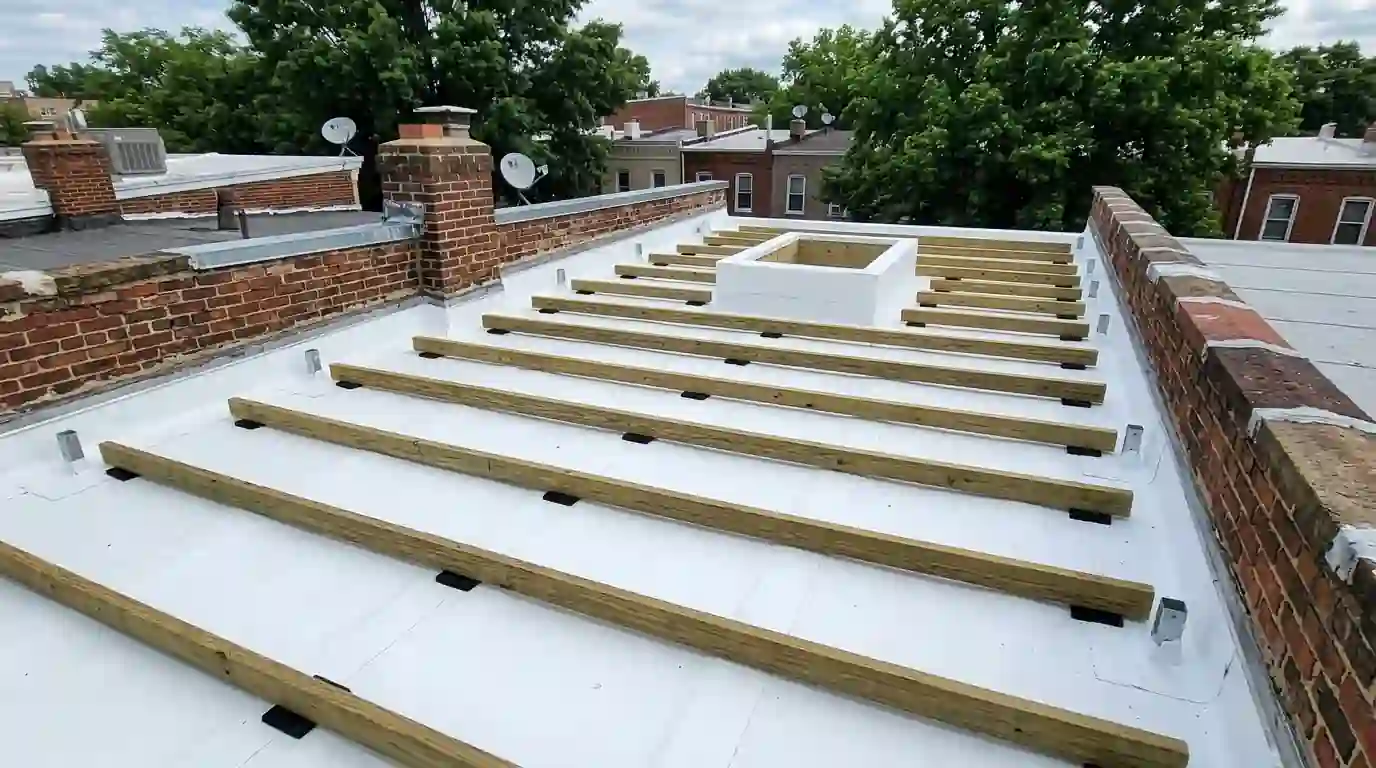
A roof deck turns a hot, unused rowhouse roof into the best outdoor space on the block, but the deck builder's job sits on top of the roofer's job. If the membrane, flashing and...
Read the article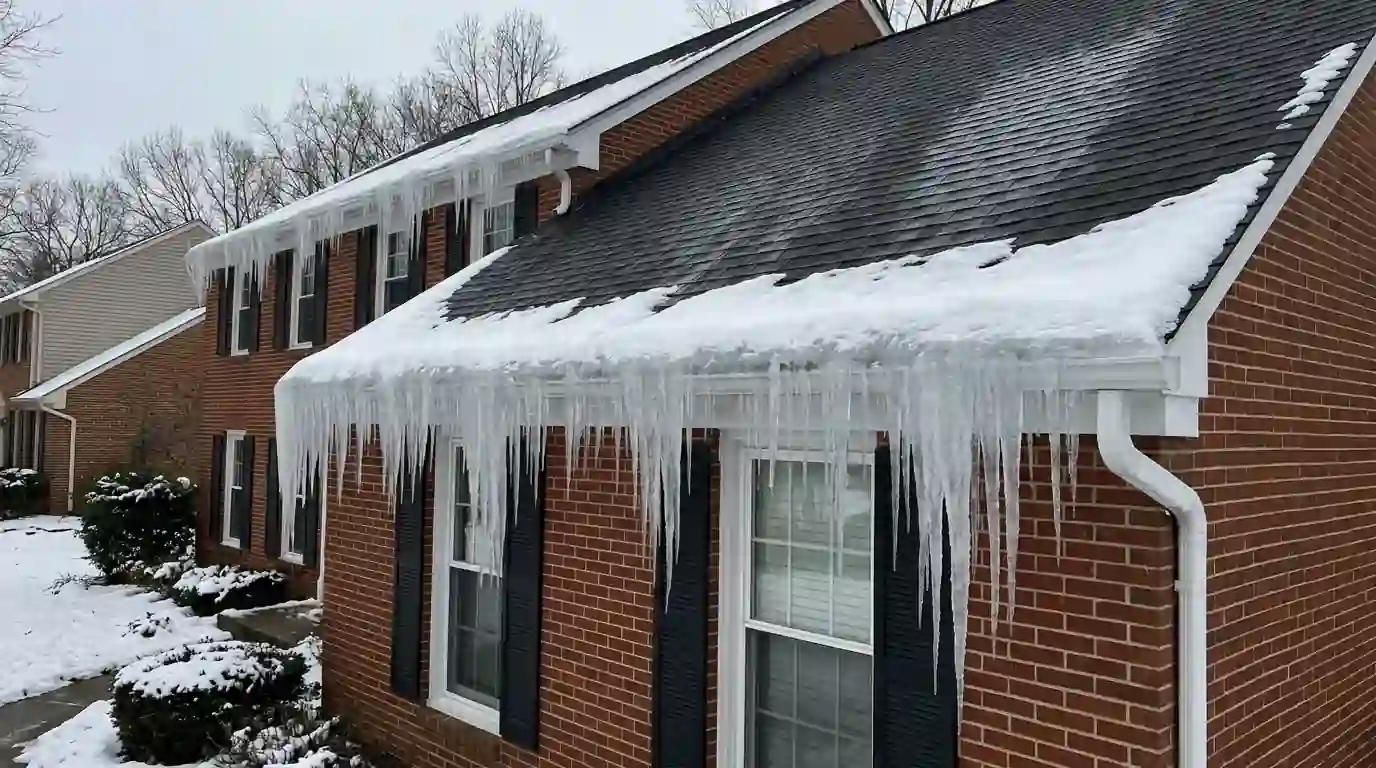
Washington doesn't get buried in snow every winter, but a few inches followed by a week of freezing nights is enough to build ice dams along the eaves of many homes in the region....
Read the articleCall and a roofer will answer, any hour of any day. We stop the leak first and fix it properly once the roof is dry.