What's actually in a can of silver coating
Most silver roof coatings are fibered aluminum: tiny flakes of aluminum suspended in an asphalt or solvent base, sometimes with mineral fibers for body. When it's brushed or rolled onto a roof, the flakes float to the surface and lie flat, forming a metallic skin that reflects much of the sun's ultraviolet light and a good share of its heat.
Under that skin, the asphalt in a modified bitumen cap sheet or an old built-up roof stays protected from the UV that would otherwise dry it out and crack it. Without a coating, a smooth asphalt surface can alligator and shrink within a few summers in Washington's sun.
There are also water-based acrylic and silicone coatings, usually white, which reflect more heat than silver. Those work differently and suit different roofs, which we'll cover further down.
What a silver coating does well
On a smooth-surfaced modified bitumen or built-up roof, the coating is part of the system, not an extra. Manufacturers often expect it on smooth caps, and roofs without it age fast. Kept up on schedule, a silver finish can add several years to a roof that would otherwise crack early.
It also lowers the surface temperature compared to bare black asphalt, which takes some load off the top floor and the air conditioner on hot afternoons. The difference isn't as large as a bright white membrane, but on a third-floor bedroom in a Columbia Heights rowhouse, owners notice it.
And it makes inspection easier. Cracks, blisters and open laps show up clearly on a uniform silver surface, so a roofer looking down from a hatch can spot trouble faster than on a dull, weathered roof.
Timing helps here. A recoat applied while the old coating is merely dull, before bare asphalt shows, needs less prep and less product, because the cap sheet underneath is still supple and the surface is still sound enough to hold a new layer.
What it can't do, no matter what the label says
A coating isn't a membrane. It's a few mils thick, and it bridges hairline cracks at best. It won't seal an open seam, a split at a parapet, a torn pipe boot or a hole from a satellite mount. Those need real repair before any coating goes on.
It also can't fix what's under the roof. If the insulation is wet, coating over it traps moisture against the deck, and the rot keeps spreading out of sight. Ponding water that sits for days will lift and strip a fibered aluminum coating in a season or two.
- Won't fix active leaks on its own
- Won't dry out wet insulation or rotted deck boards
- Doesn't hold up under standing water for long
- Doesn't bond well to TPO or EPDM without special primers
- Isn't a substitute for flashing at parapets, hatches and vents
How to tell from below if your coating is wearing out
A fresh silver roof looks bright, almost mirror-like. Over five to seven years it dulls to gray, then patches of black asphalt start to show through, especially in low spots and along the rear where water collects. If you can see the roof from a neighbor's window or a deck down the block, that color change is easy to read.
Other signs include silver flakes collecting in the downspout or on the patio below the scupper, and a chalky residue on the gutter at the rear. Inside, nothing usually changes until the asphalt itself starts cracking, which is why coatings get forgotten until there's already a leak.
Pay attention to the edges as well. The parapet flashing and the scupper box take the most sun and the most water, so coating fails there first. If the field still looks silver but the base of each wall has gone black and crazed, the flashings need attention before the next coat.
Doing a recoat properly
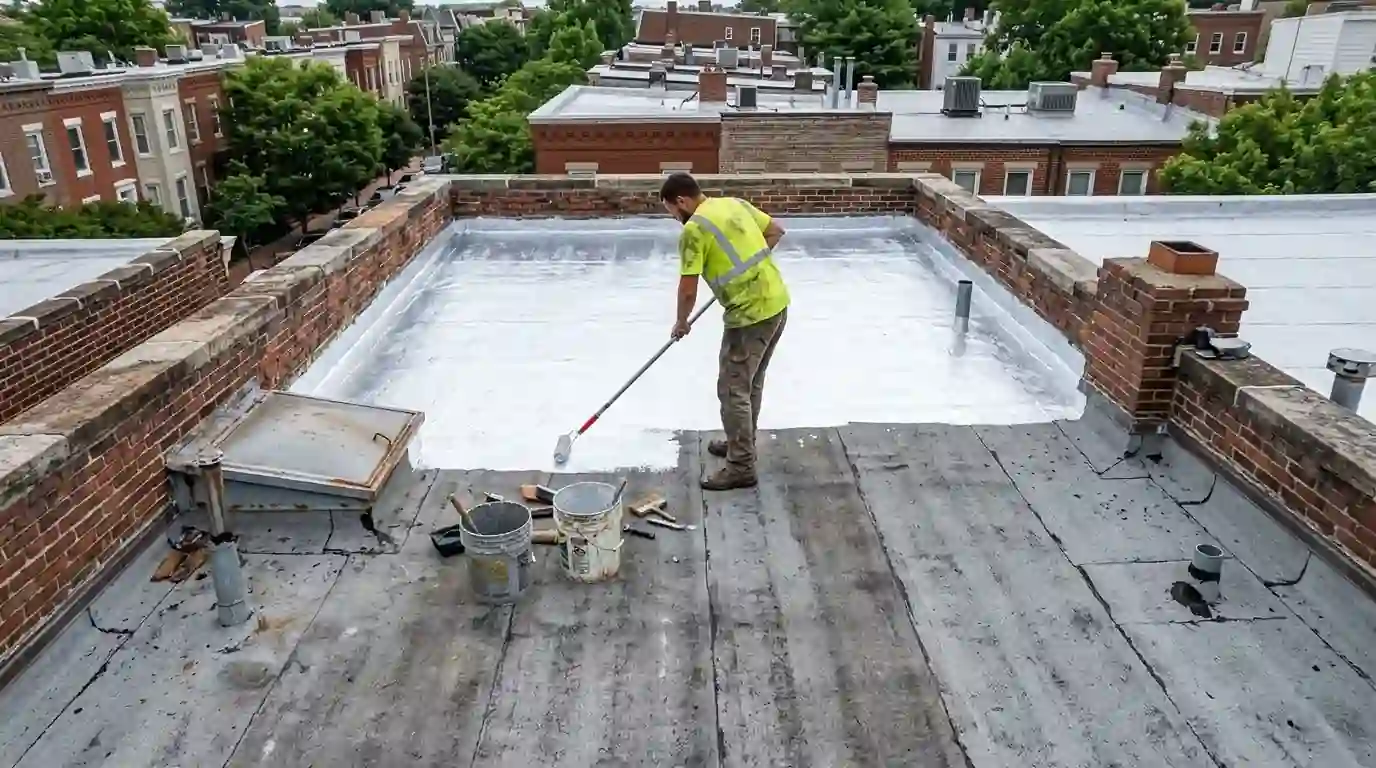
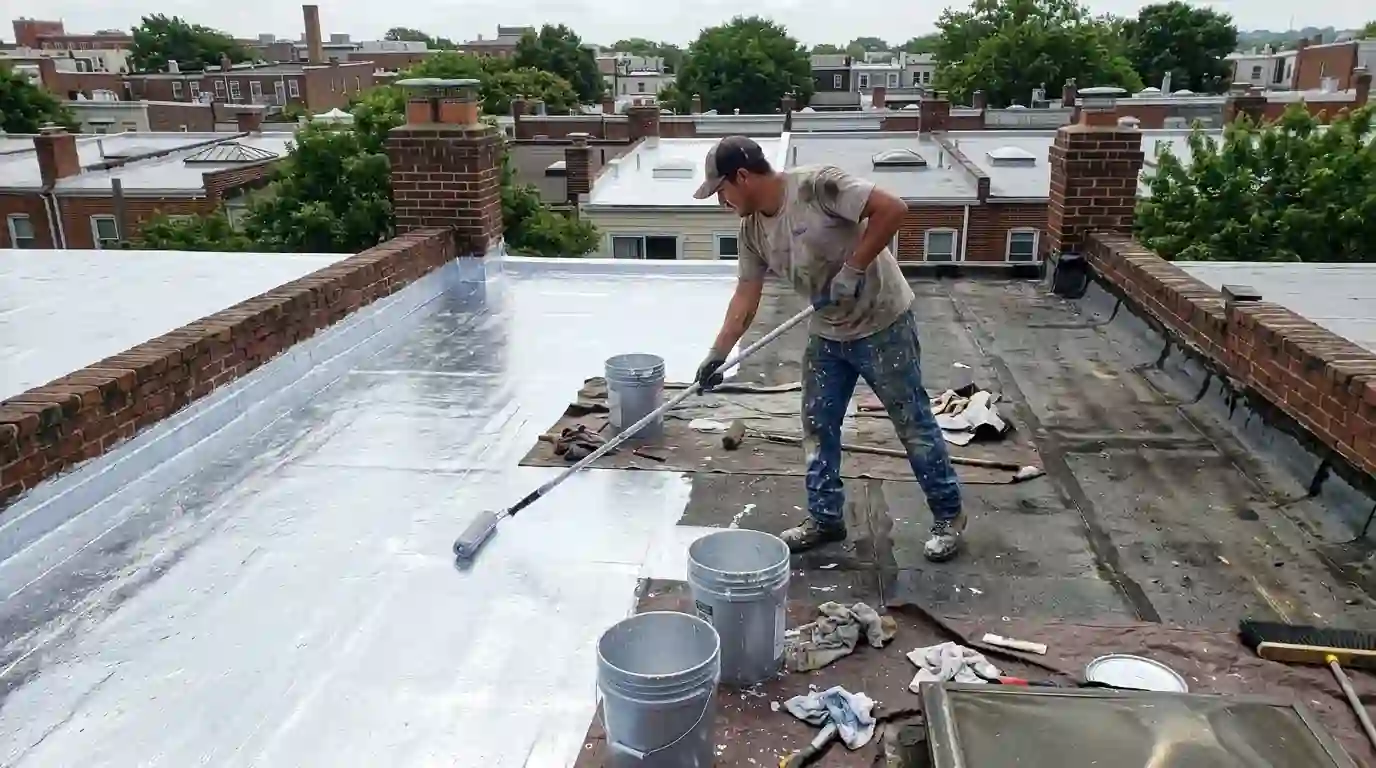
Recoating is mostly preparation. The crew sweeps and washes the roof, scrapes off loose old coating, and lets everything dry fully. Blisters get cut and patched, open laps get resealed with compatible mastic and fabric, and flashings get checked and repaired.
Then the coating is stirred thoroughly so the aluminum is evenly mixed, and applied in one or two coats at the rate on the product sheet, usually with long-handled brushes or rollers working away from the hatch. The roof needs a stretch of dry, mild weather, so in DC spring and early fall are the best windows.
We also avoid coating late in the day when dew is expected, because moisture landing on wet coating can leave it streaky and weak. Most rowhouse recoats take one dry day for washing and repairs and a second for the coating itself, with the scupper kept clear so rinse water drains away.
For a typical rowhouse roof, a cleaned and recoated silver finish with minor repairs often runs $1,240-$2,870. Larger roofs, heavy prep, more seam repairs or a switch to a premium coating raise that. The roof's actual condition sets the final price, so we'll quote after a look.
Silver, white acrylic or silicone: picking the right finish
Silver fibered aluminum is inexpensive and well-suited to smooth asphalt roofs. White acrylic reflects more heat, which helps with DC cool roof goals, but it can wear faster on roofs that hold water. Silicone handles ponding better and stays flexible, though it's harder to recoat later because few products stick to it.
Which one fits depends on the roof underneath, how it drains, and how long you expect to keep it. Our roof coating visits start with a moisture check, and on rowhouses where the energy savings matter most, we sometimes recommend a cool roof membrane at the next replacement instead of chasing a coating.
When coating stops making sense
If the roof is past about 18 years, has several layers of patches, or shows wet insulation in multiple spots, coating usually just delays the inevitable at extra cost. That money is better put toward a tear-off and new membrane. Our guide on how long a flat roof lasts in DC goes through those age markers in detail.
Call (202) 771-7443 if your silver roof has gone dull and patchy, or if you're not sure what kind of roof you have. We answer around the clock, come out with a moisture meter, and tell you straight whether a recoat or a flat roof repair is worth the money.