Typical lifespans for the membranes on DC rowhouses
Walk any alley behind a row of Petworth or Bloomingdale houses and you will usually spot four kinds of low-slope roofs: old built-up tar and gravel, modified bitumen with a granulated or silver-coated cap sheet, black EPDM rubber, and white TPO. Each one ages at its own pace under Washington's humid summers, freeze-thaw winters and short thunderstorms that can dump a lot of water in an hour.
The ranges below are what we see on roofs that were installed correctly and drained reasonably well. A roof that holds water, or one that was laid over an older layer, often falls short of the low end.
- Two-ply modified bitumen, torched or cold-set: about 15 to 22 years
- Fully adhered EPDM, 60 mil with taped seams: about 20 to 28 years
- TPO, 60 to 80 mil with heat-welded seams: about 18 to 25 years, sometimes longer
- Single-ply roll roofing or a lone cap sheet: often 8 to 12 years
- Old built-up tar and gravel: usually past its design life and living on patches
Why one roof outlasts the identical roof next door
Drainage decides more than the brand name. Most rowhouse roofs pitch gently toward the rear, where a scupper box feeds a downspout into the yard or alley. When joists sag over a century, low spots form, and water that sits for two or three days softens adhesive, feeds algae and bakes the surface in summer sun.
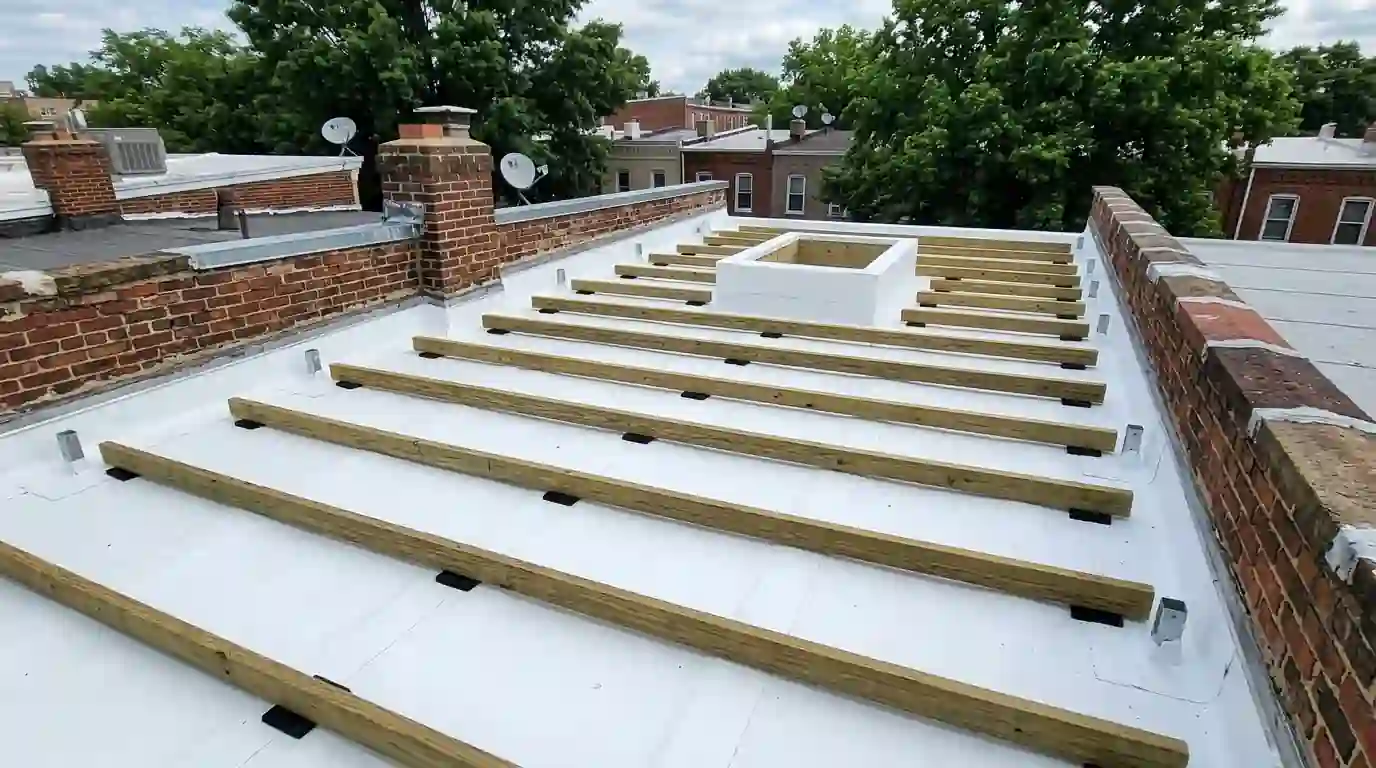
Flashing is the next weak spot. The membrane has to turn up the parapet, the party wall, the hatch curb and every vent pipe, and those vertical laps fail years before the open field of the roof. A tidy field with tired edges is the most common condition we find on roofs in Columbia Heights and Shaw.
Foot traffic matters too. HVAC techs walking to a condenser, a satellite installer screwing a mount through the membrane, or a neighbor crossing over to reach a hatch can all shorten a roof's life. Walk pads around equipment cost little and save the sheet from boot wear.
What the top floor ceiling tells you about the roof above
You don't need to climb anything to learn a lot. After a heavy rain, take a flashlight to the top floor and look at the ceiling along the party walls, at the rear wall above the windows, and around the roof hatch or skylight well.
Brown rings with a darker edge mean water has come and dried more than once. Fresh, soft-looking patches mean the leak is active. Bubbling paint high on the wall near the rear scupper often points to a clogged drain backing water under the flashing rather than a hole in the field.
Please stay off the roof itself. Many rowhouse roofs are reached through a ladder hatch with no rail, the parapet can be lower than your knee, and a wet membrane is slick. We'd rather walk up for you than hear about a fall.
- Stains that grow a little after each storm
- A musty smell in a closet or crawl space under the roof
- Ceiling drywall that sags or gives when pressed lightly with a broom handle
- Rust on the hatch ladder or water marks on the hatch frame
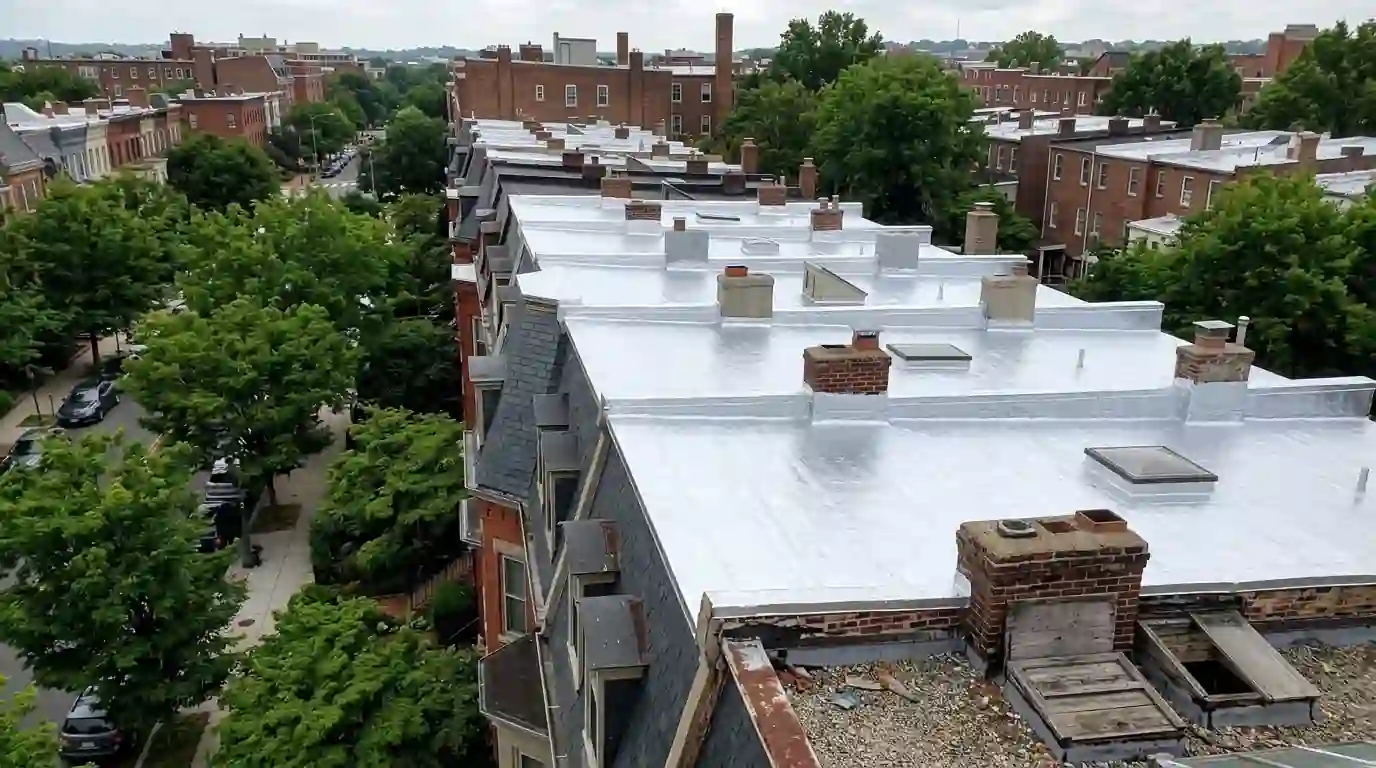
Signs you can spot from the alley without a ladder
Stand in the alley during a steady rain and watch the downspout. If water is running freely, the scupper is open. If the downspout stays dry while rain pours off the parapet edge, debris has blocked the outlet and the roof is holding water it was never built to hold.
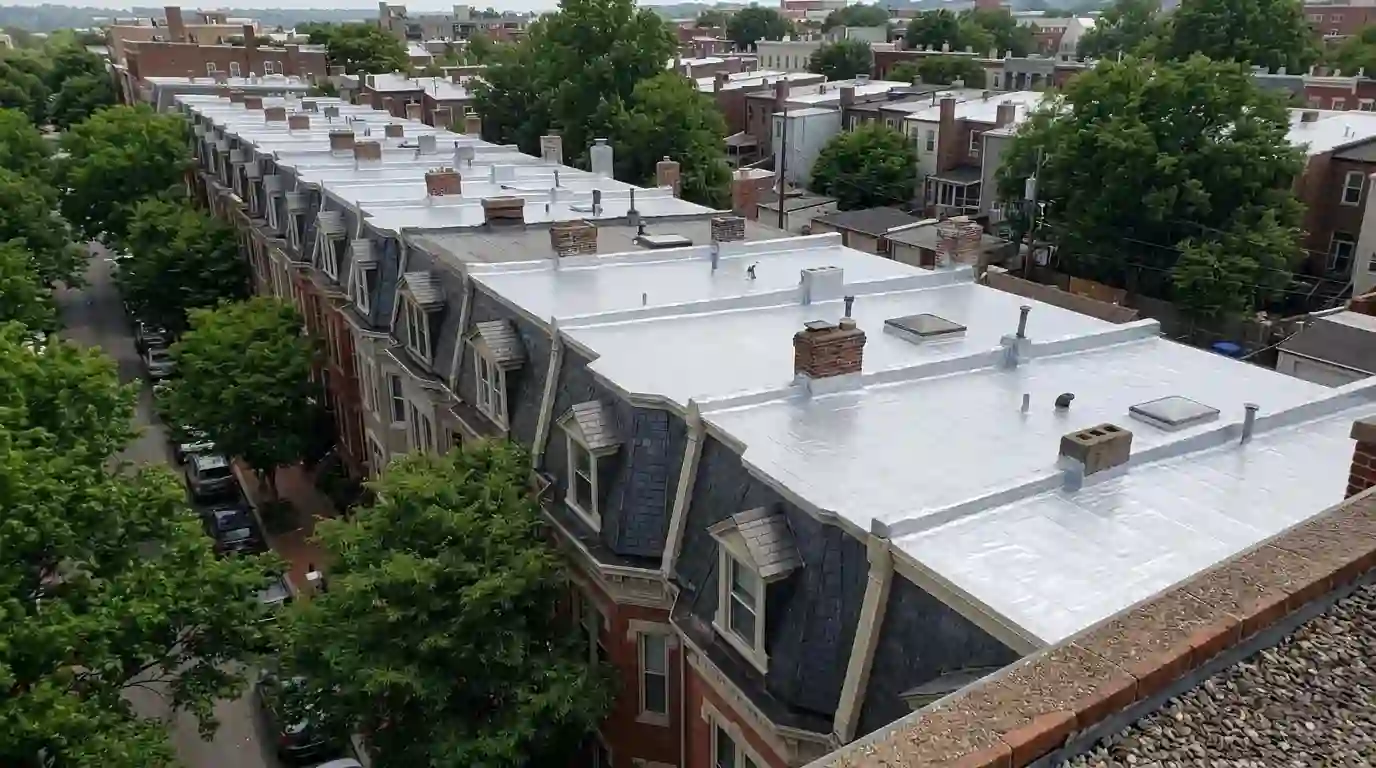
In dry weather, look at the brick under the scupper box for dark streaks or white salt deposits. Check the parapet top for missing coping, weeds or small saplings. A silver coating that has turned dull and black in patches tells you the protective layer has worn off and the asphalt below is drying out.
If a neighbor has a higher window or a roof deck, ask to take a photo across. Phone zoom is enough to see ponding rings, seams smeared with black mastic, and blisters that look like bubbles under the surface.
Patch, coat or tear off: how the roof's age changes the answer
A roof under ten years old with one failed seam or a cracked pipe boot should be repaired, not replaced. A middle-aged roof with dry insulation and scattered wear is often a good candidate for a coating that buys several more seasons. Once a roof passes about 18 years and the insulation underneath is wet, patches stop holding, and replacing the whole flat roof becomes the honest answer.
To tell which case you're in, we run a moisture meter across the field and take a small core cut near suspect areas, then seal it before we leave. Wet insulation feels spongy underfoot and reads high on the meter, and it will keep rotting the deck no matter what goes on top.
For rough budgeting, a seam or flashing fix through our flat roof repair work commonly lands around $385-$1,140. A tear-off with new insulation and membrane on a typical rowhouse roof often runs $9,850-$17,600, moved by the number of old layers, parapet height, insulation thickness and how far debris has to be carried. The real figure comes from looking at your roof.
Small habits that add years to a low-slope roof
Most of what extends a flat roof is plain maintenance done twice a year. None of it is dramatic, and much of it fits into one visit in late fall after the street trees drop their leaves.
If your roof carries a silver finish, our piece on what a silver coating does explains when a recoat helps and when it only hides trouble.
- Have the scupper, leader head and downspout cleared each spring and fall
- Ask HVAC and cable techs to stay on walk pads and never screw into the membrane
- Recoat silver or white coatings on modified bitumen every five to seven years
- Get the flashing checked after any storm that brings limbs down on your block
- Keep branches trimmed back so they don't scrape the roof or drop debris on it
When it's time to stop waiting and call
Call (202) 771-7443 if a ceiling stain gets bigger after each storm, if you can see blisters or open laps from a neighbor's window, or if the roof is past 18 years and nobody has looked at it. We answer around the clock, every day of the week.
On a visit we photograph the field, flashing, scupper and hatch, test for wet insulation, and tell you plainly if the roof needs a repair, a coating or full replacement. You keep the photos, so you can see exactly what we saw up there.