A plain look at each membrane
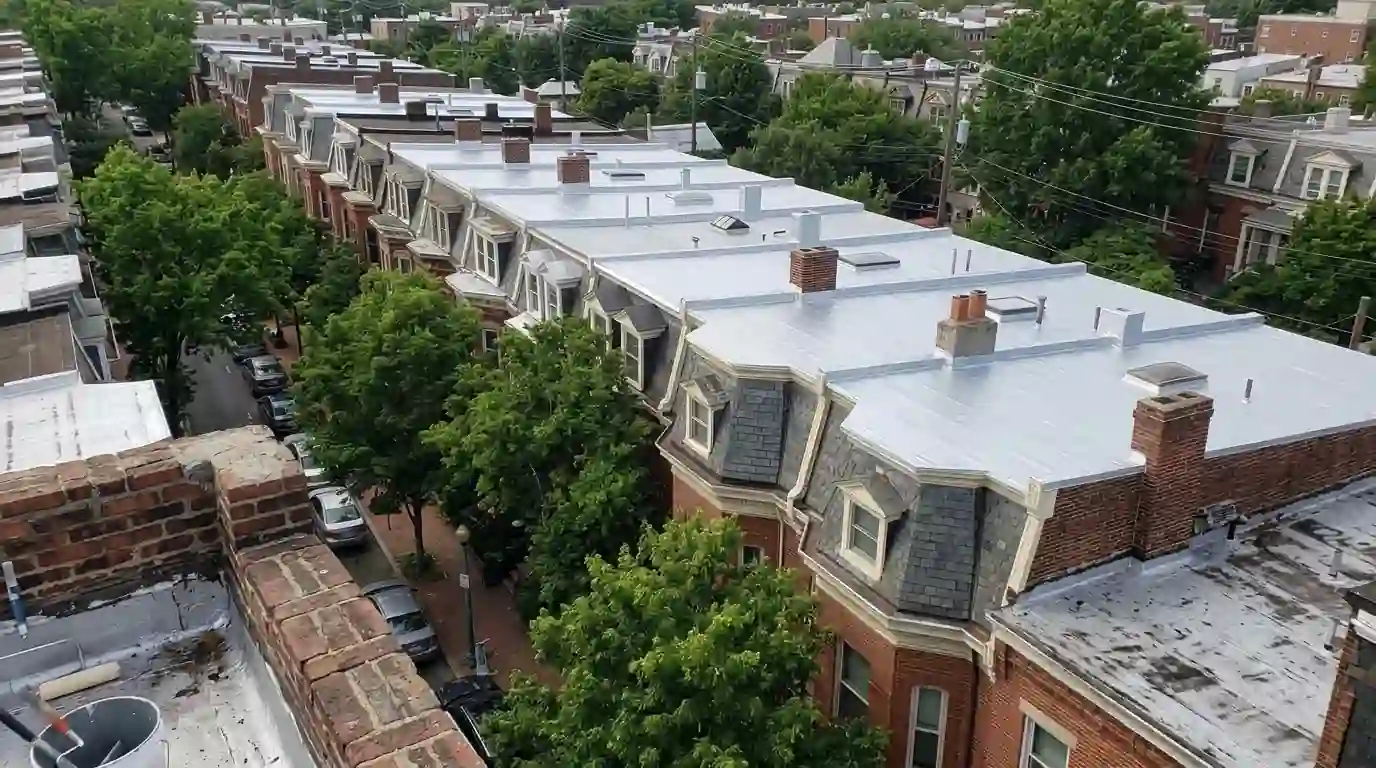
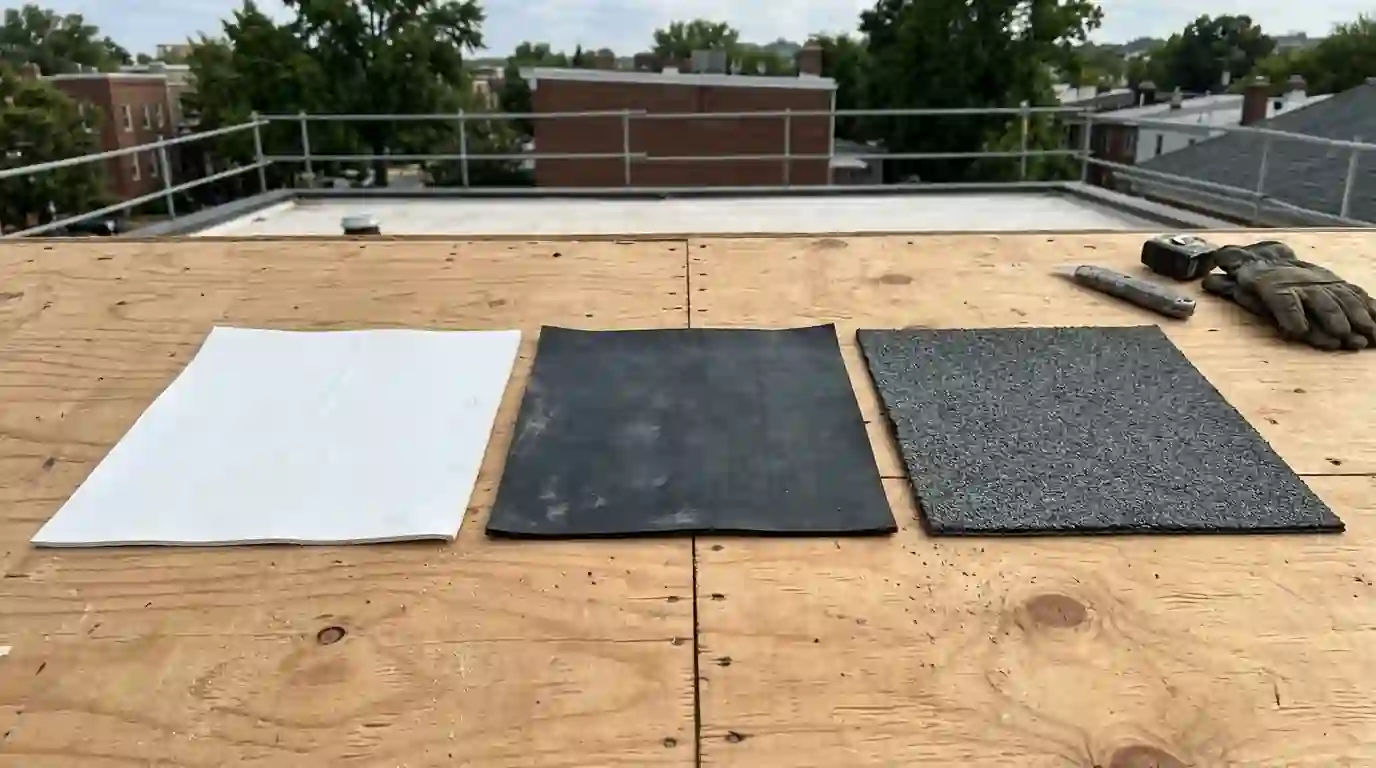
TPO is a white thermoplastic sheet, usually 60 or 80 mil thick, held down with adhesive or plates and screws. Its seams are joined with a hot-air welder, which melts the two sheets into one piece. Products like a Carlisle or GAF TPO membrane are common on DC rowhouses because the white surface reflects sun and meets the District's cool roof push for low-slope replacements.
EPDM is a synthetic rubber sheet, almost always black, often 60 mil. It's glued to the insulation board, and the seams are joined with factory tape and primer. Rubber stays flexible in cold weather and shrugs off hail and summer heat, which is why some roofs from the 1990s are still going.
Modified bitumen is asphalt reinforced with polyester or fiberglass and modified with rubber or plastic polymers. It goes down in two layers, a base sheet and a cap sheet, either torched, self-adhered or set in cold adhesive. The cap can be granulated in white or gray, or coated silver.
How each one handles a DC July and a January freeze
Summer roof surfaces on a black membrane can pass 160 degrees. EPDM tolerates that well, but the top floor below gets hot, and the roof gives back heat into the evening. A white TPO or a white-capped modified bitumen surface stays much cooler, which helps the room under it and slows the aging of the sheet.
In winter, rubber stays soft, so seams and flashings flex with the building instead of cracking. TPO also handles cold, though older thin sheets could get brittle at flashings. Modified bitumen can develop small cracks in the cap when the coating wears off and the asphalt dries, which is why a recoat schedule matters.
Thunderstorms add another test. A short summer downpour can drop an inch of water on a roof that drains through one scupper, and any membrane will suffer if that water backs up against a weak parapet lap. Wind matters less on rowhouses sheltered by their neighbors, but corner units and end-of-row houses see more uplift at the edges, so perimeter fastening and adhesive coverage get extra care there.
Seams are where the real difference lives
Almost every flat roof leak starts at a seam, a flashing or a penetration. A heat-welded TPO seam, done right and probed afterward, is stronger than the sheet itself. A taped EPDM seam depends on clean surfaces, proper primer and pressure from a roller, and a careless install can let edges lift in a few years.
Modified bitumen laps are sealed by heat or adhesive and pressed so a small bead of asphalt shows along the edge. Two plies mean a leak in the cap doesn't always reach the deck. That redundancy is one reason many roofers still like it for older rowhouses with lots of penetrations.
Penetrations deserve their own attention. Plumbing vents get prefabricated boots or field-wrapped flashing, old abandoned vents get cut down and capped below the membrane, and the hatch curb gets wrapped up and over its top edge. On a crowded rowhouse roof with six or seven pipes, the flashing work can take longer than laying the field sheet.
- TPO: hot-air welded seams, probed with a hand tool after welding
- EPDM: primed and taped seams, rolled under pressure, edges sealed with lap sealant
- Modified bitumen: two plies with offset laps, torched or adhered, edges checked for a full bead
Roof decks, solar and heavy foot traffic
If you plan to add a roof deck, solar panels or a raised condenser stand, membrane choice should follow that plan. TPO accepts welded flashings and walk pads that fuse to the sheet. EPDM is easy to repair but scuffs and punctures under steady traffic unless it's covered. Modified bitumen's granulated cap tolerates foot traffic well, which helps on roofs that get regular visits.
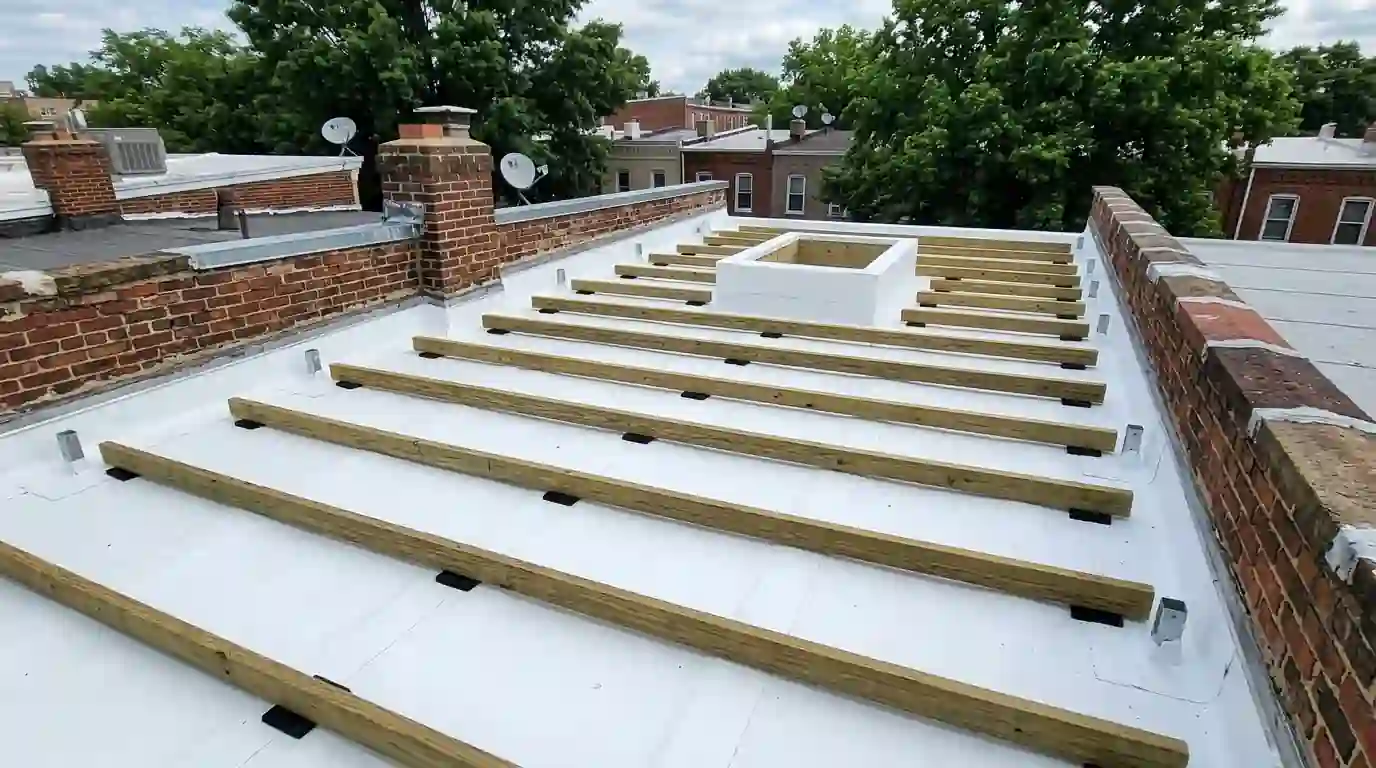
For a deck, the sleepers and posts need their own flashed bases, and the membrane under the deck should be one that can be reached for repair. Our post on adding a roof deck to a rowhouse covers the waterproofing side in more detail.
Rough cost ranges for a rowhouse in 2026
These ranges are for a tear-off on a typical two- or three-story rowhouse roof, including new insulation and flashing. They're a starting point, not a promise, and the real number comes after we look at the roof, count the layers and measure the parapets.
Price moves with the number of old layers to strip, how much wet insulation and rotted decking turns up, parapet height and coping condition, the thickness of tapered insulation, the number of vents and hatches, and how far debris has to travel to a dumpster in the alley or out front.
- TPO, 60 mil, fully adhered: about $10,450-$17,900
- EPDM, 60 mil, fully adhered: about $9,780-$16,950
- Modified bitumen, two ply with white or silver cap: about $10,150-$18,300
How we usually match a membrane to a rowhouse
For a roof with a few penetrations, good access and an owner who wants a cool, bright surface, we often lean to a TPO roof. For a roof where low cost per year matters most, or where the owner wants a sheet that can be patched easily for decades, EPDM rubber holds up well.
Where the roof is crowded with vents, old chimneys, hatches and satellite mounts, a two-ply modified bitumen system gives an extra layer of protection at all those flashings. None of these is the wrong answer on its own. Problems come from the install, not the label.
Matching the neighbors can also matter. Where your roof meets the house next door along the party wall, the two membranes have to be tied together or separated by a clean flashing detail, and that joint is easier to keep dry when both roofs are compatible.
Questions to ask before you sign for any flat roof
Ask how many layers will come off and what happens if rotted deck boards turn up. Ask what thickness and type of insulation will go down, and if tapered pieces will steer water to the scupper. Ask how the parapet, party wall and hatch curb will be flashed, and what the coping cap will be.
If you'd like to talk it through, call (202) 771-7443 at any hour. We'll ask about your roof, then come out, take photos and lay the options side by side for your house.